Evaluation of muscle strength in children: a review of literature
Evaluación de la fuerza muscular en niños: una revisión de la literatura Evaluation of muscle strength in children: a review of literature


How to Cite
Download Citation

This work is licensed under a Creative Commons Attribution-NonCommercial-NoDerivatives 4.0 International License.


Show authors biography






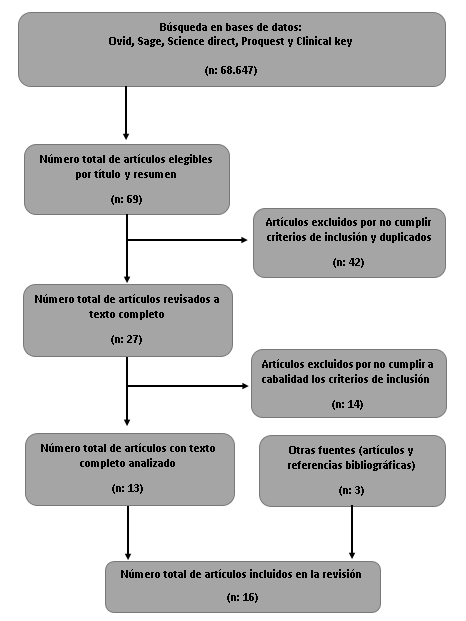
Introduction: muscle strength is an important indicator of neuromuscular function and a component of physical fitness essential for performance in different activities of daily life. Its alteration may cause functional limitations and affects the independ-ence and the roles that a person develops. That is why the evaluation of muscle strength is necessary to determine the level of motor performance and identify risks associated with growth and development. Objective: to describe the state of art re-lated to the use of muscle strength assessment scales in children between 3 and 8 years of age. Materials and Methods: a review of the literature was performed using the PICO strategy, with bibliographic search in the Ovid, Sage, Science Direct, Proquest and Clinical Key databases. Results: In the initial phase of the screening process, 69 eligible records were identified by title and abstract, of which 56 were excluded because they did not meet the inclusion criteria. Additionally, 3 books with relevant information were identified, which is why 16 references that are part of the qualitative synthesis of this study were taken into account. Conclusions: srategies and tests such as dynamometry, Functional Strength Measurement, Bruininks Oseretsky's Motor Skills Test, Fitness Testing Preschool Children and FUPRECOL are tools that allow evaluating muscle strength in childhood, and provide important elements in early identification of risk factors for the person's health.
Article visits 2850 | PDF visits 1431
Downloads
Information