Ir para o menu de navegação principal Ir para o conteúdo principal Ir para o rodapé

Prevalence, incidence, clinical manifestations and factors associated with pediculosis capitis in nursery school children of a low-income area from Colombia



Seção
Artículos de Investigación

Como Citar
Medina Ortega, . Ángela P. ., Mosquera Monje, S. L. ., López Valencia, D. ., Vásquez Arteaga, L. R. ., & Salguero, C. . (2019). Prevalence, incidence, clinical manifestations and factors associated with pediculosis capitis in nursery school children of a low-income area from Colombia. Archivos De Medicina , 20(1), 40-52. https://doi.org/10.30554/archmed.20.1.3438.2020
Baixar Citação

Dimensions
PlumX

Como Citar

Medina Ortega, . Ángela P. ., Mosquera Monje, S. L. ., López Valencia, D. ., Vásquez Arteaga, L. R. ., & Salguero, C. . (2019). Prevalence, incidence, clinical manifestations and factors associated with pediculosis capitis in nursery school children of a low-income area from Colombia. Archivos De Medicina , 20(1), 40-52. https://doi.org/10.30554/archmed.20.1.3438.2020

Baixar Citação

Ángela Patricia Medina Ortega
Sara Lucía Mosquera Monje
David López Valencia
Luis Reinel Vásquez Arteaga
Carolina Salguero

Ángela Patricia Medina Ortega,

Medical student. Research Center on Microbiology and Parasitology (CEMPA), Department of Internal Medicine, Faculty of Health Sciences, University of Cauca


Sara Lucía Mosquera Monje,

Medical student. Research Center on Microbiology and Parasitology (CEMPA), Department of Internal Medicine, Faculty of Health Sciences, University of Cauca. Popayán


David López Valencia,

Medical student. Research Center on Microbiology and Parasitology (CEMPA), Department of Internal Medicine, Faculty of Health Sciences, University of Cauca


Luis Reinel Vásquez Arteaga,

Professor. Research Center on Microbiology and Parasitology (CEMPA), Department of Internal Medicine, Faculty of Health Sciences, University of Cauca. Popayán


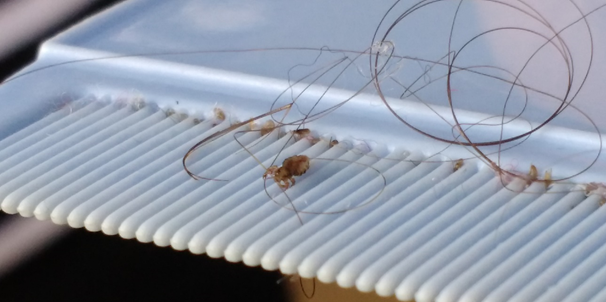
Objectives: epidemiology of pediculosis capitis was determined. The worldwide distributed ectoparasite, Pediculus humanus capitis, causes pediculosis capitis. Although risk factors for children are known, studies about its clinical description are rare. Materials and methods: cross-sectional descriptive study based on a sample (356 children) aged 1 to 5 of a low-income area from Popayán, Colombia. Two observations were practiced: at the beginning and at the end of the year 2017. Hair, scalp, lymphatic nodules and frontotemporal, parietal, occipital, nuchal and retroauricular cutaneous regions were examined. Insects were mechanically removed by wetting the hair and using lice combs. Nits, nymphs and adult lice were gathered and stored for future studies. Results:  prevalence and incidence of pediculosis capitis were 5.1 % and 20.2 %, respectively. The associated variables were mainly infestation antecedent, long hair, female sex and eliminating with shampoo (95 % CI: 15-20). Clinical variables: presence of adenopathies, hair scalp inflammation and nuchal adenopathies (25-35 %); nits and lice localized in occipital region, hair scalp itching and retroauricular itching (20-25 %). Conclusions: pediculosis capitis affects those nursery children studied. It is important to know the variables associated  for prevention, control and eradication of head lice infestation.


Visão geral 1471 | Visualizações de PDF 106


Downloads

Os dados de download ainda não estão disponíveis.
Sistema OJS 3.4.0.10 - Metabiblioteca |