Intervention with somatic techniques from the lotus pedagogy, to improve coexistence processes in students of a public school in a conflict zone in Bogotá, Colombia
Intervención a través de técnicas somáticas desde la pedagogía del loto, para mejorar los procesos de convivencia en estudiantes de un colegio público en una zona de conflicto en Bogotá, Colombia


How to Cite
Download Citation

This work is licensed under a Creative Commons Attribution-NonCommercial-NoDerivatives 4.0 International License.








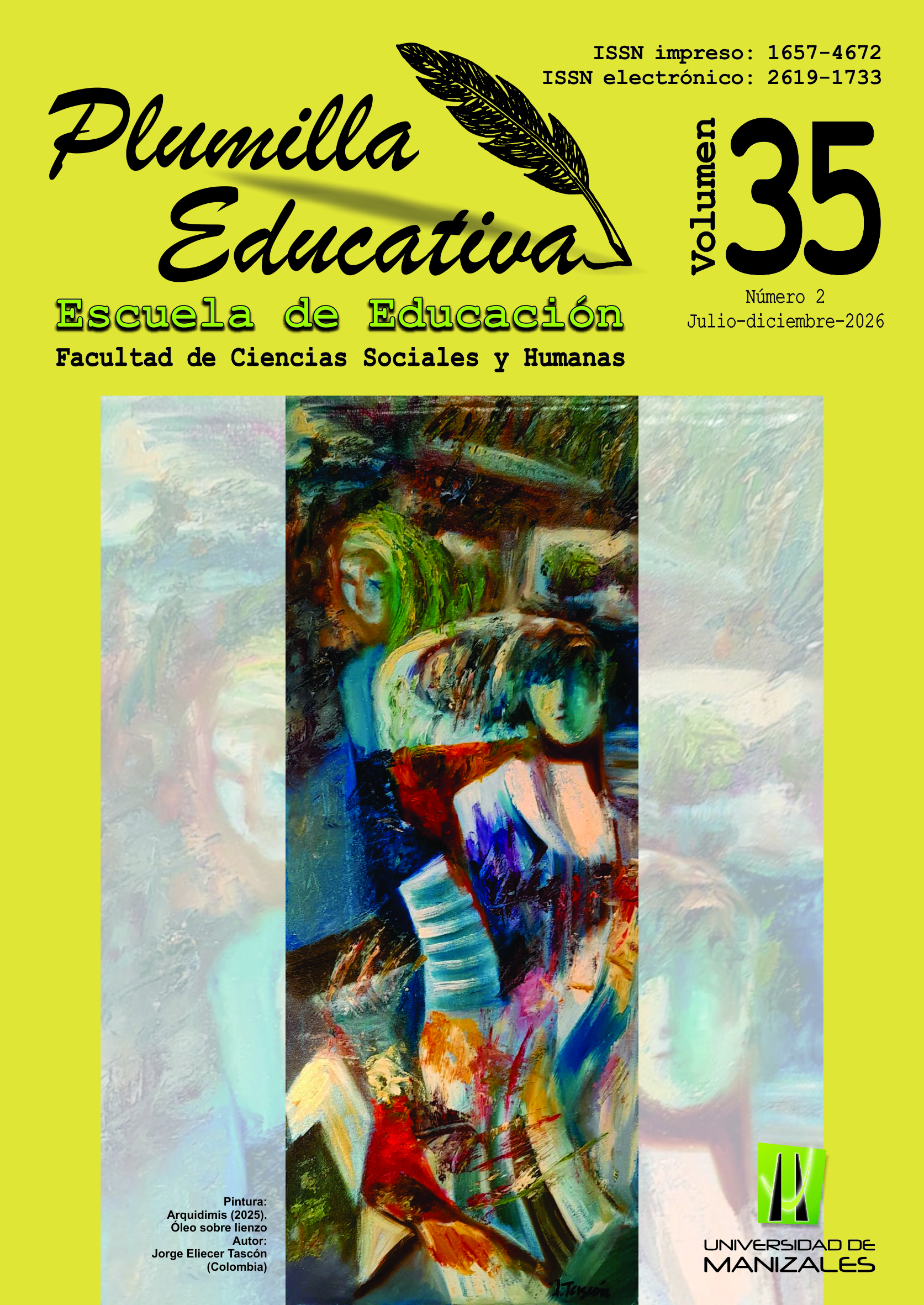
This article presents research conducted with students from the Rodrigo Lara Bonilla School in Bogota, Colombia. Lotus Pedagogy is an innovative educational methodology that seeks to foster socio-emotional regulation in youth through practices such as breathing, meditation, mindfulness, hatha yoga, and body percussion within collective group work.
Objective: To evaluate the impact of the somatic techniques of Lotus Pedagogy on reducing violence among eleventh-grade students at a public school in Ciudad Bolívar (Bogotá, Colombia), a vulnerable area with high levels of conflict. Methods and materials: Quantita- tive study with a pretest-posttest experimental design, with a control group (n = 82) and an experimental group (n = 82), throughout the 2019 school year (February–November). The experimental group received 20 minutes of somatic techniques three times a week in physical education and arts classes; coexistence was measured using the student behavior record (“student observer”). Results and discussion: A t-test showed a significant reduction in conflict situa- tions in the experimental group compared with the control group (p= 0.001), in line with previous studies on yoga. Conclusions: Lotus Pedagogy improves school coexistence and is a relevant strategy for peace education and post-conflict education.
Article visits 20 | PDF visits 19
Downloads
- Adhy, B., & Nagarajan, K. (2025). Effectiveness of Indian Raaga-based music therapy (IRMT) model for hypertension management in working professionals: A randomized controlled trial. Human development model based on yogic wisdom for well-being and self-actualization: A conceptual framework.
- AG, G. S., Subramanya, P., & Mahadevan, B. (2017). Effect of yoga on adolescents’ attitude
- towards violence. Journal of Human Values, 23(2), 81–91.
- Budhi, R. B., Singh, D., Goswami, J., Manjunath, N. K., & Vinchurkar, S. (2024). Influence of high- frequency yoga breathing (Kapalabhati) on states changes in gamma oscillation. International Journal of Yoga, 17(2), 106–115.
- Castro Martínez, J. (2023). Influencia de las técnicas somáticas en las prácticas pedagógicas y el bienestar emocional en contextos escolares. Instituto para la Investigación Educativa y el Desarrollo Pedagógico (IDEP).
- Churches, R. (2016). Teacher-led research: Designing and implementing randomised controlled trials and other forms of experimental research. Crown House Publishing.
- Gamboa Mejía, A. (2022). Bitácora kinético emotiva: Técnicas somáticas, bienestar emocional y desarrollo personal [Cartilla].
- Ganguly, M., Mohanty, S., Mishra, S., Patra, S., & Jha, M. (2021). Impact of Sanskrit prosody on anxiety, mindfulness, and self-concept in young adolescents: A four-armed control trial. Yoga Mimamsa, 53(1), 4.
- Rubio A., A. (2026). Intervención a través de técnicas somáticas desde la pedagogía del loto, para mejorar los procesos de convivencia en estudiantes de un colegio público en una zona de conflicto en Bogotá, Colombia. Plumilla Educativa, 35 (2) 1-13 p.
- DOI: https://doi.org/10.30554/pe.35.2.5573.2026
- Hernández-Sampieri, R., & Mendoza, C. (2018). Metodología de la investigación: Las rutas cuan- titativa, cualitativa y mixta. McGraw-Hill Education.
- Kanthi, A., Deepeshwar, S., Chidananda, K., Vidyashree, M., & Krishna, D. (2024). Event-related potential changes following 12-week yoga practice in T2DM patients: A randomized controlled trial. Clinical EEG and Neuroscience, Article 15500594241249511.
- Li, D., Mohanty, S., Mavathur, R., Vageesh, V. Y., Jain, A., Gopi, A., … Gopi, A. (2024). Study protocol for mindfulness-based yoga versus physical exercise on the psychological well-being in students with early visual impairment: A three-armed, multi-centered, randomized controlled trial. Cureus, 16(9).
- Pandey, M., Dwivedi, K., & Behera, N. (2024a). Effectiveness of yoga and physical exercises on emotional and behavioral problems and academic performance among Indian adolescents: A randomized trial. Journal of Emotional and Behavioral Disorders, Article 10634266241301371.
- Pandey, M., Keshav, R., & Behera, N. (2024b). Improving academic standard of low-performing ado- lescents: A Delphi study. MIER Journal of Educational Studies, Trends and Practices, 315–343.
- Piñeros Botero, L. Á. (2022). Corporeidad, bienestar y socioemocionalidad: Aportes desde el saber pedagógico para la educación del siglo XXI.
- Rubio Álvarez, A. (2014). Cartilla de yoga y percusión corporal Colegio Rodrigo Lara Bonilla IED. Secretaría de Educación de Bogotá.
- Rubio Álvarez, A. (2020a). Educación para el siglo XXI: Un florecer desde la Pedagogía del Loto.
- Instituto para la Investigación Educativa y el Desarrollo Pedagógico (IDEP).
- Rubio Álvarez, A. (2020b). Kinesia de la danza. Una propuesta de entrenamiento corporal para las cualidades físicas en danza.
- Rubio Álvarez, A. (2020c). La proxemia virtual y la socioemocionalidad en tiempos de incertidum- bre. Enunciación, 25, LI–LV. https://doi.org/10.14483/22486798.17026
- Rubio Álvarez, A. (2022). Maestros y maestras que inspiran: Corporeidad, bienestar y socioemocionalidad. Instituto para la Investigación Educativa y el Desarrollo Pedagógico (IDEP).
- Sharma, S., & Rawat, V. (2023). Effect of yogic practices on body posture and its correlation with physical and mental health in adolescents. Indian Journal of Medical Specialities, 14(4), 216–224.
- Sinha, A., & Kumari, S. (2021). Integrating yoga with education in the modern schooling system: A theoretical model based on ancient knowledge and modern research. Yoga Mimamsa, 53(1), 46.
- Sreekumar, T. S., Nagendra, H. R., & Ilavarasu, J. V. (2020). Mindfulness and yoga: A parallel and comparative analysis. International Journal of Yoga-Philosophy, Psychology and Parapsychology.
- Swamy, H. D., Nagarajan, K., & Babu, N. (2021). Yogic principles of artha and dāna with reference to individual and corporate social responsibility. International Journal of Yoga, 14(3), 248.
- TI, A. M., Omkar, S. N., Sharma, M. K., Choukse, A., & Nagendra, H. R. (2021). Development and validation of yoga module for anger management in adolescents. Complementary Therapies in Medicine.
- Tripathi, M., & Kumari, S. (2019). Effect of yoga practices on academic performance among college students – Randomized controlled trial study. Think India Journal, 22(15), 817–823.
- Velandia Mora, M. A. (2021). Colección de corporeidad, técnicas somáticas y socioemocionalidad: Educación para el siglo XXI. IDEP.
Information

















Keywords
ISSN impreso: 1657-4672
ISSN electrónico: 2619-1733