It’s Time to Tell Ourselves Another Story: Reflections on Pedagogy, Memory, and the Pedagogy of Memory
Es hora de echarnos otro cuento. Reflexiones sobre la pedagogía, la memoria y la pedagogía de la memoria


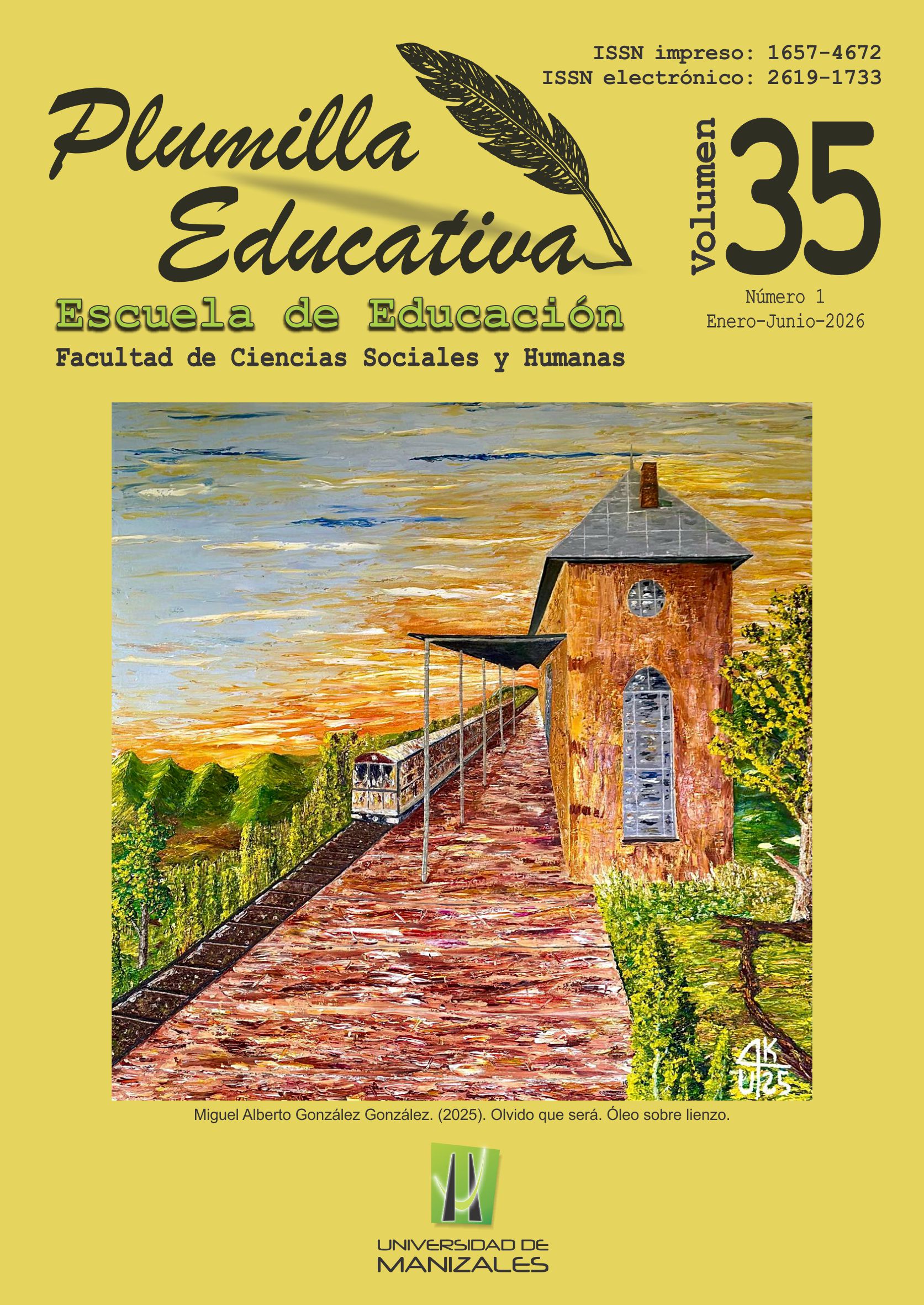
How to Cite
Download Citation

This work is licensed under a Creative Commons Attribution-NonCommercial-NoDerivatives 4.0 International License.








This article offers a critical reflection on the relationships bet- ween law, memory, and the right to memory in the Colombian context, based on the analysis of academic narratives found in doctoral dissertations. It starts from the premise that memory is not only a field of symbolic dispute but also a right under cons- truction—particularly relevant in contexts of post-agreement and transitional justice. Methodology: A systematic documentary review was conducted of doctoral theses from three Colombian educational institutions, focusing on historical memory, memories of the recent past, and subaltern memories. The PRISMA pro- tocol guided the review, enabling rigorous criteria for inclusion, exclusion, and analysis. Findings were triangulated with the Final Report of Colombia’s Truth Commission (CEV), enhancing dia- logue between academic production and official truth. Results: The review identified tensions and openings around the right to memory, highlighting its plural, situated, and contested nature. The analyzed dissertations reveal experiences of resistance, ins- titutional silences, and pedagogical strategies for building living memories from subalternized communities. Divergences with hegemonic legal frameworks were evident, suggesting a broader and more relational understanding of law. Conclusions: Memory, far from being a closed archive, emerges as a field of political and epistemic action. The right to memory must be reconfigured from below, recognizing the other narratives that inhabit territories, schools, and bodies that resist forgetting.
Article visits 439 | PDF visits 345
Downloads
- Ahmed, S. (2015). La política cultural de las emociones. Universidad Nacional de Quilmes.
- Arteta, A. (2002). Mal consentido. La complicidad del espectador indiferente. Madrid: Alianza.
- Amador Baquiro, J. C. (2023). Memoria del pasado reciente en la escuela: una perspectiva desde las alfabetizaciones múltiples. Revista Colombiana De Ciencias Sociales, 14(1), 318–344. https://doi.org/10.21501/22161201.3968
- Ávila Rodríguez, S. P. (2024). Doscientos años de narraciones, investigaciones y enseñanza. En XXIII Cátedra. Museo Nacional de Colombia.
- Ben-Peretz M. (1995). Learning from Experience: Memory and the Teachers’ Account of Teaching. New York: State University of New York Press.
- Bernstein, B. (2000). Pedagogy, Symbolic Control and Identity. New York: Rowman and Littlefield.
- Campbell, M. (2018). Ireland’s Multicultural Classrooms and Initial Teacher Education: The Con- vergence of Culture and Pedagogy. National Academy for Integration of Research, Teaching and Learning (NJ1), Paper presented at the Annual Conference of the National Academy for the Integration of Research, Teaching and Learning (3rd, Dublin, Ireland, Nov 11-12, 2009).
- Cardona Zuluaga, A. P. (2016). Memoria, palabra y acción: La historia patria, un saber para el sentimiento. Anuario de Historia Regional y Local, Universidad UIS.
- Comisión para el Esclarecimiento de la Verdad, la Convivencia y la No Repetición. (2022). Hay futuro si hay verdad. Informe final. Hallazgos y recomendaciones. Bogotá: CEV. Recuperado de https://www.comisiondelaverdad.co/informe-final
- Corcuera de Mancera, S. (1997). Voces y silencios en la Historia: siglos xix y xxi. México: Fondo de Cultura Económica.
- Das, V. (2006). Life and words: Violence and the descent into the ordinary. University of California Press.
- Gallagher, A. (2017). Addressing conflict and tolerance through the curriculum. In M. Bellino, &
- González, M. (2017). Memorias, cuerpos y subjetividades en la escuela: una aproximación desde los estudios de memoria social. Educación y Ciudad, (33), 23–38. https://doi.org/10.36737/01230425.n33.2017.1646
- Hobson, P. (1995). El autismo y el desarrollo de la mente. Madrid: Alianza. Honneth, A. (1994). La lucha por el reconocimiento. Barcelona: CRÍTICA.
- Huyssen, A. (2002). En busca del futuro perdido. México, D. F./Buenos Aires: Fondo de Cultura Económica.
- Jacklin, H. (2004). Discourse, Interaction and Spatial Rhythms: locating pedagogic practice in a material world. Pedagogy, Culture and Society. 12 (3). Pp 373-396.
- Jalongo M.R., Isenberg J.P. (1995). How narrative connects. In: M.R. Jalongo, J.P. Isenberg (Eds.): Teachers’s Stories: From Personal Narrative to Professional Insight. San Francisco: Jossey Bass, pp. 28-51
- Jelin, E. (2003). Los trabajos de la memoria. Siglo XXI Editores.
- J. Williams (Eds.), (Re)Constructing Memory: School Textbooks, Identity, and the Pedagogies and Politics of Imagining Community: Vol III: (Re) Constructing Memory: Education, Identity, and Conflict (1 ed., Vol. 3, pp. 191-208). [9] Netherlands: Sense Publishers.
- Lässig, S. (2008). ¿Textos escolares de historia como medio de reconciliación? Algunas obser- vaciones sobre textos bilaterales e. historias comunes. Ponencia presentada en el Seminario Internacional Textos escolares de Historia y Ciencias Sociales. Ministerio de Educación de Chile, Santiago de Chile.
- McAdams, D.P. (2008). Personal narratives and the life story. In: OP John, RW Robins, LA Pervin (Eds.): Handbook of Personality Theory and Research. New York: Wilford Press, pp. 242-262.
- Mignolo, W. D. (2011). The darker side of Western modernity: Global futures, decolonial options. Duke University Press.
- Msila, V. (2012). .Memory, Educators and Pedagogy: Viewing Cry Freedom - Unearthing Biko’s Philosophy in the Classroom. J Sociology Soc Anth, 3(2): 163-171.
- Nussbaum, M. (2006). El ocultamiento de lo humano. Buenos Aires: Katz
- Orozco Pineda, P. A., & Pineda Martínez, E. O. (2020). Geopolítica de las emociones en prácti- cas educativas de territorios de posconflicto. Estudio comparativo entre México, Guatemala y Colombia. Campos En Ciencias Sociales, 8(2), 369-398. https://doi.org/10.15332/25006681/6023
- Ospina Cruz, C. A., & Runge Peña, A. K. (2017). La educación laica en Antioquia durante el primer cuarto del siglo xx: Una historia de solapamientos y combinatorias. Historia Caribe, 12(30), 107–144. http://dx.doi.org/10.15648/hc.30.2016.5
- Pineda, E, Orozco, P., Rodríguez, R. (2019). Epistemologías ancestrales, tradicionales y Populares de la Orinoquia colombiana. Villavicencio, Colombia: Ediciones USTA.
- Pineda, E., & Orozco, P. (2021). Pedagogía de las emociones para la construcción de paz en clave de capacidades y reconocimiento. Trabajo Social, 23(2), 101–125. https://doi.org/10.15446/ts.v23n2.90244
- Pineda, E. O., & Orozco, P. A. (2023). Pedagogía de las emociones como aporte a una educación emancipadora y con justicia social. Trabajo Social, 25(1), 199–225. https://doi.org/10.15446/ts.v25n1.105716
- Pineda M., E.O.; Orozco P., P.A. (2026). Es hora de echarnos otro cuento. Reflexiones sobre la pedagogía, la memoria y la pedagogía de la memoria. Plumilla Educativa, 35 (1) 1-28 p. DOI: https://doi.org/10.30554/pe.35.1.5467.2026
- Quintero, M. & Mateus, J. (2014). Sentimientos morales y políticos en la formación ciudadana en Colombia: atributos y estigmas. En: Revista Folios, Universidad Pedagógica Nacional, No. 39.
- Restrepo, J. (2018). Reflexiones en torno a la enseñanza de la historia en Colombia: un breve balance historiográfico. Revista De Ciencias Sociales, (161). https://doi.org/10.15517/rcs.v0i161.35063
- Reyes-Mate, M. (2016). Memoria histórica y ética de las víctimas. En Pagina abierta (242), pp 6-13. Richard, N. (1998). Residuos y metáforas. (Ensayos de crítica cultural sobre el Chile de la Transición), Santiago, editorial Cuarto Propio.
- Ricoeur, P. (2006). Fenomenología del hombre capaz. En Caminos del reconocimiento. Tres estudios, (pp. 141-143). México: Fondo de Cultura Económica
- Sacavino, S. (2015). Pedagogía de la memoria y educación para el “nunca más” para la cons- trucción de la democracia. Folios, (41), 69.85. https://doi.org/10.17227/01234870.41folios69.85
- Schindel, E. (2009). Inscribir el pasado en el cuerpo: memoria y testimonio en América Latina. Aletheia, 1(1), 1–16. https://doi.org/10.24215/18533701e002 Segato, R. L. (2018). Contra-pedagogías de la crueldad. Prometeo.
- Taussig, M. (2012). A lomo de indio: la topografía moral de los Andes y su conquista. Chamanismo, colonialismo y el hombre salvaje. Un estudio sobre el terror y la curación, 345-395. Popayán: Universidad del Cauca
- Trouillot, M.-R. (1995). Silencing the past: Power and the production of history. Beacon Press. Wade, P. (1997). Gente negra, nación mestiza. Dinámicas de las identidades raciales en Colombia. Bogotá: Ediciones Uniandes.
- Wilt J, Cox K.S., McAdams D.P. (2010). The Eriksonian life story: Developmental scripts and psychosocial adaptation. Journal of Adult Development, 17: 156- 161.
- Zembylas, M. (2003). "Emotions and Teacher Identity: a poststructural perspective", Teachers and Teaching: theory and practice, vol. 9, no. 3, pp. 213-238.
Information



















Keywords
ISSN impreso: 1657-4672
ISSN electrónico: 2619-1733