Fairs as a means of promoting health in the university community: steps towards a positive education
Las ferias como medio para la promoción de la salud en la comunidad universitaria: pasos hacia una educación positiva


How to Cite
Download Citation

This work is licensed under a Creative Commons Attribution-NonCommercial-NoDerivatives 4.0 International License.

Show authors biography
Most read articles by the same author(s)
- Antonia Barranca Enríquez, Tania Romo González, Gloria López Mora, Maria de Jesús Contreras Miranda, Diana María Sánchez Silva, María del Rocío Hernández Pozo, Positive education in college students: the effects of the “self-knowledge and soul care” workshop on the emotions and character strengths , Archivos de Medicina (Manizales): Vol. 21 No. 2 (2021): .







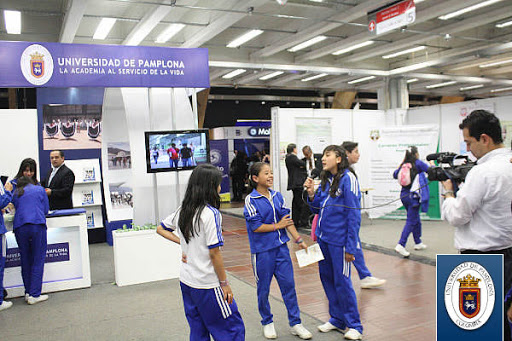
The promotion of health in positive and well-being terms implies conceiving it as the process in which the community increases control over its health and improves it. Universities in this sense have great capacities for their promotion, for example, the Health Fairs, which break traditional unidirectional and passive schemes of health programs.
The Integral Health Program (PSI) of the Universidad Veracruzana, Mexico, implemented health promotion through Health Fairs. However, there was a perception in the university community that its implementation had no effect on the students served. The impact of the Fairs was evaluated through a questionnaire and the strengths of character were identified.
The participation of students in these activities provides them with knowledge and skills to improve their health, as well as to adopt lifestyles consistent with self-care and sustainability. Likewise, the 24 strengths are present in all students, although self-control was the least present strength. Therefore, the Health Fairs are spaces that promote health, by transmitting and appropriating information, at the same time that they approach and educate different audiences in an effective playful way.
Article visits 1360 | PDF visits 155
Downloads
- Rootman I, Goodstadt M, Potvin L. y Springett, J. A framework for Health Promotion Evaluation. WHO Reg Publ Eur Ser. 2001; 92:7-38.
- Muñoz M, Cabieses B. Universidades y promoción de la salud: ¿cómo alcanzar el punto de encuentro? Rev Panam Salud Pública. 2008; 24(2):139–46.
- Fredrickson BL. The Role of Positive Emotions in Positive Psychology. The Broaden-and-Build Theory of Positive Emotions. Am Psychol. 2001; 56(3):218–226.
- Bolte A, Goschke T, Kuhl J. Emotion and intuition: effects of positive and negative mood on implicit judgments of semantic coherence. Psychological Science. 2003; 14:416–421. https://doi.org/10.1111/1467-9280.01456
- Fredrickson B L, Branigan C. Positive emotions broaden the scope of attention and thought-action repertoires. Cogn Emot. 2005; 19(3):313–332. DOI: 10.1080/02699930441000238
- Rowe G, Hirsh JB, Anderson AK, Smith EE. Positive affect increases the breadth of attentional selection. PNAS. 2007; 104(1):383–388. DOI: 10.1073/pnas.0605198104
- Isen AM, Daubman KA, Nowicki GP. Positive affect facilitates creative problem solving. Journal of Personality and Social Psychology. 1987; 52(6):1122–1131.
- Isen AM, Rosenzweig AS, Young MJ. The influence of positive affect on clinical problem solving. Med Decis Making. 1991; 11(3):221–227.
- Estrada CA, Isen AM, Young MJ. Positive affect improves creative problem practice satisfaction in physicians. Motivation and Emotion. 1994; 18:285–299.
- Kuhl J. Emotion, cognition, and motivation: perception, memory, problem-solving, and overt action. Sprache & Kognition. 1983; 2:228–253.
- Kuhl J. A functional-design approach to motivation and self-regulation: the dynamics of personality systems interactions. En: Boekaerts M, Pintrich PR, Zeidner M. (Eds). Handbook of self-regulation (pp. 111-169). San Diego: Academic Press; 2000.
- Ruiz-Lugo L. Formación integral: desarrollo inteletual, emocional, social y ético de los estudiantes. Revista Universidad de Sonora. 2007. 2007:11-13.
- Seligman ME, Ernst R, Gillham K, Reivich K, Linkins M. Positive Education: positive psychology and classroom interventions. Oxford Review of Education. 2009; 35(3):293-311. DOI: 10.1080/03054980902934563.
- Seligman ME, Csikszentmihalyi M. Positive Psychology. An Introduction. American Psychologist. 2000; 55(1):5-14. DOI: 10.1037/0003-066X.55.1.5
- Pérez-Morales AG, Aguirre-Serena ME, Barranca-Enríquez A. Plan Estratégico del PSI Regional. Veracruz: Vicerectoria Región Veracruz Universidad Veracruzana; 2016.
- Pérez-Morales AG, Aguirre-Serena ME, Barranca-Enríquez A, Romo-González T. Proyecto “Comunidad Educativa Integral (CEI) para una vida sana”. Veracruz: Vicerectoria Región Veracruz Universidad Veracruzana; 2018.
- Villaseñor-Galarza A. El gran giro Despertando al Florecer de la Tierra. Scotts Valley: CreateSpace Independent Publishing Platform; 2015.
- Ruiz MC, Ávila C, González D. Proyecto Feria de la Salud. X Reunión de la Red de Popularización de la Ciencia y la Tecnología en América Latina y el Caribe (RED POP - UNESCO) y IV Taller “Ciencia, Comunicación y Sociedad” San José, Costa Rica, 9 al 11 de mayo; 2007.
- Góngora-Coronado EA, Vásquez-Velázquez II, Hernández-Pozo MR, Romo-González T, González-Ochoa R, Gallegos-Guajardo J, et al. Explorando la Vida Buena en México. Las Fortalezas del Carácter y su Relación con la Felicidad. Rev Latin Medicina Conductual. 2019; 9(2):43-55.
- Park N, Peterson C, Seligman MEP. Strengths of Character and Well-Being. Journal of Social and Clinical Psychology. 2004; 23(5):603-619. https://doi.org/10.1521/jscp.23.5.603.50748
- Gomez-Acosta CA. Factores psicológicos predictores de estilos de vida saludable. Rev Salud Pública. 2018; 20(2):155-162. https://doi.org/10.15446/rsap.V20n2.50676
Information