Environmental ethics as the central object of education
Ética ambiental como objeto central de la educación


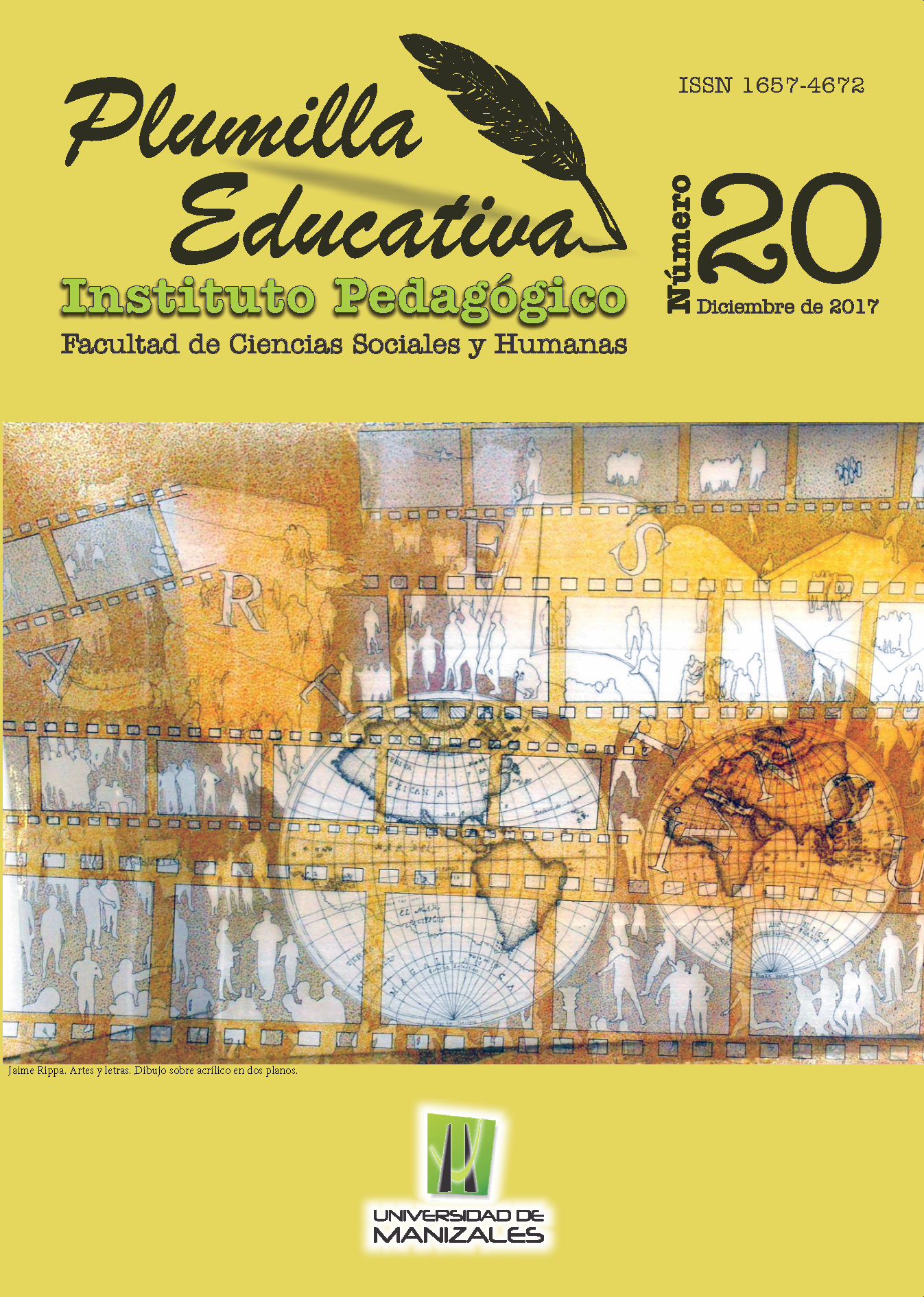
How to Cite
Download Citation
Show authors biography
Most read articles by the same author(s)
- Jesús Edgardo Martínez, Martha Olivia Mesa Restrepo, Luis Humberto Piarpuzán Quiroz, Mario Mejía Valencia, La educación musical: alternativa pedagógica de transformación social , Plumilla Educativa: Vol. 15 No. 1 (2015)
- Mario Mejía Valencia, La interdisciplinariedad en la educación secundaria , Plumilla Educativa: Vol. 3 No. 1 (2004)







This study aims to understand the impact of educational policies in the construction of an environmental awareness, in the population diversity of the municipalities of Bucaramanga, Riosucio and San José del Guaviare. The project was realized in the light of different theoretical perspectives as the philosophical, economic, political, ecological, ethical and educative vision. The type of research is critical-social and hermeneutic with a mixed approach. For this purpose, a sample of 230 participants was taken from active teachers, students of the last educational level of the average and parents or common people whose main characteristic was to have finished secondary education after the year 2000; these participants responded to the survey of 24 items constructed with a Likert scale. A different sample of 45 participants under the same selection conditions answered 12 questions from the structured interview; this allowed them to know their position in relation to the environmental themes boarded. The obtained results revealed that most of the participants need to strengthen their environmental awareness, starting with the construction of significant actions that the government itself poses from its state policies, but which are not being made known in an effective and efficient way in the different Educational institutions, the family and society; As a consequence of this process is evident the crisis of the relation man-nature and the relationship among humans. In conclusion, environmental education is not being fully recognized as a transformative axis of society, due to the lack of reflection on environmental issues from the home, school and society. In this way, the conservation and preservation of Mother Earth are the responsibility of all human beings, from their individual and collective actions, through the appropriation and strengthening of environmental education policies to achieve the creation of an environmental ethics.
Article visits 297 | PDF visits 233
Downloads
Information

















Keywords
ISSN impreso: 1657-4672
ISSN electrónico: 2619-1733