Abordagens disponíveis para a inclusão de textos literários nas aulas de inglês como segunda língua e língua estrangeira: revisão sistemática


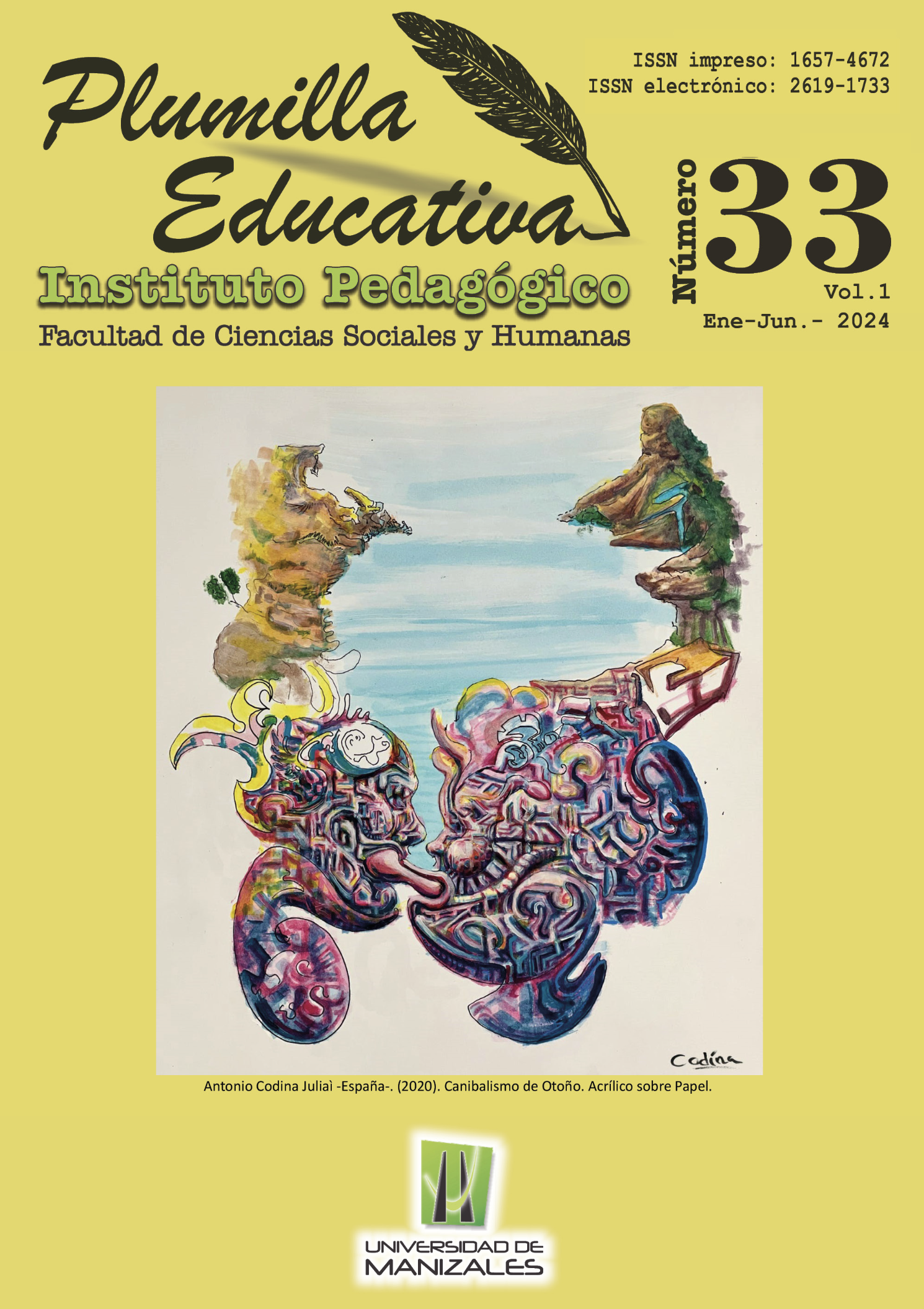
Como Citar
Baixar Citação

Este trabalho está licenciado sob uma licença Creative Commons Attribution-NonCommercial-ShareAlike 4.0 International License.

Este trabajo pretende describir los enfoques de enseñanza de la literatura aplicados por los profesores en el aula de ESL. Por otro lado, busca profundizar en los retos que plantea la aplicación de enfoques adecuados de enseñanza de la literatura en el aula de inglés. Proponemos una revisión sistemática mediante el análisis temático de veintidós trabajos científicos publicados entre 2003 y 2022 en revistas especializadas. Para ello, se aplican criterios específicos de inclusión y exclusión de muestras durante el proceso de selección de la búsqueda de artículos. Durante la selección de la muestra se utilizaron palabras clave como estrategias de enseñanza de ESL, enfoques de enseñanza de literatura, retos en la enseñanza de literatura, enseñanza y aprendizaje de ESL y pedagogía de segundas lenguas con el objetivo de alcanzar muestras y hallazgos significativos en torno a los enfoques disponibles y retos a los que se enfrentan los docentes.
Visão geral 481 | Visualizações de PDF 387
Downloads
- Anthony, E. M. 1963. Approach, Method and Technique. English Language Teaching. 17: 63-67.
- Arafah, B. 2019. The Idol: A Model for Incorporating Literature in ELT. KNE Social Sciences. 43-59.
- Carter, R. y Long, M. 1991.Teaching Literature. London: Longman.
- Divsar, H. 2014. A Survey of the Approaches Employed in Teaching Literature in an EFL Context. Modern Journal of Language Teaching Methods. 4(1): 74.
- Duff, A., y Maley, A. 1990. Literature. Oxford: Oxford University Press.
- Ellis, R. 2003. Task-based Language Learning and Teaching. Oxford, Oxford University Press.
- Fisher, R. 2003. Teaching Thinking. London: Continuum.
- Garrote, M. (2009). Didáctica de segundas lenguas y lenguas extranjeras en Educación Infantil y Primaria. Madrid: Paraninfo.
- Hwang, D., y Embi, M. A. 2007. Approaches Employed by Secondary School Teachers to Teaching the Literature Component in English. Malaysian Journal of Educators and Education. 22: 1-23.
- Kaowiwattanakul, S. 2021. CEFR Based Learning Approach: Using Literature to Enhance EFL Students' Reading Skills and Critical Thinking Skills. English
- Language Teaching. 14(11): 66-79.
- Kirschner, P., Sweller, J., y Clark, R. E. 2006. Why Unguided Learning Does Not Work: An Analysis of the Failure of Discovery Learning, Problem-based Learning, Experiential Learning and Inquiry- Based Learning. Educational Psychologist. 41(2): 75-86.
- Ling, S., Chen, S., E. 2016. Approaches to the Teaching of English Literature Preferred by Students in Selected International Secondary Schools. International Journal of Language Education and Applied Linguistics. Retrieved from https://doi.org/10.15282/ijleal.v4.481.
- Macías , M. (2022). Computer-Assisted Language Learning (CALL) and multiple intelligences theory: Curricular design in vocational formation in Spain. Journal of Digital Educational Technology, 3(2), ep2306. https://doi.org/10.30935/jdet/13237
- Macías, M. (2023). Innovation and ICTs in ESL: Exploring the Role of the Podcast as a Learning Enhancing Tool in Innovation Projects. Integrated Journal for Research in Arts and Humanities, 3(2), 70–77. https://doi.org/10.55544/ijrah.3.2.12
- Nair, G. K. S., Roszainora Setia, Siti Norliana Ghazali, Sabapathy, E., Razita
- Mohamad, Myshithah Mohamad Ali, y Nor Syamimi Iliani Che Hasan. 2012. Can Literature Improve English Proficiency? The Students’ Perspective. Asian Social Science. 8(12): 21.
- Perfetti, C. A., y Stafura, J. 2014. Word Knowledge in a Theory of Reading Comprehension. Scientific Studies of Reading. 18: 22-37. Doi:10.1080/10888438.2013.827687.
- Perfetti, C. A., Landi, N., y Oakhill, J. 2005. The Acquisition of Reading Comprehension Skill. In M. J. Snowling y C. Hulme (Eds.). The Science of Reading: A Handbook Malden, MA: Blackwell. 227- 247.
- Radzuwan Abdul Rashid., Vethamani, M. E., y Shireena Basree. 2010. Approaches Employed by Teachers in Teaching Literature to Less Proficient Students in Form 1 and Form 2. English Language Teaching. 3(4): 87-99.
- Ridoutt, B.G., Pfister, S., Manzardo, A. et al. Area of concern: a new paradigm in life cycle assessment for the development of footprint metrics. Int J Life Cycle Assess 21, 276–280 (2016). https://doi.org/10.1007/s11367-015-1011-7
- San Jose, A. E., y Galang, J. G. 2015. Teaching Strategies in Teaching Literature: Students in Focus. International Journal of Education and Research. 3(4): 41-50.
- Savvidou, C. 2004. An Integrated Approach to Teaching Literature in the EFL Classroom. The Internet TESL Journal. 10(12): 1-6.
- Sii, L., y Chen, S.E. 2016. Types of English Literature Teaching Approaches Preferred by Teachers in Secondary Schools. International Journal of Language Education and Applied Linguistics. 4: 1-14
- Tonia, Grace-Ganta. 2015. The Strengths and Weaknesses of Task Based Learning (TBL) Approach. Scholarly Research Journal for Interdisciplinary Studies. 3(16): 2760-2771.
- Ur, P. A. 1991. Course in Language Teaching. Cambridge, United Kingdom: Cambridge University Press.
- Wang, E. 2003. Integrating Moral Education in the Study of Literature. English Quarterly. 35: 38. Toronto: Canadian Council of Teachers of English Language Arts.
Informações


















Palavras-chave
ISSN impreso: 1657-4672
ISSN electrónico: 2619-1733