Prevalence, incidence, clinical manifestations and factors associated with pediculosis capitis in nursery school children of a low-income area from Colombia
Prevalence, incidence, clinical manifestations and factors associated with pediculosis capitis in nursery school children of a low-income area from Colombia


How to Cite
Download Citation

Show authors biography







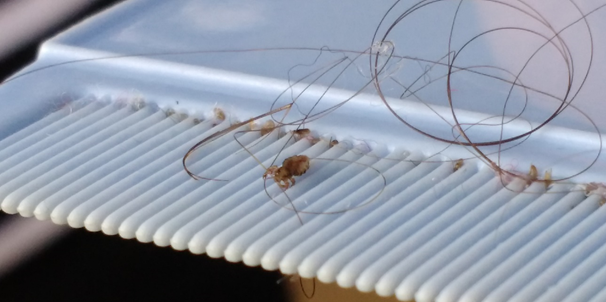
Objectives: epidemiology of pediculosis capitis was determined. The worldwide distributed ectoparasite, Pediculus humanus capitis, causes pediculosis capitis. Although risk factors for children are known, studies about its clinical description are rare. Materials and methods: cross-sectional descriptive study based on a sample (356 children) aged 1 to 5 of a low-income area from Popayán, Colombia. Two observations were practiced: at the beginning and at the end of the year 2017. Hair, scalp, lymphatic nodules and frontotemporal, parietal, occipital, nuchal and retroauricular cutaneous regions were examined. Insects were mechanically removed by wetting the hair and using lice combs. Nits, nymphs and adult lice were gathered and stored for future studies. Results: prevalence and incidence of pediculosis capitis were 5.1 % and 20.2 %, respectively. The associated variables were mainly infestation antecedent, long hair, female sex and eliminating with shampoo (95 % CI: 15-20). Clinical variables: presence of adenopathies, hair scalp inflammation and nuchal adenopathies (25-35 %); nits and lice localized in occipital region, hair scalp itching and retroauricular itching (20-25 %). Conclusions: pediculosis capitis affects those nursery children studied. It is important to know the variables associated for prevention, control and eradication of head lice infestation.
Article visits | PDF visits
Downloads
- Devera R. Epidemiología de la pediculosis capitis en América Latina. Saber 2012; 24(1):25-36.
- Downs AMR, Stafford KA, Coles GC. Head Lice: Prevalence in Schoolchildren and Insecticide Resistance. Parasitol Today 1999; 15(1):1-4. DOI: https://doi.org/10.1016/S0169-4758(98)01361-1
- Madke B, Khopkar U. Pediculosis capitis: an update. Indian J Dermatol Venereol Leprol 2012; 78(4):429–38. DOI: https://doi.org/10.4103/0378-6323.9807
- Candy K, Amanzougaghene N, Izri A, Brun S, Durand R, Louni M, et al. Molecular Survey of Head and Body Lice, Pediculus humanus, in France. Vector Borne Zoonotic Dis 2018; 18(5):243–51. DOI: https://doi.org/10.1089/vbz.2017.2206
- Louni M, Mana N, Bitam I, Dahmani M, Parola P, Fenollar F, et al. Body lice of homeless people reveal the presence of several emerging bacterial pathogens in northern Algeria. PLoS Negl Trop Dis 2018; 12(4):e0006397. DOI: https://doi.org/10.1371/journal.pntd.0006397
- López D, Medina A, Mosquera S, Vásquez L. Actualización y perspectiva integrada de la pediculosis. Rev Asoc Colomb Dermatol 2017; 25(1):38–48: DOI: https://doi.org/10.29176/2590843X.320
- Centers for Disease Control and Prevention. Head lice - Epidemiology & Risk Factors. Atlanta: Centers for Disease Control and Prevention; 2013.
- Falagas ME, Matthaiou DK, Rafailidis PI, Panos G, Pappas G. Worldwide Prevalence of Head Lice. Emerg Infect Dis 2008; 14(9):1493-4. DOI: https://doi.org/10.3201/eid1409.080368
- Rassami W, Soonwera M. Epidemiology of pediculosis capitis among schoolchildren in the eastern area of Bangkok, Thailand. Asian Pac J Trop Biomed 2012; 2(11):901–4. DOI: https://doi.org/10.1016/S2221-1691(12)60250-0
- Patiño-Camargo L. Brote epidémico de tifo negro o exantemático en Bogotá. Rev Fac Med 1941; 10(6):425–41. DOI: https://doi.org/10.15446/revfacmed
- Groot H, Mayoral P, Martínez L. Tifo exantemático en Nariño. Rev Fac Med 1941; 9(11):770–8. DOI: https://doi.org/10.15446/revfacmed
- Patiño-Camargo L. El tifo exantemático en la hoya del río Cauca. Rev Fac Med 1942; 11(1):13–21. DOI: https://doi.org/10.15446/revfacmed
- Quintero Vélez J, Hidalgo M, Rodas González J. Rickettsiosis, una enfermedad letal emergente y re-emergente en Colombia. Univ Sci 2012; 17(1):82–99.
- Davarpanah MA, Rasekhi Kazerouni A, Rahmati H, Neirami RN, Bakhtiary H, Sadeghi M. The prevalence of pediculus capitis among the middle schoolchildren in Fars Province, southern Iran. Casp J Intern Med 2013; 4(1):607–10.
- Alcaldía de Popayán (Colombia), Popayán. Popayán: Alcaldía de Popayán (Colombia); 2012.
- Frankowski BL, Bocchini JA. Clinical Report—Head Lice. Pediatrics 2010; 126(2): 392-403. DOI: https://doi.org/10.1542/peds.2010-1308
- Paller A, Mancini A. Lice (pediculosis). 4° ed. New York: Elsevier Saunders; 2011.
- Devore CD, Schutze GE. Head Lice. Pediatrics 2015; 135 (5): e1355-e1365. DOI: https://doi.org/10.1542/peds.2015-0746
- Molina-Garza ZJ, Galaviz-Silva L. Pediculus capitis in schoolchildren of the urban area of Nuevo León, México: Analyses of associated factors. Biomédica 2017; 37(3):333–40. DOI: https://doi.org/10.7705/biomedica.v37i3.3311
- Salehi S, Ban M, Motaghi M. A Study of Head Lice Infestation (Pediculosis Capitis) among Primary School Students in the Villages of Abadan in 2012. Int J Community Based Nurs Midwifery 2014; 2(3):196–200.
- Mumcuoglu KY, Meinking TA, Burkhart CN, Burkhart CG. Head louse infestations: the “no nit” policy and its consequences. Int J Dermatol 2006; 45(8):891–6. DOI: https://doi.org/10.1111/j.1365-4632.2006.02827.x
- Liao C-W, Cheng P-C, Chuang T-W, Chiu K-C, Chiang I-C, Kuo J-H, et al. Prevalence of Pediculus capitis in schoolchildren in Battambang, Cambodia. J Microbiol Immunol Infect 2018; 52(4):585-591. DOI: https://doi.org/10.1016/j.jmii.2017.09.003
- López-Valencia D, Medina-Ortega A, Vásquez-Arteaga L. Prevalence and variables associated with pediculosis capitis in kindergarten children from Popayán, Colombia. Rev Fac Med 2017; 65(3):425–8. DOI: http://dx.doi.org/10.15446/revfacmed.v65n3.58812
- Khamaiseh AM. Head Lice among Governmental Primary School Students in Southern Jordan: Prevalence and Risk Factors. J Glob Infect Dis 2018; 10(1):11–5. DOI: https://doi.org/10.4103/jgid.jgid_19_17
- Gulgun M, Balci E, Karaoglu A, Babacan O, Turker T. Pediculosis capitis: prevalence and its associated factors in primary school children living in rural and urban areas in Kayseri, Turkey. Cent Eur J Public Health 2013; 21(2):104–8. DOI: https://doi.org/10.21101/cejph.a3750
- Mumcuoglu KY, Klaus S, Kafka D, Teiler M, Miller J. Clinical observations related to head lice infestation. J Am Acad Dermatol 1991; 25(2Pt1):248–51. DOI: https://doi.org/10.1016/0190-9622(91)70190-D
- Ramadas AA, Jose R, Varma B, Chandy ML. Cervical lymphadenopathy: Unwinding the hidden truth. Dent Res J (Isfahan) 2017; 14(1):73–8.
- Mumcuoglu KY, Danilevich M, Zelig O, Grinbaum H, Friger M, Meinking TL. Effects of blood type and blood handling on feeding success, longevity and egg production in the body louse, Pediculus humanus humanus. Med Vet Entomol 2011; 25(1):12–6. DOI: https://doi.org/10.1111/j.1365-2915.2010.00897.x
- Lesshafft H, Baier A, Guerra H, Terashima A, Feldmeier H. Prevalence and Risk Factors Associated with Pediculosis Capitis in an Impoverished Urban Community in Lima, Peru. J Glob Infect Dis 2013; 5(4):138–43. DOI: https://doi.org/10.4103/0974-777X.121994
- Cazorla D, Ruiz A, Acosta M. Estudio clínico-epidemiológico sobre pediculosis capitis en escolares de Coro, estado Falcón, Venezuela. Invest Clin 2007; 48(4):445–57.
- Escobar M, Ortega M, Muñoz V, Vargas M. Tiña pedis y otras entidades dermatológicas en un grupo de niños con retraso mental. Iatreia 1991; 4(1):11–3.
- Ríos S, Fernández J, Rivas F, Sáenz M, Moncada L. Prevalencia y factores asociados a la pediculosis en niños de un jardín infantil de Bogotá. Biomédica 2008; 28(2):245–51. DOI: https://doi.org/10.7705/biomedica.v28i2.95
- González C, Hernández J, Fernández J, Chaves J, Orozco V, Vásquez L. Frecuencia de pediculosis en los escolares de la comuna 8 de la ciudad de Popayán. Infectio 2001; 5:1–2.
- Harris J, Crawshaw JG, Millership S. Incidence and prevalence of head lice in a district health authority area. Commun Dis public Heal 2003; 6(3):246–9.
- Castro D del C, Abrahamovich AH, Cicchino AC, Rigoni AM, Raffaeli C, Barrio A de. Prevalencia y estacionalidad de la Pediculosis capitis en la población infante-juvenil de la region sanitaria, Buenos Aires, Argentina. Revista de Saúde Pública 1994; 28(4):295–9. DOI: http://dx.doi.org/10.1590/S0034-89101994000400009
- AlBashtawy M, Hasna F. Pediculosis capitis among primary-school children in Mafraq Governorate, Jordan. East Mediterr Health J 2012; 18(1):43–8.
- Cetinkaya U, Hamamci B, Delice S, Ercal BD, Gucuyetmez S, Yazar S, et al. The prevalence of Pediculus humanus capitis in two primary schools of Hacilar, Kayseri. Turkiye parazitolojii Derg 2011; 35(3):151–3. DOI: https://doi.org/10.5152/tpd.2011.38
- Doroodgar A, Sadr F, Paksa A, Mahbobe S, Doroodgar M, Sayyah M, et al. The prevalence of pediculosis capitis and relevant factors in primary school students of Kashan, Central Iran. Asian Pacific J Trop Dis 2014; 4(6):500–4. DOI: https://doi.org/10.1016/S2222-1808(14)60616-2
- Nazari M, Saidijam M. Pediculus capitis infestation according to sex and social factors in Hamedan-Iran. Pakistan J Biol Sci PJBS 2007; 10(19):3473–5. DOI: https://doi.org/10.3923/pjbs.2007.3473.3475
- Moshki M, Zamani-Alavijeh F, Mojadam M. Efficacy of Peer Education for Adopting Preventive Behaviors against Head Lice Infestation in Female Elementary School Students: A Randomised Controlled Trial. PLoS One 2017; 12(1):e0169361. DOI: https://doi.org/10.1371/journal.pone.0169361
Information