Samuel Eduardo Nossa Ávila1, Sebastián Franco González2, Karen Daniela Gómez Muñoz3, Carlos Fernando Camargo Salas4
Recibido para publicación: 23-07-2025. Versión corregida: 17-09-2025. Aprobado para publicación: 25-02-2026.
Modelo de citación:
Nossa Ávila S.E., Franco González S., Gómez Muñoz K.D., Camargo Salas C.F. Acute myocardial in- farction type 2 without ST elevation following administration of butylbromide hyoscine: case report. Arch Med (Manizales). 2026;26(1). https://doi.org/10.30554/archmed.26.1.5465.2026
We report the case of a woman in her eighth decade who developed atrial fibrillation and a type 2 non–ST-elevation myocardial infarction (type 2 NSTEMI) after intravenous administration of 20 mg hyoscine butylbromide as premedication for colonoscopy. Co- ronary angiography showed no obstructive lesions.
Main findings: Onset was sudden, 2 minutes after administration of hyoscine butylbro- mide, with oppressive retrosternal chest pain radiating to the jaw, dyspnea, diaphoresis and palpitations. Physical examination revealed marked hypotension and tachycardia. Electrocardiogram demonstrated new-onset atrial fibrillation without ischemic ST–T changes. High-sensitivity troponin T was significantly elevated and transthoracic echo- cardiography showed segmental wall-motion abnormalities of the basal anterolateral wall.
Diagnosis, interventions and outcome: A diagnosis of type 2 NSTEMI secondary to unstable atrial fibrillation with rapid ventricular response—likely triggered by an adverse reaction to hyoscine butylbromide—was made. The patient underwent coronary cathe- terization without evidence of coronary stenosis. Management included hemodynamic support with intravenous fluids, beta-blocker therapy, statin therapy, initial antiplatelet therapy and anticoagulation. She had a favorable clinical course and was discharged on a beta-blocker and oral anticoagulation.
Médico Cirujano, Universidad de Ciencias Aplicadas y Ambientales (UDCA). ORCID: 0009-0009-5753-3280
Médico y Cirujano, Universidad de Antioquia. Especialista en Medicina de Urgencias, Universidad de Caldas. Emergenciólogo, Los Cobos Medical Center, Bogotá. ORCID: 0009-0000-8593-0036
Química Farmacéutica, Universidad Nacional de Colombia. ORCID: 0009-0009-6841-0413
Estudiante de Medicina, Universidad El Bosque. ORCID: 0009-0002-7294-3596. Correo: cfcs05@hotmail.com
Nossa Ávila S.E., Franco González S., Gómez Muñoz K.D., Camargo Salas C.F. Acute myocardial infarction type 2 without ST elevation following administration of butylbromide hyoscine: case report.
Arch Med (Manizales). 2026;26(1)
Acute myocardial infarction may result from mechanisms other than atherosclerotic coronary obstruction, notably supply–demand mismatch.
Hyoscine butylbromide, although commonly associated with xerostomia, constipation and nausea, can be associated with serious cardiovascular adverse events that require prompt recognition and management.
Retrosternal chest pain requires a broad differential diagnosis (including pulmo- nary embolism and acute coronary syndromes); an accurate and timely diagnostic approach is essential.
Se presenta el caso de una mujer en la octava década de la vida que desarrollo episodio de fibrilación auricular e infarto agudo de miocardio sin elevación del ST (IAMSEST) tipo 2 tras la administración intravenosa de 20 mg de butilbromuro de hioscina como premedicacion para colonoscopia sin hallazgos en la arteriografía coronaria.
Hallazgos principales: Fue de inicio subito 2 minutos posteriores a la aplicación del butil bromuro hioscina iniciado como un dolor torácico retroesternal opresivo irradiado a mandíbula, disnea, diaforesis y palpitaciones. Al examen físico con hipotensión marcada y taquicardia. A los paraclínicos con evidencia de un electrocardiograma con fibrilación auricular de novo, no signos de isquemia. Troponina T ultrasensible con aumento significativo y ecocardiograma con trastornos segmentarios de la con- tractilidad basal anterolateral.
Diagnósticos, intervenciones y resultados: Se considero un IAMSEST tipo 2 se- cundario a una fibrilación auricular con respuesta ventricular rápida inestable, secun- dario a una reacción adversa al butilbromuro de hioscina. Fue llevada a cateterismo coronario sin evidencia de estenosis coronaria por lo que se consideró manejo con líquidos endovenosos, betabloqueo, estatina, antiagregación inicial y anticoagulación. Adicionalmente por los hallazgos y la evolución favorable egreso con betabloqueador y anticoagulación oral.
El infarto agudo de miocardio es una condición clínica que puede ser ocasionada por causas diferentes a la enfermedad coronaria, como cambios en la oferta y demanda de oxígeno miocárdico.
El butilbromuro de hioscina tiene efectos adversos que son más frecuentes como lo pueden ser xerostomía, constipación y nauseas, sin embargo, los efectos ad- versos cardiovasculares pueden ser presentados y tienen que ser manejados de manera adecuada.
Nossa Ávila S.E., Franco González S., Gómez Muñoz K.D., Camargo Salas C.F. Acute myocardial infarction type 2 without ST elevation following administration of butylbromide hyoscine: case report.
Arch Med (Manizales). 2026;26(1)
El dolor torácico retroesternal es un síntoma que puede ser atribuido a diferentes causas como lo es el tromboembolismo pulmonar o el infarto agudo de miocardio, a razón de esto es esencial el manejo y enfoque diagnostico acertado.
Palabras clave: Infarto, hioscina, electrocardiograma, angiografía, adversos, troponina.
Relatamos o caso de uma mulher na oitava década de vida que desenvolveu fibrilação atrial e infarto agudo do miocárdio sem supradesnivelamento do segmento ST (IAM- SSST) tipo 2, após administração intravenosa de 20 mg de butilbrometo de hioscina como premedicação para colonoscopia. A angiografia coronária não revelou lesões obstrutivas.
Achados principais: O início foi súbito, 2 minutos após a administração do butilbrometo de hioscina, manifestando-se por dor torácica retroesternal opressiva irradiada à mandíbula, dispneia, diaforese e palpitações. Ao exame físico havia hipotensão marcada e taquicardia. O eletrocardiograma evidenciou fibrilação atrial de novo sem alterações isquêmicas de ST–T. A troponina T de alta sensibilidade apresentou elevação significativa e o ecocardiograma transtorácico mostrou alterações segmentares do movimento parietal na região basal anterolateral.
Diagnóstico, intervenções e evolução: Foi estabelecido diagnóstico de IAMSSST tipo 2 secundário a fibrilação atrial com resposta ventricular rápida instável, provavel- mente desencadeada por reação adversa ao butilbrometo de hioscina. A paciente foi submetida a cateterismo coronário sem evidência de estenose coronária. A conduta incluiu suporte hemodinâmico com reposição volêmica endovenosa, betabloqueador, estatina, terapia antiplaquetária inicial e anticoagulação. Evoluiu favoravelmente e recebeu alta com betabloqueador e anticoagulação oral.
Infarto agudo do miocárdio pode decorrer de mecanismos distintos da doença ate- rosclerótica coronariana, como desequilíbrio entre oferta e demanda de oxigênio miocárdico.
Butilbrometo de hioscina, embora frequentemente associado a efeitos adversos como xerostomia, constipação e náuseas, pode provocar eventos cardiovasculares graves que exigem reconhecimento e manejo imediato.
A dor torácica retroesternal possui um amplo diagnóstico diferencial (incluindo tromboembolismo pulmonar e síndromes coronarianas agudas); portanto, uma abordagem diagnóstica rápida e precisa é essencial.
Nossa Ávila S.E., Franco González S., Gómez Muñoz K.D., Camargo Salas C.F. Acute myocardial infarction type 2 without ST elevation following administration of butylbromide hyoscine: case report.
Arch Med (Manizales). 2026;26(1)
Hyoscine butylbromide is an antimuscarinic drug indicated for muscle spasms in the gastro- intestinal tract [1]. Its injection can cause serious cardiovascular adverse effects in patients with underlying heart disease, and there are even international reports of associated deaths [2,3]. These include AMI, as it can cause type 2 AMI in a few cases. Up to 26% of type 2 AMI cases are secondary to cardiac arrhythmia, mainly tachyarrhythmias such as atrial fibrillation [4]. Hyoscine butylbromide has been prescribed as a pre-colonoscopy treatment to reduce dis- comfort during the procedure [5,6]. This report seeks to provide clinical evidence on a rarely described adverse cardiovascular reaction associated with hyoscine butylbromide, con- trasting the case with existing literature and demonstrating possible pathophysiological mechanisms, providing recommendations for evaluation and management.
We report a case of collapsing atrial fibrillation with hypotension and type 2 acute myocardial infarction [7] following intravenous administra- tion of hyoscine as premedication for colonos- copy. The patient was a woman in her 80s who attended for a scheduled colonic polypectomy by colonoscopy. Prior to the procedure, 20 mg
of hyoscine butylbromide was prescribed in- travenously. Two minutes after administration, she presented with sudden-onset chest pain, oppressive, radiating to the jaw, associated with dizziness, dyspnoea, diaphoresis, and palpita- tions. On physical examination, she was alert, hypotensive, and tachycardic, so volumetric resuscitation with crystalloid intravenous fluids was initiated with a slight response, and she was transferred to the emergency department. She was admitted to the resuscitation room with the following physical examination findings: Glasgow Coma Score 15/15, blood pressure 56/36 mmHg, TAM 41 mmHg, heart rate 105 bpm, respiratory rate 20 rpm, temperature 35.5°C, oxygen saturation 93%, Fio2 24%.
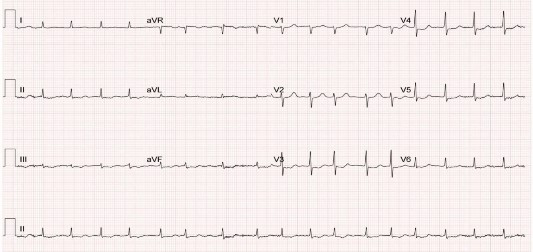
Electrocardiogram shows atrial fibrillation with rapid ventricular response, with no electro- cardiographic traces suggestive of acute coro- nary injury or myocardial necrosis. (Figure 1)
Figure 1. Electrocardiogram (ECG) — Date: [10/11/2021]. ECG recorded after intravenous administration of 20 mg of hyoscine butylbro- mide. Shows de novo atrial fibrillation with rapid ventricular response, without ST segment ele- vations or depressions or pathological Q waves. Acquisition parameters:
Standard 12-lead leads, speed 25 mm/s, calibration 10 mm/mV.
Nossa Ávila S.E., Franco González S., Gómez Muñoz K.D., Camargo Salas C.F. Acute myocardial infarction type 2 without ST elevation following administration of butylbromide hyoscine: case report.
Arch Med (Manizales). 2026;26(1)
The patient is considered to have a diagnostic impression of cardiac chest pain, type 2 acute myocardial infarction without ST segment el- evation (GRACE Score: 165 points Killip and Kimbal II TIMI Score: 1 point), de novo atrial fibrillation with rapid ventricular response sec- ondary to adverse effect of hyoscine butylbro- mide (CHA2DS2 VASC: 4 points HASBLED: 2 points)
Management with intravenous Ringer’s lactate is indicated, and metoprolol 50 mg, atorvastatin 80 mg, acetylsalicylic acid 100 mg, clopidogrel 75 mg, and enoxaparin 60 mg subcutaneously are administered orally.
Paraclinical tests | Interpretation |
Blood glucose measurement | 70 mg/dl |
Complete blood count | Normal |
Serum creatinine | 0.9 mg/dl |
Ultra-sensitive troponin T | 0.076 positive (reference value less than 0.014) |
D-dimer | 11.221 positive (reference value 500) |
Arterial blood gases | Metabolic acidaemia, without oxygenation disorder or hyperlactataemia |
Chest X-ray | Bilateral parahilar peribronchovascular interstitial opacities. Left basal atelectasis. Cardio-mediastinal silhouette magnified by projection. Rest normal. |
Due to elevated D-dimer levels and the sudden onset of dyspnoea and chest pain, pulmonary thromboembolism was suspected. A pulmonary artery angiography, troponin test, cardiology assessment, and transthoracic echocardiogram were ordered, yielding the following results:
Paraclinical tests | Interpretation |
Ultra-sensitive troponin T | 0.606 delta of 690% |
Pulmonary artery angiography | Negative for TEP |
Trans-thoracic echocardiogram | Left ventricle of normal size with segmental disorders of ANTEROLATERAL BASAL contractility and preserved ventricular systolic function, LVEF 55%. |
She was transferred to the Coronary Care Unit, where emergency percutaneous coro- nary intervention (PCI) was performed using the IAMSEST technique, with coronary arte- riography showing no evidence of stenosis or obstruction (Figure 2), without the need for balloon angioplasty or stenting. The pa- tient’s outcome was favourable, and she was discharged on beta-blocker therapy and oral anticoagulation.
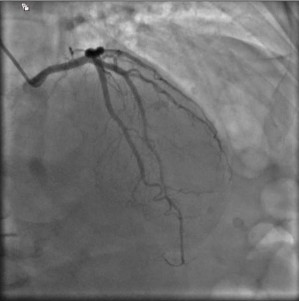
Figure 2. Coronary arteriography — Date: [10/11/2021]. Coronary arteriography performed after the diagnosis of AMI. Coronary projections showing absence of angiographic obstructive stenosis in the main epicardial arteries. No angioplasty or stenting was performed.
Nossa Ávila S.E., Franco González S., Gómez Muñoz K.D., Camargo Salas C.F. Acute myocardial infarction type 2 without ST elevation following administration of butylbromide hyoscine: case report.
Arch Med (Manizales). 2026;26(1)
Hyoscine butylbromide contains a nitrogen molecule with four different bonds to various chemical groups, making it a quaternary ammo- nium derivative of hyoscine with a rapid-onset anticholinergic effect [8] The mechanism of action of anticholinergics is non-selective com- petitive antagonism of muscarinic acetylcholine receptors[9] . Five subtypes of muscarinic receptors have been identified: M1 receptors are found in the autonomic ganglia, salivary and gastric glands; M2 receptors are found predominantly in the heart; M3 receptors are involved in smooth muscle contraction, acetyl- choline-mediated vasodilation, control of secre- tory glands and ocular accommodation; their activation induces emesis and their antagonism has antiemetic properties[10]. The M4 and M5 subtypes, predominantly expressed in the CNS, have actions at various levels [11].
In 2017, the Medicines and Healthcare prod- ucts Regulatory Agency in the United Kingdom reported nine cases of patients who died after re- ceiving an injection of BB Hyoscine. In most cas- es, the adverse reaction was reported as cardiac arrest. It also reported that hyoscine butylbro- mide injection can cause adverse effects includ- ing tachycardia, hypotension, and anaphylaxis. These effects may be more severe in patients with underlying heart disease. Several reports have indicated that anaphylaxis is more likely to be fatal in patients with underlying coronary artery disease compared to those without [11]
In 2018, a case report was published in Neiva, Colombia, on the occurrence of Kounis syndrome, which is characterised by cardiac involvement secondary to an allergic response following the administration of hy- oscine and dipyrone BB. In this case, the pa- tient presented with chest pain accompanied by clinical manifestations of anaphylaxis. An electrocardiogram was performed, showing ST segment depression. [12] It is important to clarify that our patient had no signs or symp- toms of anaphylaxis and also had a cardiac catheterisation report with no evidence of coronary lesions, which rules out type 1 acute myocardial infarction. No drug interactions or causes related to prescription, dispensing, suitability or administration that could have led to the reaction were identified. A thorough re- view of the literature was conducted, revealing that most existing reports are associated with colonoscopy under sedation, which would in- troduce a bias in determining the causality of the adverse effect given the drug interaction with the sedative. However, in this case, only hyoscine butylbromide was administered. To our knowledge, the above supports the hypothesis that this is the first reported case of a serious cardiovascular adverse effect caused by a single administration of hyoscine butylbromide, triggering collapsing atrial fibril- lation with type 2 non-ST-segment elevation acute myocardial infarction in a patient with no underlying heart disease, and ruling out other causes.
Nossa Ávila S.E., Franco González S., Gómez Muñoz K.D., Camargo Salas C.F. Acute myocardial infarction type 2 without ST elevation following administration of butylbromide hyoscine: case report.
Arch Med (Manizales). 2026;26(1)
Sanofi-Aventis New Zealand Limited. Ficha técnica de Buscopan y Buscopan Forte. 2017. Available in: Available in: https://www.buscopan.com/dam/jcr:d136c436-46d9-4c8f-9062-976fa7ad8582/Buscopan%2010mg%20 PIL%20(Nov%202024).pdf
Medicines and Healthcare products Regulatory Agency. Hyoscine butylbromide (Buscopan) injection: risk of serious adverse effects in patients with underlying cardiac disease [Internet]. 2017 [citado el 19 de agosto de 2025]. Available in: https://www.gov.uk/drug-safety-update/hyoscine-butylbromide-buscopan-injection-risk-of-serious- adverse-effects-in-patients-with-underlying-cardiac-disease
Saunders BP, Elsby B, Boswell AM, Atkin W, Williams CB. Intravenous antispasmodic and patient-controlled analgesia are of benefit for screening flexible sigmoidoscopy. Gastrointest Endosc.1995;42(2):123–7. https://doi.org/10.1016/S0016-5107(95)70067-6
Saunders BP, Williams CB. Premedication with intravenous antispasmodic speeds colonoscope insertion. Gas- trointest Endosc.1996;43(3):209–11. https://doi.org/10.1016/S0016-5107(96)70317-6
Shaheen NJ, Robertson DJ, Crosby MA, Furs SJ, May DT, Harlan WR, et al. Hyoscyamine as a pharma- cological adjunct in colonoscopy: a randomized, double blinded, placebo-controlled trial. Am J Gastroente- rol.1999;94(10):2905–8. https://doi.org/10.1111/J.1572-0241.1999.01435.X
Comentarios al consenso ESC 2018 sobre la cuarta definición universal del infarto de miocardio. Rev Esp Car- diol.2019;72(1):10–5. https://doi.org/10.1016/J.RECESP.2018.11.009
Fry ENS. Hyoscine butylbromide: a useful premedicant. Anaesthesia. 1975;30(4):549–50. https://doi.org/10.1111/J.1365-2044.1975.TB00904.X
Brunton L, Hilal R, Knollmann B. Goodman & Gilman’s: The Pharmacological Basis of Therapeutics, 13e [Internet]. 2017 [citado el 19 de agosto de 2025].
Available in: https://accessmedicine.mhmedical.com/book.aspx?bookid=2189
Flood P, Rathmell JP, Shafer S. Stoelting’s Pharmacology and Physiology in Anesthetic Practice, 5e. Lippincott Wi- lliams & Wilkins; 2015. p.341–49. Available in: https://anesthesiology.lwwhealthlibrary.com/book.aspx?bookid=1357
Galindo LA, Andrade MJ, Mateus MJ, González N, Casanova A, Aguilera M. Hyoscine butyl bromide useful in the management of perioperative bradycardia? Rev. Chil. Anest. 2023;52(2):152–7. https://doi.org/10.25237/revchilanestv5221121154
Cristhian C, Ramos FR, Méndez-Betancourt JL, Ramirez-Ramos CF, López-Guevara OA, Osorio-Carmona HE. Reporte de casos. Síndrome de Kounis, a propósito de un caso Kounis syndrome, apropos of a case. Acta Med Peru. 2018;35(1):65–70.
Available in https://www.researchgate.net/publication/339082430_Sindrome_de_Kounis_a_proposito_de_un_caso