Harold Tinoco Giraldo1
Recibido para publicación: 11-03-2024. Versión corregida: 21-10-2024. Aprobado para publicación: 30-10-2024.
Model of citation:
Tinoco Giraldo H. Pathways to inclusion: can gamified reflections and mentoring find acceptance at the end of the LGBTQIA+ Rainbow? Arch Med (Manizales). 2025;25(1). https://doi.org/10.30554/archmed.25.1.5226.2025
Background: Despite increasing acceptance of LGBTQIA+ individuals, particularly on university campuses, the process of coming out remains challenging and potentially isolating for many young adults. Supportive relationships, especially mentorship, could significantly benefit LGBTQIA+ individuals. Objective: To introduce and evaluate “Rain- bow Pathways,” a gamified mentoring experience designed to provide guidance for LGBTQIA+ persons in coming out and navigating complex social situations, including mental health challenges and dating. Method: Qualitative data was collected and an- alyzed from 33 university students who participated in the “Rainbow Pathways” game. Results: Participants reported that “Rainbow Pathways” was accessible, offered social support, and provided educational insights on inclusion-related topics. The game al- lowed them to reflect on their own experiences and those of other LGBTQIA+ students. Conclusion: “Rainbow Pathways” shows promise as a tool for supporting LGBTQIA+ young adults. However, further research is necessary to determine its applicability to wider audiences beyond university students.
Keywords: Video games, Mentoring, Gender discrimination, Higher education, LGBTQIA+, Inclusion
Antecedentes: A pesar de la creciente aceptación de las personas LGBTQIA+, especialmente en los campus universitarios, el proceso de salir del armario sigue
1 PhD,Baylor College of Medicine, Houston, Texas. ORCID: https://orcid.org/0000-0001-9338-3669. U242628@bcm.edu
Tinoco Giraldo H. Pathways to inclusion: can gamified reflections and mentoring find acceptance at the end of the LGBTQIA+ Rainbow?
Arch Med (Manizales). 2025;25(1)
siendo difícil y potencialmente aislante para muchos adultos jóvenes. Las relaciones de apoyo, especialmente el mentoring, podrían beneficiar significativamente a las personas LGBTQIA+. Objetivo: Introducir y evaluar “Rainbow Pathways”, un juego con una experiencia de mentoring diseñado para orientar a las personas LGBTQIA+ en su salida del armario y en la navegación por situaciones sociales complejas, incluidos los problemas de salud mental y las citas. Método: Se recogieron y ana- lizaron datos cualitativos de 33 estudiantes universitarios que participaron en el juego “Rainbow Pathways”. Resultados: Los participantes informaron de que el juego era accesible, ofrecía apoyo social y proporcionaba conocimientos educativos sobre temas relacionados con la inclusión. El juego les permitió reflexionar sobre sus propias experiencias y las de otros estudiantes LGBTQIA+. Conclusiones: “Rainbow Pathways” se muestra prometedor como herramienta de apoyo a los jóvenes adultos LGBTQIA+. Sin embargo, es necesario seguir investigando para determinar su aplicabilidad a un público más amplio, más allá de los estudiantes universitarios.
Palabras Claves: Video juegos, Mentorías, Discriminación de género, Educación Superior, LGBTQIA+, Inclusión
Contexto: Apesar da crescente aceitação das pessoas LGBTQIA+, especialmente nos campi universitários, o processo de se assumir continua difícil e potencialmente isolante para muitos jovens adultos. Os relacionamentos de apoio, especialmente a orientação, poderiam beneficiar significativamente as pessoas LGBTQIA+. Ob- jetivo: apresentar e avaliar o “Rainbow Pathways”, um jogo com uma experiência de mentoria projetado para orientar pessoas LGBTQIA+ a se assumirem e a na- vegarem em situações sociais complexas, incluindo problemas de saúde mental e namoro. Métodos: foram coletados e analisados dados qualitativos de 33 estu- dantes universitários que participaram do jogo Rainbow Pathways. Resultados: os participantes relataram que o jogo era acessível, oferecia apoio social e fornecia percepções educacionais sobre questões relacionadas à inclusão. O jogo permitiu que eles refletissem sobre suas próprias experiências e as de outros estudantes LGBTQIA+. Conclusões: O Rainbow Pathways se mostra promissor como fer- ramenta de apoio a jovens adultos LGBTQIA+. Entretanto, são necessárias mais pesquisas para determinar sua aplicabilidade a um público mais amplo, além dos estudantes universitários.
Palavras-chave: Videogames, Mentoria, Discriminação de gênero, Ensino superior, LGBTQIA+, Inclusion
Tinoco Giraldo H. Pathways to inclusion: can gamified reflections and mentoring find acceptance at the end of the LGBTQIA+ Rainbow?
Arch Med (Manizales). 2025;25(1)
Mentoring can be incredibly important for all university students [1] including those who iden- tify as lesbian, gay, bisexual, transgender, queer or insecure, intersex, or asexual (LGBTQIA+) [2,38]. LGBTQIA+ students face numerous challenges and obstacles throughout their ac- ademic journeys [3,4], such as discrimination, social isolation, mental health issues and a lack of support from family and friends. These chal- lenges can be particularly difficult for students who have yet to come out to their families or peers, and those who experience rejection or lack of support from their loved ones [5]. Addi- tionally, transphobia and homophobia remain significant issues in many academic institutions
[6] leading to a lack of resources and support for LGBTQIA+ students.
Recognizing the need for support and re- sources to help LGBTQIA+ students navigate these challenges; mentoring programs have become increasingly popular [7]. Mentors can provide guidance, advice, and support that can help these students navigate these challenges and succeed in their academic and personal lives.
To address these challenges, Tinoco-Giraldo et al. [8] support the notion that mentoring pro- grams have emerged as a popular strategy to support LGBTQIA+ students. However, these programs often face various barriers, such as lack of funding or limited accessibility [9]. There- fore, proponents of innovative methods, include Pon-Barry et al. [10], Lee [11], Tolan et al. [12] Wolff et al. [13]; who consider technological initiatives such as online games, as a means of supplementing these programs.
The American Psychological Association of Graduate Students Committee on Sexual Orien- tation and Gender Diversity (APAGS-CSOGD)
[13] is one of these initiatives that has devel- oped an online game to serve as a support tool for LGBTQIA+ students. This game addresses a range of issues that LGBTQIA+ students may
face, including coming out, family and school support, dealing with discrimination and hate, and other mental health challenges, offering LGBTQIA+ psychologist, professional, and advanced graduate student to support students’ professional development.
This paper will examine the challenges faced by LGBTQIA+ students in academic settings, students, and the benefits of utilizing an online game as a tool for support in a mentoring pro- gram.
By exploring the design and effectiveness of this game. Additionally, it will examine how an online game was developed as a support tool for a mentoring program, addressing these chal- lenges. The game will aim to provide a safe and engaging environment for LGBTQIA+ students to discuss these issues and seek guidance from mentors.
Holloway’s et al. [14] discussion of mentor- ing openly acknowledges that forms of social support are crucial for LGBTQIA+ university students because they often face unique chal- lenges related to their sexual orientation and gender identity that can affect their academic and personal success. LGBTQIA+ students may experience discrimination, harassment, or exclusion from peers and faculty, which can lead to feelings of isolation and disconnection [6,8,13,15,37]. Additionally, they may struggle with coming out to family and friends, finding supportive resources, or accessing healthcare services that meet their needs.
Mentoring provides LGBTQIA+ university students with a supportive and inclusive en- vironment where they can connect with peers and mentors who understand their experiences and challenges [16,36]. Krisi and Nagar [17] support the notion that mentors can provide guidance, advice, and emotional support to help students navigate these challenges and
Tinoco Giraldo H. Pathways to inclusion: can gamified reflections and mentoring find acceptance at the end of the LGBTQIA+ Rainbow?
Arch Med (Manizales). 2025;25(1)
develop the necessary skills and knowledge to succeed academically and personally. The study carried out by Beltman et al. [18] reveled that a mentor can provide a sense of commu- nity and belonging that can reduce feelings of isolation and marginalization.
Several studies, examined the importance of mentoring for LGBTQIA+ university students:
In their 2014 study, Higa et al, [19] found that a mentor who has successfully naviga- ted similar challenges can also serve as a powerful role model and play an important role for the participants demonstrating that it is possible to be happy and successful as an LGBTQIA+ person. LGBTQIA+ students may feel isolated or marginalized on cam- pus, and having a mentor who is also LGB- TQIA+ can provide them with a much-nee- ded sense of belonging and validation [20].
Asakura [21] established a link between support and the creation of safe spaces in mentoring. LGBTQIA+ students may face discrimination and harassment on campus, and a mentor can provide emotional support and advice on how to handle these situa- tions. They can also offer support for perso- nal issues such as coming out to friends and family, dealing with relationship problems, or managing mental health challenges.
The studies by Beltman et al. [18]; Tinoco- Giraldo et al. [8]; Wolff et al. [13] and Rios et al. [6] have found an association between the additional challenges faced by LGBTQIA+ students when it comes to finding employment or pursuing certain career paths and the understanding of the complexities of peer mentoring in providing guidance on how to navigate these challen- ges, including networking with LGBTQIA+ professionals and finding LGBTQIA+- friendly employers.
According to Holloway et al. [14], mentoring can help LGBTQIA+ students advocate for themselves and for other LGBTQIA+ students on campus. They can provide
guidance on how to work with administra- tors and faculty to address issues such as discrimination and lack of support services.
In times in which learners grow accustomed to digital environments and in which the union between games and technology occurs natu- rally, new opportunities arise for researchers, instructional designers, and digital content cre- ators. Those who are part of the learning and technology industries can favor the develop- ment of better playful-educational experiences, through what is called edutainment.
The emergence of this new education mo- dality can contribute to address the challenge of transforming systems focused on connect- ing students with mentors in virtual mentoring programs, helping to create the necessary conditions to build the tools that need to be beneficial for learners who may feel isolated or marginalized because of their identities or experiences.
In recent years, educators have witnessed the emergence of edutainment, considered a hybrid genre that relies on visual material, narra- tives, and playful formats, with an ever-present component of innovation [22].
These new proposals, which are permeating the borders of computer-supported collabora- tive learning (CSCL) and game based-learning (GBL) by being incorporated into the creative sector, have an enormous potential to generate a high socio-learning impact. The study carried out by Gomez et al. [23] revealed that CSCL refers to the use of technology to facilitate collaborative learning and knowledge-sharing among learners in an educational context.
Rosé and Järvelä [24] recognize the im- portance of game-based learning through the impact of better learning and maintaining motivation by incorporating visual aids, videos, and much more interactive and participatory concepts. The result is a more comprehensive, adaptable, and effective learning model.
Tinoco Giraldo H. Pathways to inclusion: can gamified reflections and mentoring find acceptance at the end of the LGBTQIA+ Rainbow?
Arch Med (Manizales). 2025;25(1)
Within edutainment there is a variant called “serious games,” which consists of a set of educational contents that bet on gamification as a mechanism for knowledge transmission [22], generally used by companies to train their employees or measure their knowledge and adaptability. This is because video games teach skills such as critical thinking, resilience, perseverance, and problem solving. Thus, it facilitates the teaching of transversal skills such as teamwork, self-regulation, and collaboration, through project-based learning.
This variant has boosted distance education and the use of tools that enhance it, such as storytelling, which involves creating, adapting, and telling a story to connect with audiences and transmit the message in the most effec- tive way possible. In the context of mentoring programs Rosé and Järvelä [24] support the notion that games can be a powerful tool for fostering connections and creating a supportive community. In similar vein, Pryor and Nachman
[25] also found that mentoring programs that utilize games can be particularly effective for LGBTQIA+ students, because these immersive digital environments allow to experience situa- tions and experiences of individuals, commu- nities, places, or other moments.
It has been shown that gaming processes, achieves in students a greater and easier un- derstanding of complex intangible concepts, demonstrating the enormous potential to edu- cate about equity and social justice, as well as to develop empathetic skills in people [23]. GBL allows processes to be customized according to the needs of each learner, thanks to its flexi- bility and adaptability of space and time. All this makes mentoring contributions a real and safe possibility for many, being particularly useful for people facing numerous challenges and obstacles throughout their academic journeys.
Mentoring processes supported by gaming provide an online platform where students can connect with mentors and peers, participate in group activities, and receive guidance and
support. Edutainment use can create a safe and inclusive space for students to collaborate and learn from one another, while also developing the necessary skills and knowledge to succeed academically and personally [24].
The theoretical framework of Gomez et al. [23, p.108] posits that the central concept of CSCL is that learning is enhanced through collaboration, communication, and social inter- action. CSCL is designed to promote interaction among learners, as well as between learners and mentors.
The use of technology tools, in CSCL allows learners to connect and collaborate in differ- ent ways and not only reflects what is to be learned and what learning is or is not, but also allows for an awareness of how learning occurs through practice in a range of contexts, people and meanings linked to practices, tools and content that may not be possible in traditional face-to-face settings. In addition, these tech- nological tools can be especially beneficial for learners who may feel isolated or marginalized because of their identities or experiences (Rosé & Järvelä, 2020) [24].
In the context of mentoring LGBTQIA+ uni- versity students, the use of games can be a powerful tool for promoting collaboration and social interaction. It can provide a safe and supportive space for students to connect with one another, share experiences, and receive mentorship and guidance. Also, it can be used to facilitate discussions and group activities that promote learning and skill-building.
One of the key benefits of edutainment pro- cesses in mentoring is the ability to create a sense of community and belonging. LGBTQIA+ students often feel isolated or excluded from mainstream campus culture and may struggle to find peers who share their experiences. In discussing examples of online games that serve as support tools for LGBTQIA+ students, Oktavanya and Panjaitan [27] talk about “Life Is Strange: Before the Storm” that was designed
Tinoco Giraldo H. Pathways to inclusion: can gamified reflections and mentoring find acceptance at the end of the LGBTQIA+ Rainbow?
Arch Med (Manizales). 2025;25(1)
to be inclusive and respectful of diverse ex- periences and identities within the LGBTQIA+ community. This narrative-driven adventure game features a lesbian protagonist and ex- plores themes of friendship, love, and identity within the LGBTQIA+ community.
Similarly, drawing from queer theory and game studies, Pavlounis [28], presents “Gone Home” an exploration-based game follows a young woman who returns home to her family after a year abroad and discovers the story of her younger sister’s coming out as a lesbian. The game is praised for its emotional depth and sensitivity in portraying the coming out experience. Another example is “Queer Quest: All in a Gay’s Work” [26] a game designed to promote empathy and understanding for the experiences of LGBTQIA+ individuals. Play- ers take on the role of a gay man navigating a world of discrimination and intolerance and must make choices that impact the character’s emotional well-being.
These are just a few examples of the many games and resources available for LGBTQIA+ support within the gaming community.
Game Description
“Rainbow Pathways” is a casual type game focused on social themes, which helps to virilize all the actions and processes of the game and to give more solidity to its psychological base; it is a single player game, it has a controlled linear story to ensure the same storyline throughout the game session, user interaction is based on mouse clicks or touches on a touch screen and must record user interactions.
The video game development process is from Gongsook et al. [29] (Figure 1), which im- plements series of logical steps of that include:
Design Phase: The Gender-Based En- gagement Model for Serious Games [30] was applied which seeks to optimize and recognize preferences and play styles based on sexual orientation and gender expansiveness (termi- nology used for any gender expression that falls outside the binary gender standards in force in society [8] of the players; seeking to adapt the game experience by using differentiated game dynamics, allowing players to customize their
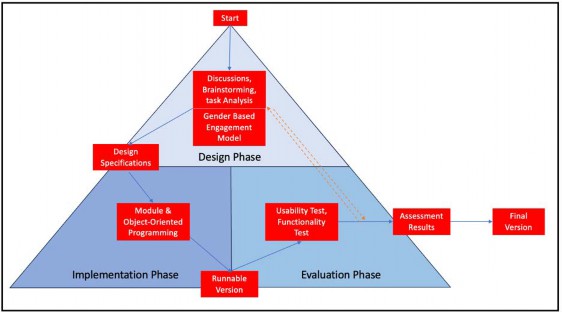
Figure 1. Development process
Tinoco Giraldo H. Pathways to inclusion: can gamified reflections and mentoring find acceptance at the end of the LGBTQIA+ Rainbow?
Arch Med (Manizales). 2025;25(1)
avatars, environments or game experiences, the use of inclusive narrative, feedback and equitable evaluation.
Also, a user-centered design approach [31,32,35] was used, where potential users of the video game are observed and interviewed to determine product requirements. In addition, an expert company in video game development was consulted, who trained the development group and helped them define the characters and graphical environments of the video game. The game consists of several levels designed to retain the player’s interest during a single game session of approximately 20 minutes. Each level applies more than one diagnostic test.
A story was proposed to give coherence and unity to “Rainbow Pathways” through its levels, which must be resolved in a sequential manner. It was based on the methodological narrative structure of the podcast “This is my story” [33] as an underlying framework. This
narrative structure is composed of five chapters, made from the school climate survey designed by “Cien por ciento Diversidad y Derechos”. Each chapter recounts and represents the perceived and manifested reality of LGBTQIA+ youth describing their own journey of sexual ori- entation and gender expression.
From this structure, we de- signed 5 different scenarios with a diagnostic purpose and adapted into a single story with different challenges that include the challenges faced by LGBTQIA+ college students in
building a supportive community and achieving personal goals and the evidence that allows us to conduct their assessment (Table 1).
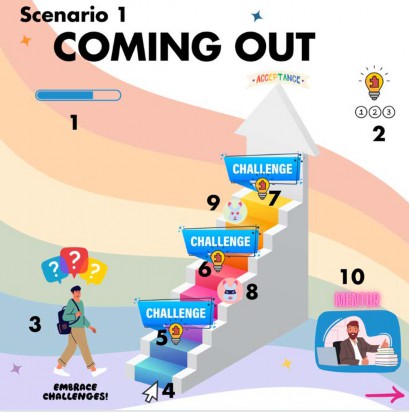
The tests make it possible to extract the nec- essary information to evaluate the emotional and persuasive level of the player, as he/she interacts with the video game, to generate pos- sible advice and recommendations. Figure 2. Shows the distribution of the screen elements of the developed video game.
At the top left, element (1), there is a bar showing the time the player must execute the challenge. At the top right, element (2), there is a light bulb with the number of challenges to perform. In the lower left part is the avatar, element (3), which must be moved through different scenarios to accomplish the different challenges of the game. The movement controls (cursor) element (4) to move the character to any direction and make jumps.
Figure 2. Distribution of the screen elements
Tinoco Giraldo H. Pathways to inclusion: can gamified reflections and mentoring find acceptance at the end of the LGBTQIA+ Rainbow?
Arch Med (Manizales). 2025;25(1)
Table 1. Scenarios Challenges & Solutions
Scenarios | Challenges | Possible solutions/actions |
1: “Coming out of the closet”. A player is struggling with their sexual orientation or gender identity and wants to come out to their friends and family but doesn’t know how. | 1. Fear of Rejection: The player faces the fear of being rejected by friends, family or classmates when revealing their identity. | 1. Conversation with a Friend: The player must simulate a conversation with a friend to practice safely disclosing his or her identity. |
2. Social Pressure: Social pressure to conform to heteronormative norms can create internal conflict and hinder the process of authenticity. | 2. Personal Decision Making: Player must make decisions related to their identity in the face of social pressure and explore the consequences of those decisions. | |
3. Isolation: The possibility of social isolation and loss of close relationships can represent an emotional challenge. | 3. Managing Isolation: The player explores strategies for maintaining social connections and coping with isolation. | |
2: Bullying and harassment. A player is experiencing bullying or harassment from peers or teachers because of their sexual orientation or Gender expansiveness. | 1. Verbal Harassment: Player may face insults and offensive comments based on their identity. | 1. Handling Offensive Comments: Player should choose effective strategies for handling verbal harassment situations. |
2. Social Isolation: Bullying can lead to social isolation, affecting participation in academic and extracurricular activities. | 2. Rebuilding Social Relationships: The player identifies opportunities to rebuild social relationships affected by bullying. | |
3. Impact on Academic Performance: Bullying can have negative consequences on students’ academic performance and mental health. | 3. Academic Strategy Development: Participant faces academic challenges related to bullying and must find ways to maintain their performance. | |
3: Mental health challenges. A player is struggling with mental health challenges related to their sexual orientation or Gender expansiveness. | 1.Social Stigma Associated with Mental Health: Player doesn’t know how to address stigmatization. | 1. Open Conversation about Mental Health: Player is willing to practice empathetic and supportive responses, sense of relief from talking openly about mental health. |
2. Lack of resources and institutional support.: Player doesn’t know anything about resources and support college services. | 2. Accessing Resources and Support: Player is discovering and clicking available links resources and support from college. | |
3. Impact on academic performance: Payer doesn’t recognize tactics to manage performance during difficult times. | 3. Academic Strategies: The player makes a list of academic skills to decrease of academic pressure. | |
4: Dating and relationships. A player is navigating the world of dating and relationships as an LGBT person and wants advice on how to approach this. | 1. Stigma and Discrimination in Relationship: Managing stigma in dating situations. | 1. Stigma Dating Simulation: Participant makes a list of skills to address intersectional challenges in relationships |
2. Lack of Positive Representation: Player is experiencing and building negative relationships. | 2. Building Positive Relationships: Player explores alternatives to having authentic and positive relationships. | |
3. Social Norms Pressure: Player has not been setting boundaries and challenging pre-existing norms. | 3. Negotiating Social Norms: Player is empowered by setting healthy boundaries in relationships. | |
5: Intersectionality. A player is experiencing challenges related to multiple marginalized identities, such as being an LGBTQIA+ person of color or an LGBTQIA+ person with a disability. | 1. Multiple Discrimination: Player unable to address discrimination arising from the intersection of LGTBQIA+ identity with race, ethnicity, or disability. | 1. Negotiating Multiple Identities in Academics: Player recognizes academic challenges related to the intersection of their LGTBQIA+ identity with race, ethnicity, or disability. |
2. Intersectional Internalized Stigma: Dealing with internalized stigma related to the intersection of multiple identities, which can affect self-esteem and full participation in college. | 2. Overcoming Internalized Stigma: Participant addresses situations that challenge internalized stigma, fostering acceptance and positive self- esteem in an intersectional context. | |
3. Intersectional Cultural and Academic Pressures: Managing additional cultural and academic pressures. | 3. Creating Intersectional Communities of Support: The payer presents creates a list of strengths and communities of support that recognize and celebrate intersectional diversity. |
Tinoco Giraldo H. Pathways to inclusion: can gamified reflections and mentoring find acceptance at the end of the LGBTQIA+ Rainbow?
Arch Med (Manizales). 2025;25(1)
The game has different elements that the player must discover that so marked with the bulbs of the challenges and has options to jump up the steps (elements 5-6-7), has a rabbit with a mask that is an element that must elude and contains negative voices in his journey (ele- ment 8) and rabbit with heart eyes (element 9) support message. The game has an additional character, the mentor (10), at the bottom right side of the game, which the player can click on and accept his help when he is not able to solve the challenges.
In turn, each scenario of the video game is composed of three challenges, each with a set of tests, to extract data on the player’s behavior and generate specific reports on the numerous obstacles along their journey as LGBTQIA+ students [3,4]. The three levels take place in different environments where the player must fulfill various objectives by performing different actions, it is here where the notion of mentoring plays its main role of support with the figure of the mentor.
The game will also incorporate an additional character, that is introduced as a mentor who helps players on their journey and supports them as they navigate in the game. The mentor points out crucial user interface (UI) elements within the game to offer detailed explanations to the mentees.
Subsequently, provide an overview of each level and its respective challenges to ensure that players acquire a fundamental understand- ing of the learning content. Amid a challenge, the mentor presents an illustrative example to aid players in overcoming the challenge. If a player commits an error, provides clarification on the accurate solution and the steps involved.
Whenever a player provides an explanation, the message smoothly descends from the bot- tom, accompanied by a sound to capture the user’s attention. Upon the player’s request, there is an option to review a log containing all prior messages from the mentor.
Throughout the game, the goal is to build a strong and supportive community of allies and friends, and to overcome the challenges and ob- stacles faced by LGBTQIA+ college students in the pursuit of personal and academic success.
Implementation Phase: Focused on game implementation techniques, Unity Engine software version 2023.1.7 f1 was selected to develop the game, compatible with Ma- cOS (X86-64). This software is a tool for the development of 2D video games, based on HTML5, with multiple benefits, such as easy learning from programming blocks, without writing lines of code (but with the possibility of adding modular and OO code), generation of mobile applications, and incor- poration of graphic, sound, and animated resources, among others.
Evaluation Phase: Feedback on the use of
the video game was obtained. For this pur- pose, a protocol was defined for conducting the test with ninth and tenth semester under- graduate students of Medicine 2022-2023 and in turn students identified as LGBTQIA+ subscribed to the “PRIDE” network. Then, a test session was planned with the partici- pation of a gaming expert. When everything was set up, the test began, which took about 20 minutes. A form was used to recognize the good use of Rainbow Pathways, UX experience and the congruence of the sce- narios with the objective of the game.
A deliberate sampling approach was utilized to choose the university student sample.
Inclusion criteria: (1) ninth and tenth semester undergraduate students of Medicine 2022-202;
(2) students identified as LGBTQIA+ subscribed to “PRIDE” network (LGBTQIA+ association that connects and collaborates with LGBTQIA+ students within the participating university) (3) informed consent and voluntary participation.
Tinoco Giraldo H. Pathways to inclusion: can gamified reflections and mentoring find acceptance at the end of the LGBTQIA+ Rainbow?
Arch Med (Manizales). 2025;25(1)
Exclusion criteria: (1) undergraduate students from other semesters and other university degrees; (2) students identified as LGBTQIA+ ally or within the cisgender or heterosexual umbrella.
46 students were invited to participate, and in the end, after some hesitation and lack of interest from other participants, 33 university students (31 gay-identified individuals and 2 transgender) were interviewed. Their ages ranged from 20 to 24 years, and their involve- ment with Pride ranged from 8 months to 2 years. Participants were recruited in March 2023 with the help of the PRIDE network.
The investigators presented the study re- cruitment information to potential participants via social networks. Participation was voluntary and no incentive was offered for participation.
The evaluation consisted of inviting two groups of players of 17 and 16 people each in a room set up by the Pride Association for the guests to play the game for 20 minutes and after the conclusion of the game, a survey created by the research group was handed out, adapting the questions with the general characteristics of interest to identify concepts of gender ex- pression and diversity supported by the game scenarios.
This survey was validated with 11 experts in LGBTQIA+ advocacy processes and orga- nizations supporting LGBTQIA+ communities. These experts were randomly selected directly from ILGA WORLD North America- The interna- tional lesbian, gay, bisexual, trans and intersex association, and Greater Houston LGBT Cham- ber Commerce. A data collection protocol was created to create the survey in which each of the experts assigned a score to the protocol questions to identify what information should be generated and included in the data collection instrument.
In addition to the questions on demographic information, the participation questionnaire asked the following questions: (1) Describe
how you felt interacting with the characters and scenarios in the game related to the ex- periences and challenges faced by LGBTQIA+ students. Do you think the game authentically represents these experiences? (2) Share how you perceived the representation of diverse cultures and geographic contexts in the game. Do you consider the game to be sensitive to cultural differences in LGBTQIA+ experienc- es? (3) How would you describe the interac- tivity of the game, and did you feel involved and an active part of the plot? (4) Evaluate the presence of the mentor in the game - did you feel that he/she provided meaningful support, both emotionally and in terms of guidance? Describe specific situations in which the men- tor positively impacted your experience. (5) Identify and discuss the variety of challenges you encountered in each game scenario. Do you feel they addressed different aspects of the LGBTQIA+ experience in academic settings?
(6) Did you find the game accessible for your participation? Consider aspects such as ease of navigation and the inclusion of features that facilitate participation by people with disabili- ties. (7) Consider whether the game included educational components that informed and raised awareness about the experiences of LGBTQIA+ students. Did you learn anything new through the game?
The data were evaluated using qualitative analysis software NVivo 12. The process con- sisted of the following steps: (1) transcriptions, preliminary coding, and note taking; (2) Se- lection of the final codes through reading and rereading the transcripts to identify patterns and themes; (3) Defined themes and sub-themes;
(4) Final report.
Researchers conducted the data analysis to ensure reliability, reviewed and validated the data, codes, and analyses. There were discussions among the researchers about the textual information until a consensus was reached.
Tinoco Giraldo H. Pathways to inclusion: can gamified reflections and mentoring find acceptance at the end of the LGBTQIA+ Rainbow?
Arch Med (Manizales). 2025;25(1)
Three themes emerged from the data analysis: (1) LGBTQIA+ Experiences and Cultural Diversity,
(2) Game Interactivity and Challenges Related to the LGBTQIA+ Experience in Academic Settings, and (3) Mentor Role and Educational Components of LGBTQIA+ Experiences.
Representative Authenticity: Game developers are increasingly inclined to ensure that their narratives and characters reflect the diversity present in society, seeking inclusion and authen- ticity. This shift is driven not only by a sense of responsibility and social values, but also by the recognition that insensitivity in character creation poses a potential risk to a game’s success and reputation. “Rainbow Pathways”, supports initiatives that prioritize diverse voices and na- rratives. In fact, players have recognized the key fit and evaluation the game had with these principles. Figure 3 shows the principles recognized.

Figure 3. Principles recognized
Authenticity is a perception, especially important for recognized players in the LGBTQIA+ community (Figure 4). Some students think that game authenticity is an absolute quality and moves a range of gamer sensibilities.
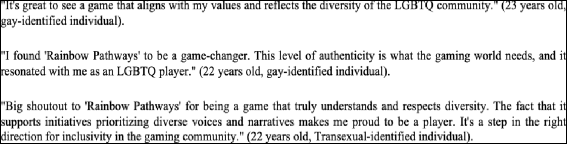
Figure 4. Authenticity
Players perceive how authentic the game is based on their personal background. Figure 5 shows some expectations of what they think they will encounter, and the qualities of the game.
Tinoco Giraldo H. Pathways to inclusion: can gamified reflections and mentoring find acceptance at the end of the LGBTQIA+ Rainbow?
Arch Med (Manizales). 2025;25(1)
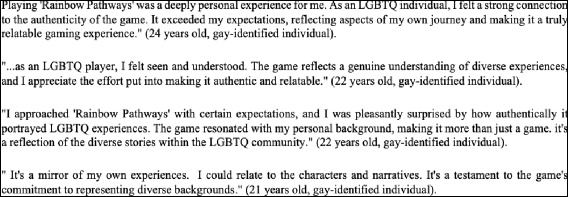
Figure 5. Expectations
Cultural Sensitivity: Representing LGBTQIA+ characters with compassion, nuance and com- plexity is not only a way to reach new segments, but also a way to make it unmistakably clear that LGBTQIA+ players belong. It is worth noting that “Rainbow Pathways”, must be played from the point of view of an LGBTQIA+ character. This sets them apart from games that hide LGBTQ+ visibility behind player choices, making LGBTQIA+ players responsible for adding representation to the story. Figure 6 shows the sensitivity characteristics found by the players.
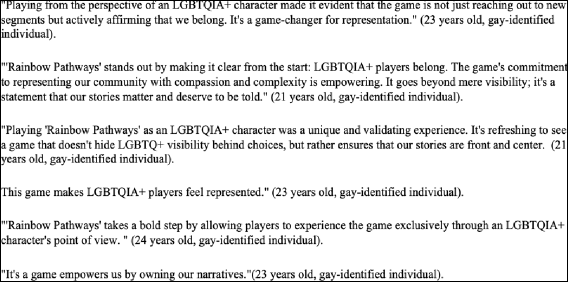
Figure 6. Sensitivity
In this sense, each sexuality intersects with other forms of subordination such as gender, social class, racialization, or ethnocentrism. By way of illustration, although the possibilities are multiple, we can say that lesbians suffer specific forms of discrimination for being women in societies that are still mostly sexist; gays because of prejudices about male sexuality and masculinity; bisexuality and asexuality are often considered as phases, whims, or fads, among others. Figure 7 illustrates the answers to the challenges faced.
Tinoco Giraldo H. Pathways to inclusion: can gamified reflections and mentoring find acceptance at the end of the LGBTQIA+ Rainbow?
Arch Med (Manizales). 2025;25(1)
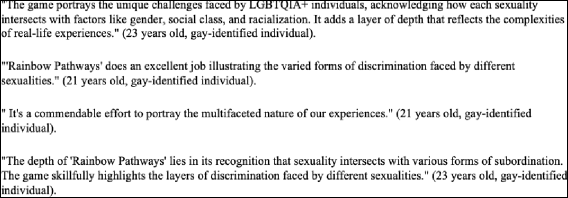
Figure 7. Challenges Faced
Thus, the activities proposed in the game aim to adopt a plural and inclusive perspective that pays special attention to how sexuality and gender intersect, to reflect on the myths, stereotypes and prejudices that persist about sexual diversity and to raise awareness about the importance of visibility and respect. Thus, Figure 8 contains the answers that allow for an inclusive perspective of the game.
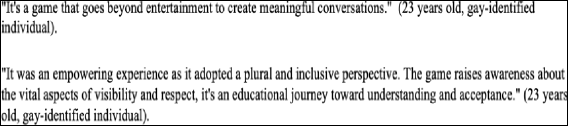
Figure 8. Inclusive Perspective
Interactivity: Making a game interactive requires the developer to understand two things. First, that the interaction must focus on the unique features of the game and, second, the types of interactions available for a game. Thus, Figure 9 interprets responses from unique game fea- tures because it is these features that drive game development. If interactions focus on the unique features of a game, the game itself will make sense to players because the interactions serve to enhance the experience.
A consistent and unique game that focuses on only the most essential and necessary aspects of fun gameplay will be unlike any other. Interactions will be classified as cerebral, emotional, or physical. Cerebral interactions include things like strategy. Emotional interactions include empathizing and identifying with a character. Physical interactions include pressing buttons or hearing sounds.
Tinoco Giraldo H. Pathways to inclusion: can gamified reflections and mentoring find acceptance at the end of the LGBTQIA+ Rainbow?
Arch Med (Manizales). 2025;25(1)
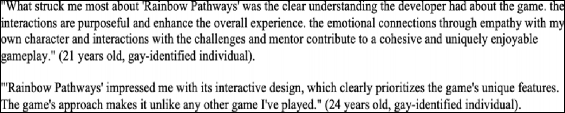
Figure 9. Interactivity
The game is adapted to the psycho-evolutionary characteristics of the players, it is motivating and easy to understand and execute, Figure 10 tells it.
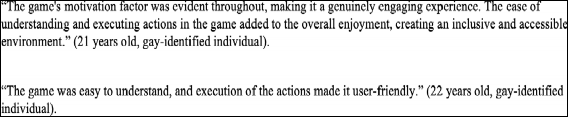
Figure 10. Motivation
Variety of Challenges: The level structure of our Challenges allows for personalized learning: early levels engage players and provide them with a quick learning curve, while more advanced tasks in later levels build confidence and skill (Figure 11).
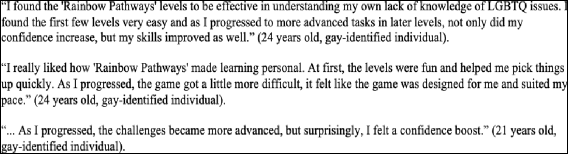
Figure 11. Personalized Learning
Moreover, the game provides an interactive and safe environment in which the player must take the initiative to explore, be able to make mistakes and learn from them to finally achieve a greater experience to reach their goal (Figure 12).

Figure 12. Feeling of Explore
Tinoco Giraldo H. Pathways to inclusion: can gamified reflections and mentoring find acceptance at the end of the LGBTQIA+ Rainbow?
Arch Med (Manizales). 2025;25(1)
Accessibility: The responses in Figure 13 recognize that Accessibility in video games is a crucial aspect to ensure that all players can enjoy a satisfactory gaming experience.

Figure 13. Satisfaction with the game
It is also important to ensure that all people could enjoy this form of entertainment and to ensure that people with disabilities do not feel excluded from a meaningful gaming experience.

Figure 14. Inclusion experience
Social Support: The mentoring action is a privileged place to promote the inclusion and partici- pation of students in university life. Mentoring can be a source of information and an engine of change and innovation in educational centers, as well as the ideal spaces for an effective and affective follow-up of each student, on an individualized basis.
The function of a mentor is to detect relational conflicts due to the “invisibility” of the diversity of mentees or to be affected by following only one social “model” to which the student has been exposed (male, cis, heterosexual, white, etc.). (Figure 15)

Figure 15. Mentor Role
Educational Inclusion: The educational inclusion of the game emphasizes its actions in individuals who present constituent elements of some type of exclusion or marginalization, which suggests an educational commitment and greater attention to individuals who are in more vulnerable circum- stances. (Figure 16).
Tinoco Giraldo H. Pathways to inclusion: can gamified reflections and mentoring find acceptance at the end of the LGBTQIA+ Rainbow?
Arch Med (Manizales). 2025;25(1)
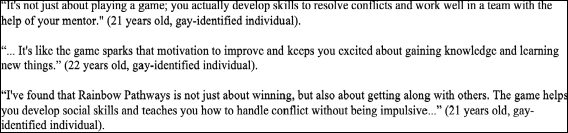
Figure 16. Educational Inclusion of the game
5. Discussion to individually build their trajectories based on
The added value of the developed vid- eo game lies in providing a tool to support LGBTQIA+ students as they face numerous challenges and obstacles throughout their aca- demic journey [3,4], incorporating engaging and challenging game levels such as discrimination, social isolation, mental health issues, and lack of support from family and friends, through immersions in various graphical environments, problem-solving exercises, homework assign- ments, and goal completion. “Rainbow Path- ways” supports players by engaging them in experiences that elicit a variety of emotional and cognitive responses that can help corroborate their own journeys their sexual orientation or gender expansiveness.
With respect to the practical implications of the study, the use of video games can have a particularly large impact by possessing im- mense potential to offer new ways of thinking and behaving. This study aims to approach mentoring from a promising perspective with a playful approach that facilitates its use. Along these lines, Krisi, and Nagar [17] indicate that mentoring guided by inclusive education effec- tively allows each player to become “a guarantor and reflection of the diversity of the societies in which the game is inserted”.
On the other hand, a game that provides elements of mentoring and has a special focus on diversity and inclusion [25] can completely transform expectations and convey experi- ences and belonging. Indeed, as LGBTQIA+ players of “Rainbow Pathways” have learned
successes and failures on different planes of their lives, it is easy for them to assume that the help of a mentor may be the only way to learn and achieve goals on other planes of their own lives. However, game-like processes that include inclusive mentoring open opportunities for trust, dialogue, and mutual learning [21].
But, in addition, it allows for improved self-confidence and the proliferation of relation- ships based on trust, respect and communica- tion in the academic and workspace, generating an environment conducive to the exchange of ideas and synergy [6, 13,18].
In either case, Online Games that function as support tools for LGBTQIA+ students become a space for meeting and sharing. Ruberg, [26, p. 121] stresses “LGBT people have experienced barriers and hostility at some point. Education and open dialogue around experiences can help address these issues.”
Taking the experience to the level of inno- vation, projecting it as a playful initiative can articulate the different interests and motivations of the training. Thus, teaching and learning processes are thought from a different perspec- tive [23]. Our bet with “Rainbow Pathways” is in the opportunity to look at the development of competencies from a complex model where competencies are determined from the identi- fication of social, professional and disciplinary problems, present or future, looking for criteria that account for the different knowledge that are integrated into the competence [34], and where the perspective of inclusion is indeed a
Tinoco Giraldo H. Pathways to inclusion: can gamified reflections and mentoring find acceptance at the end of the LGBTQIA+ Rainbow?
Arch Med (Manizales). 2025;25(1)
common perspective in the training of all future professionals.
“Rainbow Pathways” is designed to be inclu- sive and respectful of the diverse experiences and identities of the LGBTQIA+ community
[14] and offering players the opportunity to explore and celebrate their own identities and experiences. One of the main functionalities of “Rainbow Pathways” is to encourage players to reflect on their own experiences and perspec- tives, helping them to better understand them- selves and others. Pavlounis [28, p. 586], claims that “The virtual universes of video games give LGBTQIA+ people the opportunity to express their identity, and avatars and in-game add- ons help our digital selves reflect our real-life uniqueness”.
When considering the elements that con- verge in the application and use of video games, we can observe the capacity and potential that video games have in the acquisition of learning, likewise, how they provide scenarios for the development of inclusive education, specifically with the recognition of social support, partic- ipation, and cultural sensitivity. In this sense, the implementation of digital games such as “Rainbow Pathways”, become a methodological element of great value for teachers, by trigger- ing skills, abilities and attitudes that consider
their individual capabilities and globalize their own formative experiences as LGBTQIA+ in- dividuals.
Online games can be a powerful tool for mentoring in the LGBTQIA+ community, as they can provide a safe and inclusive space for individuals to express themselves and connect with others who share similar experiences and identities.
In terms of promoting inclusivity and respect for diverse experiences and identities within the LGBTQIA+ community, online games can be designed with specific features and content to address these issues. For example, includ- ing a variety of characters and scenarios that represented different identities and experiences and promoting acceptance and understanding.
While this study indicates that the positive influence of “Rainbow Pathways” is observed in LGBTQIA+ college students exposed to the game, it’s important to note that the data is cross-sectional, and longitudinal research is still needed to confirm its long-term impact. The data is limited to the active responses provided by the respondents, implying the possibility of an undisclosed portion of the self-reflection content of these participants.
Gowdy G, Hogan S, Roosevelt K, Saastamoinen M, Levine S. Informal mentoring for foster youth students: Core and capital mentors over time. Child Adolesc Soc Work J. 2023 Apr;40(2):221-36. doi:10.1007/s10560-022-00899-5.
Mara LC, Ginieis M, Brunet-Icart I. Strategies for coping with LGBT discrimination at work: A systematic literature review. Sex Res Soc Policy. 2021 Jun;18:339-54. https://doi.org/10.1007/s13178-020-00462-w
Freeman JB. Measuring and resolving LGBTQ disparities in STEM. Policy Insights Behav Brain Sci. 2020 Oct;7(2):141-8. https://doi.org/10.1177/2372732220943232
Melián E, Reyes JI, Meneses J. The online PhD experience: A qualitative systematic review. Int Rev Res Open Distrib Learn. 2023 Feb;24(1):137-58. https://doi.org/10.19173/irrodl.v24i1.6780
Mueller J. Data visualization and advocacy for sexual and gender minority health. J Map Geogr Libr. 2022 May 4;18(1-2):115-30. https://doi.org/10.1080/15420353.2022.2139329
Rios O, Font-Palomar M, Flecha A, Valls R. Violence against LGBTIQ+ people at universities: The need to uncov- er a silent reality. Trauma Violence Abuse. 2023 Oct;24(4):2680-90. https://doi.org/10.1177/15248380221111471
Allen L, Cowie L, Fenaughty J. Safe but not safe: LGBTTIQA+ students’ experiences of a university campus. High Educ Res Dev. 2020 Sep 18;39(6):1075-90. https://doi:10.1080/07294360.2019.1706453
Tinoco Giraldo H. Pathways to inclusion: can gamified reflections and mentoring find acceptance at the end of the LGBTQIA+ Rainbow?
Arch Med (Manizales). 2025;25(1)
Tinoco-Giraldo H, Torrecilla Sánchez EM, García-Peñalvo FJ. An analysis of LGBTQIA+ university students’ per- ceptions about sexual and gender diversity. Sustainability. 2021 Oct 25;13(21):11786. http://doi:10.3390/su132111786
Briscoe P. Virtual mentor partnerships between practicing and preservice teachers: Helping to enhance pro- fessional growth and well-being. Int J Mentor Coach Educ. 2019 Oct 15;8(4):235-54.
http://doi:10.1108/IJMCE-02-2019-0023
Pon-Barry H, Packard BW, St. John A. Expanding capacity and promoting inclusion in introductory computer science: A focus on near-peer mentor preparation and code review. Comput Sci Educ. 2017 Jan 2;27(1):54-77. http://doi:10.1080/08993408.2017.1333270
Lee MJ. Increasing minority youths’ participation in computing through near-peer mentorship. J Comput Sci Coll. 2019 Oct;35(3). http://doi:10.1007/s13178-020-00462-w
Tolan PH, McDaniel HL, Richardson M, Arkin N, Augenstern J, DuBois DL. Improving understanding of how mentoring works: Measuring multiple intervention processes. J Community Psychol. 2020 Aug;48(6):2086-107. http://doi:10.1002/jcop.22408
Wolff JR, Kay TS, Biaggio M, Pantalone DW. Division 44 public comments to the APA commission on accreditation: Promoting equity, accountability, and transparency in doctoral psychology training. Psychol Sex Orientat Gend Divers. 2021 Dec;8(4):391. http://doi:10.1037/sgd0000502
Holloway IW, Miyashita Ochoa A, Wu ES, Himmelstein R, Wong JO, Wilson BD. Perspectives on academic men- torship from sexual and gender minority students pursuing careers in the health sciences. Am J Orthopsychiatry. 2019;89(3):343. http://doi:10.1037/ort0000410
Salvati M, Pistella J, Baiocco R. Gender roles and internalized sexual stigma in gay and lesbian persons: A qua- dratic relation. Int J Sex Health. 2018 Jan 2;30(1):42-8. http://doi:10.1080/19317611.2017.1404542
Graham BE. Queerly unequal: LGBT+ students and mentoring in higher education. Soc Sci. 2019 Jun 5;8(6):171. http://doi:10.3390/socsci8060171
Krisi M, Nagar R. The effect of peer mentoring on mentors themselves: A case study of college students. Int J Disabil Dev Educ. 2023 Jul 29;70(5):803-15. http://doi:10.1080/1034912X.2021.1910934
Beltman S, Helker K, Fischer S. ‘I Really Enjoy It’: Emotional engagement of university peer mentors. Int J Emot Educ. 2019 Nov;11(2):50-70.
Higa D, Hoppe MJ, Lindhorst T, Mincer S, Beadnell B, Morrison DM, et al. Negative and positive factors asso- ciated with the well-being of lesbian, gay, bisexual, transgender, queer, and questioning (LGBTQ) youth. Youth Soc. 2014 Sep;46(5):663-87. http://doi.10.1177/0044118X12449630
Goodrich A. Counterpoint in the music classroom: Creating an environment of resilience with peer mentoring and LGBTQIA+ students. Int J Music Educ. 2020 Nov;38(4):582-92. http://doi:10.1177/0255761420949373
Asakura K. It takes a village: Applying a social ecological framework of resilience in working with LGBTQ youth. Fam Soc. 2016 Jan;97(1):15-22. http://doi:10.1606/1044 3894.2016.97.4
Stieler-Hunt C, Jones C. A professional development model to facilitate teacher adoption of interactive, immersive digital games for classroom learning. Br J Educ Technol. 2019 Jan;50(1):264-79. http://doi:10.1111/bjet.12679
Gomez K, Gomez LM, Worsley M. Interrogating the role of CSCL in diversity, equity, and inclusion. Int Handb Comput-Supported Collab Learn. 2021:103-19. http://doi:10.1007/978-3-030-65291-3_6
Pryor JT, Nachman BR. Conceptualizing digital campus climate within LGBTQ+ resource center websites: A critical discourse analysis. Innov High Educ. 2022 Aug;47(4):587-608. http://doi:10.1007/s10755-021-09590-6
Ruberg B. Queer Indie Game Making: An Interview with Mo Cohen. Indie Games in the Digital Age. 2020 Apr 16;8:35.
Oktavanya R, Panjaitan YA. The ambivalence of Life Is Strange in portraying its female characters. Int J Humanit Stud. 2019 Aug 29;3(1):14-29. http://doi:10.24071/ijhs.2019.030102
Pavlounis D. Straightening up the archive: Queer historiography, queer play, and the archival politics of Gone Home. Televis New Media. 2016 Nov;17(7):579-94. http://doi:10.1177/1527476416631627
Tinoco Giraldo H. Pathways to inclusion: can gamified reflections and mentoring find acceptance at the end of the LGBTQIA+ Rainbow?
Arch Med (Manizales). 2025;25(1)
Gongsook P, Peijnenborgh J, Van der Spek E, Hu J, Bellotti F, Berta R, et al. Designing a serious game as a diagnostic tool. In: Games and Learning Alliance: Third International Conference, GALA 2014, Bucharest, Romania, July 2-4, 2014, Revised Selected Papers 3. Springer International Publishing; 2015. p. 63-72. http://doi:10.1007/978-3-319-22960-7_7
Alserri SA, Zin NA, Wook TS. Gender-based engagement model for serious games. Int J Adv Sci Eng Inf Technol. 2018 Aug;8(4):1350-7. http://doi:10.1109/ICEEI.2017.8312443
Goethe O. Visual aesthetics in games and gamification. Gamification Mindset. 2019:85- 92. http://doi:10.1007/978-3-030-11078-9_8
Santoso H, Putra PH. Development & evaluation of e-learning module based on visual and global preferences using a user-centered design approach. Int J Emerg Technol Learn (iJET). 2021 Aug 11;16(15):139-51. http://doi:10.3991/ijet.v16i15.24163
Matera IF. “Esta es mi historia”: Podcasts sonoros para pensar la discriminación hacia los jóvenes LGBT en la escolarización secundaria en Argentina. Biblioteca Trabajos Finales FCH. 2019;3(2):1-08.
De Coninck D, d’Haenens L. Gendered perspectives on digital skills and digital activities: Comparing non-binary and binary youth. Comunicar. 2023 Apr 1;31(75):35-45. doi:10.3916/C75-2023-03.
Bateman C. Implicit game aesthetics. Games Cult. 2015 Jul;10(4):389-411. http://doi:10.1177/1555412014560607
Beanlands RA, Robinson LJ, Venance SL. An LGBTQ+ mentorship program enriched the experience of medical students and physician mentors. Can Med Educ J. 2020 Dec;11(6):e159. http://doi:10.36834/cmej.69936
Romero M, Kalmpourtzis G. Constructive alignment in game design for learning activities in higher education. Information. 2020 Feb 25;11(3):126. http://doi:10.3390/info11030126
Alvarado A, Mujtaba BG. The evolution of LGBTQIA+ personnel in the American workplace. J Bus Divers. 2023 May 6;23(1).