Prediction of sleep quality in military submariners
Maria Elisa Koppke Miranda1, Guillermo Brito Portugal2, Bruno Ferreira Viana3,
Priscila dos Santos Bunn4, Rodrigo Gomes de Souza Vale5
Recibido para publicación: 27-02-2024. Versión corregida: 30-07-2024. Aprobado para publicación: 12-08-2024.
Modelo de citación:
Koppke Miranda M.E., Brito Portugal G., Ferreira Viana B., dos Santos Bunn P., de Souza Vale R.G. PREDICTION OF SLEEP QUALITY IN MILITARY SUBMARINERS. Arch Med (Manizales). 2024;24(2). https://doi.org/10.30554/archmed.24.2.5077.2024
Introduction: Insufficient sleep-in submariners can negatively impact the operational performance and health of this population. Objective: To develop an equation model to predict sleep quality in military submariners based on body composition, neuromuscular and cardiorespiratory variables, stress level, and sleepiness. Methods: A cross-sectional and correlational study was conducted with a sample of 37 submariners (men: 28.11±3.45 years). Data from the Pittsburgh Sleep Quality Index (PSQI) was used as a dependent variable, and as independent variables given body composition, height, BMI, waist circumference, body fat, dominant handgrip, cardiorespiratory fitness, squats, sit-ups, relative power of the lower limbs (PotRel LL), stress (PSS-10), and Epworth Sleepiness Assessment (ESE). The multiple linear regression test, adopting the forward stepwise method, was used to select predictor variables from the equation model to estimate sleep quality. Results: The sleep quality prediction model developed was as follows: PSQI=-3.476+0.176(PSS-10)+0.165 (PotRel LL) with R2adjust: 0.36 and EPE: 1.93. Conclusion: The construction of a specific proposed model related to submariners’ health demonstrated that the level of sleep quality can be estimated with a low estimation error based on the stress level (PSS-10) and lower limb power (PotRel LL).
Keywords: Sleep, submariner, sleep quality, inadequate sleep, military personnel.
Predicción de la calidad del sueño en submarinos militares
Resumen
Introducción: El sueño insuficiente en submarinistas puede afectar negativamente al rendimiento operativo y a la salud de esta población. Objetivo: Desarrollar un modelo de ecuación para predecir la calidad del sueño en submarinistas militares basado en la composición corporal, variables neuromusculares y cardiorrespiratorias, nivel de estrés y somnolencia. Métodos: Se realizó un estudio transversal y correlacional con una muestra de 37 submarinistas (hombres: 28,11±3,45 años). Como variable dependiente se utilizaron los datos del Índice de Calidad del Sueño de Pittsburgh (PSQI), y como variables independientes la composición corporal, la altura, el IMC, el perímetro de la cintura, la grasa corporal, la empuñadura dominante, la aptitud cardiorrespiratoria, las sentadillas, los abdominales, la potencia relativa de los miembros inferiores (PotRel LL), el estrés (PSS-10) y la Evaluación de la Somnolencia de Epworth (ESE). Se utilizó la prueba de regresión lineal múltiple, adoptando el método forward stepwise, para seleccionar las variables predictoras del modelo de ecuaciones para estimar la calidad del sueño. Resultados: El modelo de predicción de la calidad del sueño desarrollado fue el siguiente: PSQI=-3,476+0,176(PSS-10)+0,165(PotRel LL) con R2ajustado: 0,36 y EPE: 1,93. Conclusiones: La construcción de un modelo específico propuesto relacionado con la salud de los submarinistas demostró que el nivel de calidad del sueño puede estimarse con un bajo error de estimación a partir del nivel de estrés (PSS-10) y la potencia de las extremidades inferiores (PotRel LL).
Palabras clave: Sueño, submarinista, calidad del sueño, sueño inadecuado, personal militar.
Prevendo a qualidade do sono em submarinos militares
Resumo
Introdução: insuficiência de sono em submarinistas pode gerar um impacto negativo no desempenho operacional e na saúde dessa população. Objetivo: desenvolver um modelo de equação para predição da qualidade do sono em militares submarinistas baseado em variáveis de composição corporal, neuromusculares, cardiorrespiratória, nível de estresse e sonolência. Método: um estudo transversal e correlacional, com amostra de 37 submarinistas (homens: 28,11±3,45 anos). Foram analisados dados da avaliação da qualidade do sono de Pittsburgh (PSQI) como variável dependente, e como variáveis independentes dados de massa composição corporal, estatura, IMC, cintura, gordura corporal, preensão manual dominante, aptidão cardiorrespiratória, agachamentos, abdominais, potência relativa de membros inferiores (PotRel MMII), estresse (PSS-10), avaliação da sonolência de Epworth. O teste de regressão linear múltipla, adotando o método forward stepwise, foi utilizado para selecionar variáveis preditoras do modelo de equação para estimar o nível de qualidade do sono. Resultados: o modelo de predição da qualidade do sono desenvolvido foi a equação PSQI=-3,476+0,176(PSS-10)+0,165(PotRel MMII) com R2ajust: 0,36 e EPE: 1,93. Conclusão: a construção do modelo proposto específico relacionado a saúde dos submarinistas demonstrou que o nível de qualidade do sono pode ser estimado com um baixo erro de estimativa, baseado no nível de estresse (PSS-10) e na potência de membros inferiores (PotRel MMII).
Palavras-chave: Sono; submarinista, qualidade do sono; sono inadequado; militares.
Introduction
Military operations may result in insufficient and poor sleep quality, depending on the characteristics of the task to be performed [1]. Furthermore, these operations can be stressful, unexpected, urgent, and harsh environments [1]. The promotion of healthy sleep is important for the physical and mental health of military personnel. Poor sleep quality can negatively impact operational readiness, safety, and effectiveness by reducing cognitive performance [2]. Furthermore, evidence suggests that poor sleep quality has been associated with the development of mental health disorders such as depression, anxiety, post-traumatic stress disorder, and, consequently, a worsening of individuals’ quality of life [3.4].
In this context, submarines can pose greater health risks. Submariners have a work environment considered as a typical isolated, confined, and extreme environment (ICE) [5], with deprivation of natural daylight and a 24-hour day-night circadian rhythm [6.7], associated with occupational confinement factors that can affect their health, such as shift work, noise, high levels of stress, and sedentary lifestyle [8–10].
The last two aspects have been frequently cited in the literature as variables related to sleep quality. Stressors on a submarine can include working and living in extremely small spaces, confinement, isolation from all interactions with the outside world, monotony in routine, prolonged separation from family members, and potentially dangerous operational responsibilities [11,12]. However, physical activity can minimize stress and improve sleep quality, as physical conditioning can positively affect these psychophysiological variables [13–15]. Furthermore, it is recommended by the American Sleep Disorders Association (ASDA) as a form of non-pharmacological intervention to improve sleep quality [16]. In this context, Ferreira et al. [17] and Gilmour et al. [18], evaluating military personnel in general, pointed out differences in sleep when evaluating individuals with different body compositions, just as Gasier et al. [19], specifically evaluating submariners, observed individuals with a higher percentage of body fat slept, on average, less than those with a lower percentage of body fat.
Insufficient sleep in this population can negatively impact operational performance and health. Activities that require concentration, emotional control, quick thinking, spatial orientation, and the ability to work under pressure can be compromised when you do not get adequate rest [17]. Therefore, the objective of the present study was to develop an equation model to predict sleep quality in military submariners based on body composition, neuromuscular, cardiorespiratory, stress level, and sleepiness variables.
Methods
Study design and sample
Cross-sectional and correlational research with the development of a model to predict sleep quality in submariners. The study was conducted in 2023, with a sample of 37 submariners (male) from the Brazilian Navy. The study participants represented approximately 40% of Brazilian submariners. The Research Ethics Committee of the Hospital Naval Marcílio Dias approved the study (CAAE number: 60399822.7.0000.5256), following the guidelines of the National Health Council.
The Pittsburgh Sleep Quality Index - PSQI questionnaire was used [20], translated, and validated into Portuguese [21] to assess sleep quality. This instrument is self-administered, with scores from seven added components (subjective sleep quality, sleep latency, duration, efficiency, sleep-related disorders, use of sleep medications, and daytime dysfunction in the sleep-wake cycle), which can vary from 0 to 21. Scores from zero to five indicate good sleep quality, scores equal to or greater than 6 indicate poor quality, and scores > 10 indicate sleep disturbance.
Stress level assessment
The Portuguese version of the Perceived Stress Scale (PSS-10) was used [22,23], to measure the degree to which individuals perceive stressful situations. The assessment consisted of 14 questions, with answer options ranging from zero to four (0=never; 1=almost never; 2=sometimes; 3=almost always; 4=always). The total scale was the sum of the scores for these 14 questions.
Sleepness assessment
The sleepness was assessed using the Epworth Sleepiness Scale (ESE) [24]. A questionnaire consisting of eight items representing everyday situations, graded from zero to three points according to the intensity of sleepness, was used to analyze the chance of dozing off in each situation presented. The results were obtained by adding eight items, considering normal sleepness up to 10 points, average sleepness of 11 to 15 points, and abnormal daytime sleepness a score greater than or equal to 16 points.
Body composition assessment
Height and total body mass (MCT) were measured on a digital scale with a stadiometer (Prix, Brazil). Waist circumference was measured with a metallic measuring tape (Cescorf, Brazil) and skin folds of the chest, abdomen, and thigh were measured with a Premier Scientific Adipometer (Cescorf, Brazil). From these measurements, the body fat percentage (%BF) and Body Mass Index (BMI) were estimated [25.26].
Assessmentneuromuscular and cardiorespiratory fitness
To evaluate the relative power of the lower limbs (PotRel LL), the average of five countermovement jumps was used, with an interval of 15 s between them, using the contact mat and Elite Jump System software (Cefise, Brazil) [27]. To obtain maximum oxygen consumption (VO2max) and measure cardiorespiratory fitness, the Cooper 2400m running test was applied on a 400m athletics track. [28]. To assess upper limb muscle strength, the maximum measurement of the dominant hand in the handgrip test was used (Hg Dom), using a Jamar dynamometer (Sammons Preston, USA) [29]. Abdominal and squat tests were also performed, with maximum results observed within 2 min [29].
Statistical analysis
Sample characterization included measures of central tendency and dispersion (mean and standard deviation). Data normality was checked using the Shapiro-Wilk test. To develop the equation model to estimate sleep quality, the multiple linear regression test adopted the forward stepwise method to select predictor variables for the model. The reliability of the model was measured using the adjusted coefficient of determination (R2adjust) and the standard error of estimate (EPE). A paired t-test was used to compare the sleep quality observed by the questionnaire and the predicted sleep quality, and the Pearson correlation coefficient was applied to analyze this relationship. Statistical analysis was performed using the statistical software IBM SPSS Statistics 25, with statistical significance set at p < 0.05.
Table 1 presents the sample characterization results for the variables analyzed in this study. Young individuals with a BMI classified as overweight but with %BF classified as good, waist circumference below the cutoff point for increased risk of developing cardiovascular diseases (>102 cm), and good general physical fitness. The average scores on the questionnaires used indicated levels of perceived stress, considered above average, average sleepness, and poor sleep quality.
Table 2 presents the model of the prediction equation for sleep quality, based on the selection criteria. The conditions with the highest R, R2, R2adjust, and lowest EPE values were adopted as the model choice conditions. Thus, in the model equation PSQI=-3.476+0.176(PSS-10)+0.165(PotRel LL) met the proposed requirements, with stress level as a predictor variable and the relative power of the lower limbs.
Subsequently, the estimated sleep quality was calculated. There was a positive correlation between observed and estimated sleep quality (p < 0.001), and the values did not differ between the groups (p>0.05) (Table 3).
Table 1. Sample characterization (n=37)
|
Average |
DP |
|
|
Age (years) |
28.11 |
3.45 |
|
Body composition variables |
||
|
MCT (kg) |
83.33 |
15.28 |
|
Height (cm) |
175.97 |
6.83 |
|
BMI (kg/m²) |
26.89 |
4.53 |
|
%BF |
15.10 |
6.76 |
|
Waist (cm) |
86.41 |
13.38 |
|
Neuromuscular variables |
||
|
Hg Dom. (kg/f) |
54.19 |
9.25 |
|
VO2max (ml/kg/min) |
44.20 |
6.66 |
|
Squat (max/2min) |
64.81 |
10.49 |
|
Sit ups (max/2min) |
47.08 |
12.84 |
|
PotRel LL (W/kg) |
42.58 |
4.00 |
|
Stress level |
||
|
PSS-10 (total of points) |
15.89 |
7.86 |
|
Sleepness |
||
|
ESSE (total of points) |
9.06 |
4.16 |
|
Sleep quality |
||
|
PSQI (total of points) |
6.28 |
2.49 |
|
n=number of participants; SD= standard deviation; MCT=Total Body Mass; BMI= Body Mass Index; %BF= percentage of body fat; Hg Dom= dominant hand grip; VO2max=maximum oxygen consumption; PotRel LL= relative power of lower limbs; PSS-10=Perceived Stress Scale; ESE= Epworth Sleepiness Scale; PSQI= Pittsburgh Sleep Quality Index. Source: Prepared by the authors. |
||
The linear regression between observed and estimated sleep quality is illustrated in Figure 1.
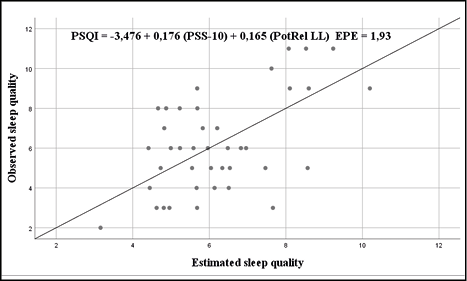
Figure 1: Linear regression between observed and estimated sleep quality for Brazilian submariners. Source: Prepared by the authors.
Discussion
the objective of the present study was to develop an equation model to predict the sleep quality of military submariners based on body composition, neuromuscular variables, stress level, and sleepiness. The results showed that the level of stress and relative power of the lower limbs were predictors of sleep quality in submariners.
The average results obtained regarding the quality of sleep indicated poor sleep in the PSQI according to the assessment instrument used. [20]. Compared to the Dutch submariners in the study by Nieuwenhuys et al. [30], the present study obtained worse results, as they were classified as having good sleep quality (4.8 ± 1.29). Another widely used instrument for assessing this variable is wrist actigraphy. In this context, Margel et al. [31] evaluated the total sleep time of Israeli military personnel (4.75 hours), Van Puyvelde et al. [7] evaluated Dutch (6.62 hours), and Trousselard et al. [32] evaluated French people (6.77 hours), they obtained results below the recommended time for individuals over 18 years old [33], indicating poor sleep quality.
One of the variables included in the predictive model was stress level. The analysis of this psychophysiological condition for this population has been extensively studied, as submarines are complex and stressful workplaces where they work for long periods in continuous operations and are isolated from the external environment. [34.35]. The perceived stress considered above average in the present study using the PSS-10 questionnaire corroborates the findings of studies using other instruments. Brasher et al. [34], using the Work and Wellbeing Questionnaire (WWBQ) and the Scale of Positive and Negative Affect and Stressful Life Events (SLEs), found a stress rate in UK submariners (40%) higher than the stress rate of military personnel in general who served on other ships (28%). Furthermore, Rapley et al. [36] used the Outcome Questionnaire (OQ-45) in Americans, and Nan-nan et al. [12] used a questionnaire on work stressors of Chinese submarine crews (Work Stress Self-Assessment Scale) and found similar results on stress levels.
Regarding the power of the lower limbs, another variable included in the predictive model, studies that specifically evaluated submariners are scarce. However, for other populations, some studies have addressed the importance of muscle mass and strength in sleep quality [15,37,38]. Kovacevic et al. [39] developed a systematic review of randomized studies on the effect of resistance exercise on sleep. The authors concluded that studies on isolated chronic resistance exercise suggest improvements in subjective sleep quality. The review also indicated that improvements in sleep quality were observed with high-intensity exercise three times per week.
A practical application of these results is in terms of encouraging actions to improve the stress levels of these individuals, as well as encouraging regular physical exercise, with priority for lower-limb power training, to mitigate the sleep problems of submariners. However, the present study has some limitations that can be highlighted, such as the cross-sectional design, as this type of research design cannot establish a cause-effect relationship. Furthermore, the assessments were not carried out on missions in which the environment was restricted inside a submarine. On the other hand, a strong point is the use of validated questionnaires and scales, in addition to tests that assess physical capabilities, applied by trained interviewers and evaluators, minimizing biases and enabling reliable results.
Conclusion
the construction of the specific proposed model related to submariners’ health demonstrated that the level of sleep quality can be estimated with a low estimation error based on the stress level (PSS-10) and the power of the lower limbs (PotRel LL). Minimizing the effects of stress on the quality of life of this population, as well as improving physical conditioning, can be an efficient strategy to improve sleep quality within a restricted work environment, such as a submarine.
This study provided preliminary data for future research on the health and serviceability of submariners. Therefore, investigations are recommended to analyze the variables analyzed in clinical trials during missions with Brazilian military personnel effectively confined to months.
References
1. Wang Z, Chen B, Li W, Xie F, Loke AY, Shu Q. Sleep quality and its impacts on quality of life among military personnel in remote frontier areas and extreme cold environments. Health and Quality of Life Outcomes. [Online] Health and Quality of Life Outcomes; 2020;18(1): 1–10. Available from: doi:10.1186/s12955-020-01460-7
2. Kong FY, Li Q, Liu SX. Poor sleep quality predicts decreased cognitive function independently of chronic mountain sickness score in young soldiers with polycythemia stationed in Tibet. High Altitude Medicine and Biology. [Online] 2011;12(3): 237–242. Available from: doi:10.1089/ham.2010.1079
3. Boyko EJ, Seelig AD, Jacobson IG, Hooper TI, Smith B, Smith TC, et al. Sleep characteristics, mental health, and diabetes risk: A prospective study of U.S. Military service members in the millennium cohort study. Diabetes Care. [Online] 2013;36(10): 3154–3161. Available from: doi:10.2337/DC13-0042
4. Gehrman P, Seelig AD, Jacobson IG, Boyko EJ, Hooper TI, Gackstetter GD, et al. Predeployment sleep duration and insomnia symptoms as risk factors for new-onset mental health disorders following military deployment. Sleep. [Online] 2013;36(7): 1009–1018. Available from: doi:10.5665/sleep.2798
5. Landon LB, Douglas GL, Downs ME, Greene MR, Whitmire AM, Zwart SR, et al. The Behavioral Biology of Teams: Multidisciplinary Contributions to Social Dynamics in Isolated, Confined, and Extreme Environments. Frontiers in Psychology. [Online] 2019;10(November). Available from: doi:10.3389/fpsyg.2019.02571
6. Zivi P, De Gennaro L, Ferlazzo F. Sleep in Isolated, Confined, and Extreme (ICE): A Review on the Different Factors Affecting Human Sleep in ICE. Frontiers in Neuroscience. [Online] 2020;14(August). Available from: doi:10.3389/fnins.2020.00851
7. Van Puyvelde M, Rietjens G, Helmhout P, Mairesse O, Van Cutsem J, Pattyn N. The submariners’ sleep study: a field investigation of sleep and circadian hormones during a 67-day submarine mission with a strict 6-h-on/6-h-off watch routine. Journal of Applied Physiology. [Online] 2022;132(4): 1069–1079. Available from: doi:10.1152/japplphysiol.00130.2021
8. Miranda MEK, Bunn P dos S, Rodrigues AI, Gomes de Souza Vale RG de S. Efeitos do confinamento sobre o condicionamento físico e saúde de militares submarinistas: uma revisão sistemática. Revista Brasileira de Fisiologia do exercí cio. [Online] 2022;21(3): 195–203. Available from: doi:10.33233/rbfex.v21i3.5160
9. Kang J, Song Y-M. Metabolic syndrome and its components among Korean submariners: a retrospective cross-sectional study. Endocrine. [Online] United States; 2018;59(3): 614–621. Available from: doi:10.1007/s12020-017-1518-8
10. Gunner F, Lindsay M, Brown PEH, Shaw AM, Britland SE, Davey T, et al. Body composition and serum lipid profile of Royal Navy submariners before and after a three-month deployment. Proceedings of the Nutrition Society. [Online] 2017;76. Available from: doi:10.1017/S0029665117000179
11. Eid J, Johnsen BH. Acute stress reactions after submarine accidents. Military Medicine. [Online] 2002;167(5): 427–431. Available from: doi:10.1093/miled.167.5.427
12. Nan-nan J, Xian-rong S, Ding-wen J, Wei C. Relationship between work stress and health of submarine crew. Medical Journal of Chinese People’s Liberation Army. [Online] 2013;38(8): 665–669. Available from: https://www.nstl.gov.cn/paper_detail.html?id=ae0c276592a53b016fc7195878cf6cd3
13. Zhai X, Wu N, Koriyama S, Wang C, Shi M, Huang T, et al. Mediating effect of perceived stress on the association between physical activity and sleep quality among Chinese college students. International Journal of Environmental Research and Public Health. [Online] 2021;18(1): 1–11. Available from: doi:10.3390/ijerph18010289
14. Silva ML, Da Conceição Reubens Leonidio A, De Freitas CMSM. Prática De Atividade Física E O Estresse: Uma Revisão Bibliométrica. Revista da Educacao Fisica. [Online] 2015;26(2): 331–339. Available from: doi:10.4025/reveducfis.v26i2.23846
15. Ropke LM, Souza AG, Bertoz AP de M, Adriazola MM, Ortolan EVP, Martins RH, et al. Efeito da atividade física na qualidade do sono e qualidade de vida: revisão sistematizada. Archives of Health Investigation. [Online] 2018;6(12). Available from: doi:10.21270/archi.v6i12.2258
16. Sateia MJ. International classification of sleep disorders-third edition highlights and modifications. Chest. [Online] 2014;146(5): 1387–1394. Available from: doi:10.1378/chest.14-0970
17. Ferreira FG, Doimo LA, Portugal GB, Ravani JPR, Campos FAD. Qualidade de sono , nível de sonolência e suas relações com indicadores de obesidade em pilotos militares brasileiros. Coleção Meira Mattos. [Online] 2023;17(59): 201–215. Available from: doi:10.22491/cmm.a100
18. Gilmour H, Lu D, Polsky JY. Sleep duration, sleep quality and obesity in the Canadian Armed Forces. Health Reports. [Online] 2023;34(5): 3–14. Available from: doi:10.25318/82-003-x202300500001-eng
19. Gasier H, Young C, Gaffney-Stomberg E, McAdams D, Lutz L, McClung J. Cardiometabolic Health in Submariners Returning from a 3-Month Patrol. Nutrients. [Online] Department of Military and Emergency Medicine, Uniformed Services University of the Health Sciences, Bethesda, MD 20814, USA: MDPI Publishing; 2016;8(2): 85. Available from: http://dx.doi.org/10.3390/nu8020085
20. Buysse DJ, Reynolds CF 3rd, Monk TH, Berman SR KD. The Pittsburgh Sleep Quality Index: a new instrument for psychiatric practice and research. Psychiatry Res. [Online] 1989;28(2): 193–213. Available from: https://doi.org/10.1016/0165-1781(89)90047-4
21. Bertolazi AN. Tradução, adaptação cultural e validação de dois instrumentos de avaliação do sono: escala de sonolência de Epworth e índice de qualidade de sono de Pittsburgh. [Online] Porto Alegre: Universidade Federal do Rio Grande do Sul; 2008. Available from: http://hdl.handle.net/10183/14041
22. Cohen, S., Kamarck, T., Mermelstein R. A global measure of perceived stress. Journal of Health and Social Behavior. Journal of Health and Social Behavior. 1983;24(4): 385–396.
23. Luft CDB, Sanches S de O, Mazo GZ, Andrade A. Versão brasileira da Escala de Estresse Percebido: tradução e validação para idosos. Revista de Saúde Pública. [Online] 2007;41(4): 606–615. Available from: doi:10.1590/s0034-89102007000400015
24. Johns M. A new method for measuring daytime sleepiness: the Epworth sleepiness scale. Sleep. [Online] 1991;14: 540–545. Available from: https://academic.oup.com/sleep/article/14/6/540/2742871
25. ISAK. The International Society For Advancement In Kinanthropometry. International Standards for anthropometry assessment. 2001. 19–47 p.
26. World Health Organization. Nutrition in adolescence - issues and challenges for the health sector. 2005; Available from: https://iris.who.int/bitstream/handle/10665/43342/9241593660_eng.pdf;sequence=1
27. Braz TV, Pennati ES, Spigolon LMP, Vieira NA, Pellegrinoti ÍL, Borin JP. Comparação entre Diferentes Métodos de Medida do Salto Vertical com Contramovimento. Revista Brasileira de Ciência e Movimento. [Online] 2010;18(2): 43–49. Available from: doi:10.18511/0103-1716/rbcm.v18n2p43-49
28. Cooper KH. The aerobics way. Bantam Books. 1977.
29. Marins, J. C. B.; Giannichi RS. Avaliação e prescrição de atividade física: guia prático.. Shape. 2003.
30. Nieuwenhuys A, Dora J, Knufinke-Meyfroyt M, Beckers D, Rietjens G, Helmhout P. “20,000 leagues under the sea”: Sleep, cognitive performance, and self-reported recovery status during a 67-day military submarine mission. Applied Ergonomics. [Online] Elsevier Ltd; 2021;91(September 2020): 103295. Available from: doi:10.1016/j.apergo.2020.103295
31. Margel D, White DP, Pillar G. Long-term Intermittent Exposure to High Ambient CO2 Causes Respiratory Disturbances during Sleep in Submariners. Chest. [Online] The American College of Chest Physicians; 2003;124(5): 1716–1723. Available from: doi:10.1378/chest.124.5.1716
32. Trousselard M, Leger D, Van Beers P, Coste O, Vicard A, Pontis J, et al. Sleeping under the ocean: Despite total isolation, nuclear submariners maintain their sleep and wake patterns throughout their undersea mission. PLoS ONE. [Online] 2015;10(5): 1–13. Available from: doi:10.1371/journal.pone.0126721
33. Watson NF, Badr MS, Belenky G, Bliwise DL, Buxton OM, Buysse D, et al. Recommended amount of sleep for a healthy adult: A joint consensus statement of the American Academy of Sleep Medicine and Sleep Research Society. Sleep. [Online] 2015;38(6): 843–844. Available from: doi:10.5665/sleep.4716
34. Brasher KS, Dew ABC, Kilminster SG, Bridger RS. Occupational stress in submariners: The impact of isolated and confined work on psychological well-being. Ergonomics. [Online] 2010;53(3): 305–313. Available from: doi:10.1080/00140130903067763
35. Marando I, Lushington K, Owen M, Matthews RW, Banks S. The sleep, circadian, and cognitive performance consequences of watchkeeping schedules in submariners: A scoping review. Sleep Medicine Reviews. [Online] Elsevier Ltd; 2023;72(September): 101845. Available from: doi:10.1016/j.smrv.2023.101845
36. Rapley J, Chin J, McCue B, Rariden M. Embedded mental health: Promotion of psychological hygiene within a submarine squadron. Military Medicine. [Online] 2017;182(7): e1675–e1680. Available from: doi:10.7205/MILMED-D-16-00269
37. das Graças Ferreira Passos Santana K, Confortin SC, Bragança MLBM, Batista RFL, da Silva dos Santos I, da Silva AAM. Associations between sleep duration and fat mass, lean mass, and body mass index in adolescents in São Luís, Maranhão State, Brazil. Cadernos de Saude Publica. [Online] 2022;38(3): 1–16. Available from: doi:10.1590/0102-311X00078721
38. Adolescentes DELOS. EFEITO DE UMA SESSÃO DE TREINAMENTO DE FORÇA SOBRE A QUALIDADE DO SONO DE ADOLESCENTES De Adolescentes. Revista Brasileira de Medicina do Esporte. 2015;21: 148–152.
39. Kovacevic A, Mavros Y, Heisz JJ, Fiatarone Singh MA. The effect of resistance exercise on sleep: A systematic review of randomized controlled trials. Sleep Medicine Reviews. [Online] Elsevier Ltd; 2018;39: 52–68. Available from: doi:10.1016/j.smrv.2017.07.002
1 Mestre em Ciências, Programa de Pós-Graduação em Ciências do Exercício e do Esporte, Universidade do Estado do Rio de Janeiro (UERJ), Rio de Janeiro (RJ), Brasil. https://orcid.org/0000-0002-5040-1131
2 Mestre em Desempenho Humano Operacional, Laboratório de Pesquisa em Ciências do Exercício e Performance (LABOCE), Marinha do Brasil, Rio de Janeiro (RJ), Brasil. https://orcid.org/ 0000-0002-2697-2751
3 Doutor em Engenharia Biomédica, Laboratório de Pesquisa em Ciências do Exercício e Performance (LABOCE), Marinha do Brasil, Rio de Janeiro (RJ), Brasil. https://orcid.org/ 0000-0002-4117-5929
4 Doutora em Ciências do Exercício e do Esporte, Laboratório de Pesquisa em Ciências do Exercício e Performance (LABOCE), Marinha do Brasil, Rio de Janeiro (RJ), Brasil. https://orcid.org/ 0000-0001-6193-4788
5 Doutor em Ciências da Saúde, Programa de Pós-Graduação em Ciências do Exercício e do Esporte, Universidade do Estado do Rio de Janeiro (UERJ), Rio de Janeiro (RJ), Brasil. https://orcid.org/ 0000-0002-3049-8773


