Artículo de Investigación
The reproducibility of the 1hz gps in the aciclic displacement with intermittent intensity
Leandro de Lima e Silva1, Eduardo Borba Neves2, Luciano Alonso Valente dos Santos3,
Jurandir Baptista Da Silva4, Rodrigo Gomes de Souza Vale5, Rodolfo de Alkmim Moreira Nunes6
1 MSc, Universidade do Estado do Rio de Janeiro. Rio de Janeiro, Brasil. ORCID: https://orcid.org/0000-0002-6644-8452. Correio e.: l.limaesilva@gmail.com
2 PhD. Universidade Tecnológica Federal do Paraná. Curitiba, Brasil. ORCID: https://orcid.org/0000-0003-4507-6562. Correio e.: neveseb@gmail.com
3 PhD. Universidade Federal do Rio de Janeiro. Rio de Janeiro, Brasil. ORCID: https://orcid.org/0000-0002-7375-946X. Correio e.: alonso.lvs@gmail.com
4 MSc, Universidade do Estado do Rio de Janeiro. Rio de Janeiro, Brasil. ORCID: https://orcid.org/0000-0001-6905-4822. Correio e.: profjurandirsilva@hotmail.com
5 PhD. Universidade do Estado do Rio de Janeiro. Rio de Janeiro, Brasil. ORCID: https://orcid.org/0000-0002-3049-8773. Correio e.:rodrigovale@globo.com
6 PhD. Universidade do Estado do Rio de Janeiro. Rio de Janeiro, Brasil. ORCID: https://orcid.org/0000-0001-9707-2649. Correio e.:rodolfoalkmim@gmail.com
Archivos de Medicina (Manizales) Volumen 21 N° 1, Enero-Junio 2021, ISSN versión impresa 1657-320X, ISSN versión en línea 2339-3874, de-Lima-e-Silva L, Borba-Neves E, Valente-dos-Santos LA, Babtista-da-silva J, Rodrigo Gomes-de-Souza-Vale R, de-Alkmim-Moreira-Nunes R.
Recibido para publicación: 17-05-2020 - Versión corregida: 04-06-2020 - Aprobado para publicación: 23-06-2020
Lima-e-Silva L, Neves EB, Alonso L, Silva JB, Vale RGS, de-Alkmim-Moreira-Nunes R. The reproducibility of the 1hz gps in the aciclic displacement with intermittent intensity. Arch Med (Manizales). 2021; 21(1):85-91. https://doi.org/10.30554/archmed.21.1.3812.2021
Summary
Objective: the aim of this study was to verify the reproducibility index of the frequency meter with GPS technology with recording speed of 1Hz in acyclic displacement and intermittent intensity, performed by soccer referees. Materials and methods: it was characterized by a field study with a quantitative trait involving 14 men, aged 20.42 ± 2.78 years, from a barracks in the city of Rio de Janeiro. Polar heart rate monitor with 1Hz GPS model V800 was used. The protocol used was adapted from the FIFA test protocol for soccer referees, so that 10 “shots” of 75m in 15s were accomplished by 25m in 20 of recovery. Testing and retest were applied with 7 days interval and identical protocols: heating, ambiance (4 “shots” following the model of the protocol above) and then the test. Since the circuit covered in the test protocol was 1000 m. Results: a mean of 1002.5 ± 17.12 m was obtained in the test and in the test 1010.83 ± 32.88 m, the coefficients of variation were respectively 1% and 3%. The difference was not significant between the test and the retest (P-value> 0.05), and the intraclass correlation coefficient indicated a moderate association between the measures. Conclusion: therefore, it is suggested that it is acceptable to use a frequency gauge with a recording speed of 1Hz to monitor displacements of soccer referees in acyclic displacement and intermittent intensity.
Keywords: soccer; remote sensors; heart rate determination.
La reproducibilidad del gps de 1 hz en desplazamiento acíclico con intensidad intermitente
Resumen
Objetivo: el objetivo de este estudio fue verificar el índice de reproducibilidad del medidor de frecuencia con tecnología GPS con velocidad de grabación de 1Hz en desplazamiento acíclico e intensidad intermitente, realizado por árbitros de fútbol. Materiales y métodos: se caracterizó por un estudio de campo con un rasgo cuantitativo que involucró a 14 hombres, de 20.42 ± 2.78 años, de un cuartel en la ciudad de Río de Janeiro. Se utilizó un monitor de frecuencia cardíaca polar con GPS 1Hz modelo V800. El protocolo utilizado fue adaptado del protocolo de prueba de la FIFA para los árbitros de fútbol, de modo que se lograron 10 “tiros” de 75 m en 15 segundos por 25 m en 20 de recuperación. La prueba y la nueva prueba se aplicaron con un intervalo de 7 días y protocolos idénticos: calentamiento, ambiente (4 “disparos” siguiendo el modelo del protocolo anterior) y luego la prueba. Dado que el circuito cubierto en el protocolo de prueba fue de 1000 m. Resultados: se obtuvo una media de 1002.5 ± 17.12 m en la prueba y en la prueba 1010.83 ± 32.88 m, los coeficientes de variación fueron respectivamente 1% y 3%. La diferencia no fue significativa entre la prueba y la nueva prueba (valor P> 0.05), y el coeficiente de correlación intraclase indicó una asociación moderada entre las medidas. Conclusión: por lo tanto, se sugiere que sea aceptable usar un medidor de frecuencia con una velocidad de grabación de 1Hz para monitorear los desplazamientos de los árbitros de fútbol en desplazamiento acíclico e intensidad intermitente.
Palabras clave: fútbol; sensores remotos; determinación de la frecuencia cardíaca.
Introduction
The knowledge present in the literature regarding the hemodynamic variables during physical activities were measured through a frequency meter with a global positioning system (GPS), most of the times[1,2]. The global positioning system consists of a network satellite navigation that provides location information and tracking time by portable devices [3].
This equipment used in the wrist, manufactured in commutation with a cardiac monitoring clock record at a speed of 1Hz. GPS devices that record speed can decrease its accuracy when used to provide displacement and location information about intermittent high-intensity activities, especially if they are completed on an acyclic path [4].
According to Coutts and Duffield [4], who used six different models of portable 1Hz GPS, all devices were within 5 m of the actual lap distance and had a good level of reliability (coefficient of variation (CV) <5%) . Although, according to Malone, Lovell [3] there is still limited information on the validity and reliability of the 1Hz GPS to measure movement during sports. Following this idea [5], they state that the current GPS systems can be limited to evaluate high-speed straight lines involving a change of direction and that an increase in the sampling rate improves the validity and reliability of GPS devices. Jennings, Cormack [5] performed a comparison of the 1Hz equipment with the 5Hz equipment.
Over time, several brands and models of individual frequency meters with GPS have appeared, and this technology has been improving with each version and model created by the manufacturers. One of the references in this segment launched a device called Polar V800. This equipment has been validated with great reliability for the questions related to heart rate (HR) according to Giles, Draper [6]. This author aimed to identify and correct the RR intervals employed before analyzing heart rate variability (HRV). A small number of errors were detected between the electrocardiogram (ECG) signal and Polar RR, with a combined error rate of 0.086%.
Still regarding this model of individual frequency meter with GPS, the Polar V800, other studies sought to analyze and validate it about cardiological factors in different circumstances, however according to others authors [7, 8], there is a knowledge gap regarding the percentage of GPS error of this model.
The literature does not present precise information regarding the accuracy and reproducibility of the results presented by the GPS of 1Hz of this model. Since, these requirements are of paramount importance, serving as a basis for prescription and monitoring of training and activities in various segments of physical activity. Both in the segments related to training, as well as to rehabilitation[9,10]. In this sense, the aim of the present study was to verify the reproducibility index of the frequency meter with GPS technology with a frequency of 1Hz signal acquisition in acyclic displacement and intermittent intensity.
Materials and methods
Sample
This is a field study with a quantitative characteristic[11], involving 14 male subjects, with an average age of 20.42 ± 2.78 years, physically active. All born and resident in the city of Rio de Janeiro. Inclusion criteria were to be physically active and to exercise aerobic activity of moderate intensity at least three times a week, totaling a minimum of 12 km of running a week, in addition to signing the Free and Informed Consent Form demonstrating to be a volunteer.
As exclusion criteria, the subject was stipulated: the subject had some pathology that prevented him from performing aerobic exercises, having performed strenuous exercises before the test that could somehow expose the sample to risk or, failing to fully comply with the proposed protocol.
The study protocol was approved by the ethics committee of the Veiga de Almeida University under feedback No. 188754 and, carried out within the current rules, so that the military presence in the sample were consulted and authorized the use of the information in this study, according to the criteria of the legislation in force in the country [12].
Procedures
The sample used the 1Hz GPS V800 cardiac monitor with a Polar brand on the left wrist and the model H10 cardiac monitoring sensor from the same manufacturer. In addition to the distances covered, the methodological tools also captured HR and intensity during the test and retest. Authors [13] have published previous study which supports the validity and reliability of the 10 Hz GPS units for measuring speed and instantaneous speed under acceleration and deceleration conditions.
Data collection took place during September 2018. At first, the sample had a brief explanation of the study protocol and had its height and body mass measured. In a second step, 3 subjects were chosen for convenience to test the circuit and measure the stride, aiming to dictate the pace during the test, so that the protocol was correctly executed about the time and distance to be covered in the test protocol.
The test and retest were applied to an athletics track with an Olympic standard and certified by the International Athletics Federation - IAAF, starting at 9 am. The meteorological conditions were verified using a digital thermometer model HI9565 from Hanna, the meteorological conditions were similar: on the day of the test, the temperature measured at 9 am was 24°C with 40% relative humidity and the sky was slightly cloudy and, on the day of the retest, it was 22°C with 60% relative humidity, the sky being slightly cloudy and light intermittent rain. On both days, the temperature and relative humidity of the airwere within the thermal comfort range[14,15]. These whether conditions were framed according to the table proposed by the Army Military Physical Training manual the C-20-20 as a “green flag” [14,16], where the physical activity can be practiced without restriction.
Seeking to enable the sample to comply with the protocol without exposing itself to risk and, without compromising the correct execution of the test at the stipulated times, the protocol used was adapted from the FIFA test protocol (40 displacements of 75m in 15s and active recovery of 25m in the 20s ), so that 10 “shots” of 75m were taken in 15s by 25m in 20 recoveries. Test and retest were applied within 7 days of the test for the retest and identical protocols: warm-up, room setting (4 displacements following the model of the aforementioned protocol), and, then, the test execution.This protocol caused a sudden increase in the HR of the sample, although the protocol of the present study is a reduced test compared to the official version used by FIFA.
The measurements were marked on the track by cones exactly as provided by the FIFA protocol [17] and, at each departure and arrival during the stimuli, the samples were observed by Physical Education professionals with flags to indicate when there was an individual who had not reached the targets. goals in time and correct distance, as this would be excluded from the study. None of the samples needed to be removed from the experiment and all individuals completed the proposed activity with complete success.
Statistical analysis
The data were treated by the program IBM SPSS Statistics 20 for Windows and presented as mean and standard deviation. The t-Student test for dependent samples was used to verify the possible differences between the test and the retest of the study variables. The intraclass correlation coefficient was calculated to verify the reproducibility of the data between the two evaluation moments. The coefficient of variation and the Bland Altman graph was used to analyze the level of dispersion of the test’s responses. The p-value <0.05 was considered for statistical significance.
Results
The average distances measured by the 1 Hz GPS of the cardiac monitor used for this study in the test and retest, and the results of the statistical analyzes are described in table 1.
Table 1. Student’s t-test and intraclass correlation index in the Polar V800 1Hz GPS test and retest
Average Rating (m) |
SD (m) |
CV |
Student t-test (p-value) |
Intraclass correlation (α Crombach) |
|
T1 |
1002.50 |
17.12 |
1% |
||
0.48 |
0.38 |
||||
T2 |
1010.83 |
32.88 |
3% |
|
|
The difference was not significant when comparing the test with the retest (P-value> 0.05) and the intraclass correlation coefficient indicated a moderate association between the measures. Furthermore, the value of the coefficient of variation in the test and in the retest was low (less than 5%), showing low dispersion according to Vieira [18]. Bland Altman’s dispersion graph was calculated, which is shown in Figure 1 below:
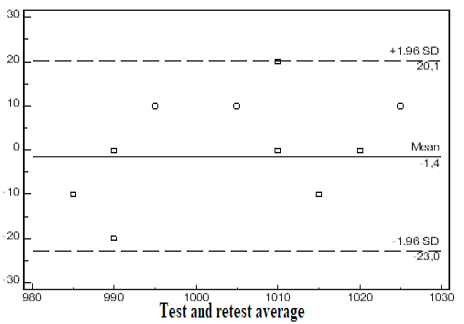
Figure 1. Dispersion between the test powder and the pre-test
Source: Authors
The average of the heart rate (HRmed), maximum heart rate (HRmax), average speed (AvgSpeed), maximum speed (MaxSpeed) was checked during the test, and retest to see if the protocol used is following the intensity of the displacement of the soccer referees in the games. These data are shown in Table 2.
Table 2. Average Heart Rate (HRmed), Maximum Heart Rate (HRmax), Average Speed (AvgSpeed) and Maximum Speed(MaxSpeed) during the test and retest
|
|
HRmed (bpm) |
HRmax (bpm) |
AvgSpeed (km/h) |
MaxSpeed (km/h) |
|
T1 |
162 |
191 |
7.58 |
24.96 |
|
T2 |
155 |
184 |
7.89 |
25.39 |
|
Average |
158.50 |
187.50 |
7.74 |
25.18 |
|
SD |
4.94 |
4.94 |
0.21 |
0.30 |
T1=test; T2=retest; SD=desviation standart. Source: Authors
The highest speeds recorded were: 27.90 km/h in the test and 31.30 km/h in the retest.
Discussion
There was no statistical significance when comparing the distances measured in the test with the retest, this fact suggests that there is reproducibility in the distances measured through the 1Hz GPS of the Polar V800 cardiac monitor. This finding is in agreement with the result of the study by Coutts and Duffield [4] who, after comparing six different GPS models with 1 Hz recording speed, concluded that all devices were within 5 m of the real distance of the lap protocol used, stating the feasibility of using this tool.
In the same sense ofJennings, Cormack [5] who affirmed the fragility of the 1 Hz GPS, the intraclass correlation coefficient of the present study indicated a poor association between the measurements. However, the value of the coefficient of variation in the test and the restest were low, being 1% and 3% in the test and retest respectively, showing low dispersion [18], a fact that was ratified and demonstrated in the Bland Altman dispersion graph (Figure 1). This result again corroborates the findings of Coutts and Duffield [4] that he found in the results study indexes of intraclass correlation <5%.
Although it was not directly linked to the objective of the present study, the heart rate presented by the sample in the test and retest showed very specific changes. An average between test and retest of 158.5 bpm was observed for HRmed and 187.5bpm for HRmax, both with a standard deviation of 4.94. Emphasizing that the tool used to measure the results obtained to HR in the present study are reliable and validated with great reliability for the questions related to HR[6].
In another line of thought, since his interest was HR variability and not just frequency, Lucini, Marchetti [19] concluded that one must be cautious when evaluating HR Variability (HRV) with wearable devices that do not electrocardiogram (ECG). The recording of the ECG signal and the guarantee that the respiratory rate is higher than 10 cycles/min are prerequisites for a more reliable analysis of HRV, especially in athletes.
Regarding the protocol used in the present study, the speed between the test and retest was 7.735 km / h and the speed of 25.175 km / h. It is noted that the speed in the FIFA test promotes abrupt changes in the speed of displacement of the volunteers.Studies have shown that soccer referees perform this movement pattern, with great alternation of intensity and non-progressive direction, during their professional performance[20, 21].
The lack of information on the number of satellites captured by the equipment during the performance of the experiments, due to the weather conditions and the geographical position of the city of Rio de Janeiro, as well as the sample size as limitations of this study.
Conclusion
It can be concluded that the use of a frequency meter with GPS technology with a 1 Hz signal acquisition frequency is feasible to monitor the displacements of soccer referees, as the tests performed showed that the tool used showed reproducibility in recording the acyclic displacement and intermittent intensity, performed by the sample of this study. The data obtained confirmed the researched literature demonstrating that soccer referees work under high hemodynamic pressure.
Therefore, the 1 Hz GPS of the Polar Brand V800 cardiac monitor is a viable and low-cost option when compared to GPS with higher signal acquisition frequencies, such as, for example, 10 Hz GPS. conducting new studies that compare the data related to the displacement of soccer referees, using GPS with other signal acquisition frequencies.
Aknowledgment
The authors would like to thank the Scientific Development Council e. Tecnológico (CNPq) for the granting of a research grant for the development of this work.
Conflicts of interest: no conflicts of interest.
Financing sources: none.
Cited literature
1. García RCF, de Oliveira RM, Martínez EC, Neves EB. VO2 Estimation Equation Accuracy to Young Adults. Arch Med (Manizales). 2020; 20(1):33-9.DOI: 10.30554/archmed.20.1.3476.2020
2. Neves EB, Cunha RM, Rosa C, Antunes NS, Felisberto IMV, Vilaça-Alves J, et al. Correlation between skin temperature and heart rate during exercise and recovery, and the influence of body position in these variables in untrained women. Infrared Phys Technol. 2016; 75:70-6. DOI: 10.1016/j.infrared.2015.12.018
3. Malone JJ, Lovell R, Varley MC, Coutts AJ. Unpacking the black box: applications and considerations for using GPS devices in sport. Int J Sports physiol Perform. 2017; 12(Suppl 2):S2-18-S2-26. DOI: 10.1123/ijspp.2016-0236
4. Coutts AJ, Duffield R. Validity and reliability of GPS devices for measuring movement demands of team sports. J Sci Med Sport. 2010; 13(1):133-5. DOI: 10.1016/j.jsams.2008.09.015
5. Jennings D, Cormack S, Coutts AJ, Boyd L, Aughey RJ. The validity and reliability of GPS units for measuring distance in team sport specific running patterns. Int J Sports physiol Perform. 2010; 5(3):328-41. DOI: 10.1123/ijspp.5.3.328
6. Giles D, Draper N, Neil W. Validity of the Polar V800 heart rate monitor to measure RR intervals at rest. Eur J Appl Physiol. 2016; 116(3):563-71. DOI: 10.1007/s00421-015-3303-9
7. Caminal P, Sola F, Gomis P, Guasch E, Perera A, Soriano N, et al. Validity of the Polar V800 monitor for measuring heart rate variability in mountain running route conditions. Eur J Appl Physiol. 2018; 118(3):669-77. DOI: 10.1007/s00421-018-3808-0
8. Hernández-Vicente A, Santos-Lozano A, De Cocker K, Garatachea N. Validation study of Polar V800 accelerometer. Ann Transl Med. 2016; 4(15):278. DOI:10.21037/atm.2016.07.16
9. Cunha RM, Arsa G, Neves EB, Lopes LC, Santana F, Noleto MV, et al. Water aerobics is followed by short-time and immediate systolic blood pressure reduction in overweight and obese hypertensive women. J Am Soc Hypertens. 2016; 10(7):570-7. DOI: 10.1016/j.jash.2016.05.002
10. Bandeira F, Moura MAMd, Souza MAd, Nohama P, Neves EB. Pode a termografia auxiliar no diagnóstico de lesões musculares em atletas de futebol? Rev Bras Med Esporte. 2012; 18:246-51. DOI: 10.1590/S1517-86922012000400006
11. Thomas JR, Nelson JK, Silverman SJ. Métodos de pesquisa em atividade física.6º ed.Porto Alegre: Artmed Editora; 2009.
12. Resolução N. 466 do Conselho Nacional de Saúde. (Diário Oficial da União de 12 de dezembro de 2012).
13. Bataller-Cervero AV, Gutierrez H, DeRentería J, Piedrafita E, Marcén N, Valero-Campo C, et al. Validity and reliability of a 10 Hz GPs for assessing variable and mean running speed. J Hum Kinet. 2019; 67(1):17-24. DOI: 10.2478/hukin-2018-0084
14. Neves EB, Moreira TR, Lemos R, Vilaça-Alves J, Rosa C, Reis VM. Using skin temperature and muscle thickness to assess muscle response to strength training. Rev Bras Med Esporte. 2015; 21(5):350-4. DOI: 10.1590/1517-869220152105151293
15. Neves EB, Matos F, da Cunha RM, Reis VM. Thermography to monitoring of Sports Training: an Overview. Pan Am J Med Thermol. 2015; 2(1):18-22. DOI: 10.18073/2358-4696/pajmt.v2n1p18-22
16. Exército EM. Manual de treinamento físico militar (C 20 20). Brasília: EGCEEF; 2002.
17. Fédération Internationale de Football Association (FIFA). 2020 Refereeing International Lists. Zurich: FIFA; 2020. [Accessed: 10 March 2020]. Available: https://resources.fifa.com/image/upload/2020-fifa-list-of-international-match-officials.pdf?cloudid=bdhkmbhyt2evwe69isju.
18. Vieira S. Introdução à bioestatística. 4º ed. Rio de Janeiro: Elsevier Brasil; 2015.
19. Lucini D, Marchetti I, Spataro A, Malacarne M, Benzi M, Tamorri S, et al. Heart rate variability to monitor performance in elite athletes: Criticalities and avoidable pitfalls. Int J Cardiol. 2017; 240:307-12. DOI: 10.1016/j.ijcard.2017.05.001
20. de Lima L, Godoy ES, Neves EB, Vale R, López JAH, Nunes RdAM. Frecuencia cardíaca y la distancia recorrida por los árbitros de fútbol durante los partidos: una revisión sistemática. Arch Med Deporte. 2019; 189:36-42.
21. Lima-e-Silva L, Neves E, Silva J, Alonso L, Vale R, Nunes R. The haemodynamic demand and the attributes related to the displacement of the soccer referees in the moments of decision/intervention during the matches. Int J Perform Anal Sport. 2020; 20(2):219-30. DOI: 10.1080/24748668.2020.1736937