 Artículo de InvestigaciónArtículo de Investigación
Ángela Patricia Medina Ortega 1, Sara Lucía Mosquera Monje 2, David López Valencia 3, Luis Reinel Vásquez Arteaga 4, Carolina Salguero 5.
1. Medical student. Research Center on Microbiology and Parasitology (CEMPA), Department of Internal Medicine, Faculty of Health Sciences, University of Cauca. Popayán, Colombia. Del Lab al Campo, BIOTECMED, Research Group, Bogotá D.C., Colombia. ORCID: 0000-0001-5076-8673. Correo e: angelamedina@unicauca.edu.co.
2. Medical student. Research Center on Microbiology and Parasitology (CEMPA), Department of Internal Medicine, Faculty of Health Sciences, University of Cauca. Popayán, Colombia. ORCID: 0000-0001-5266-3891. Correo e: saramosquera@unicauca.edu.co.
3. Medical student. Research Center on Microbiology and Parasitology (CEMPA), Department of Internal Medicine, Faculty of Health Sciences, University of Cauca. Popayán, Colombia. Del Lab al Campo, BIOTECMED, Research Group, Bogotá D.C., Colombia. ORCID: 0000-0001-6699-5061. Correo e: davlopez@unicauca.edu.co. Autor para correspondencia.
4. Professor. Research Center on Microbiology and Parasitology (CEMPA), Department of Internal Medicine, Faculty of Health Sciences, University of Cauca. Popayán, Colombia. ORCID: 0000-0003-3538-6313. Correo e: lreinel@unicauca.edu.co.
5. PhD, Biochemistry. Chief Executive Officer. Del Lab al Campo, BIOTECMED, Research Group, Bogotá D.C., Colombia. https://orcid.org/0000-0001-6119-1937. Correo e: csalguero@gmail.com
Archivos de Medicina (Manizales) Volumen 20 N° 1, Enero-Junio 2020, ISSN versión impresa 1657-320X, ISSN versión en línea 2339-3874, Medina Ortega A.P., Mosquera Monje S.L., López Valencia D., Vásquez Arteaga L.R., Salguero C.
Recibido para publicación: 27-07-2019 - Versión corregida: 13-09-2019 - Aprobado para publicación: 14-12-2019
Medina-Ortega AP, Mosquera-Monje SL, López-Valencia D, Vásquez-Arteaga LR, Salguero C. Prevalence, incidence, clinical manifestations and factors associated with pediculosis capitis in nursery school children of a low-income area from Colombia. Arch Med (Manizales) 2020; 20(1):40-52. DOI: https://doi.org/10.30554/archmed.20.1.3438.2020
Objectives: epidemiology of pediculosis capitis was determined. The worldwide distributed ectoparasite, Pediculus humanus capitis, causes pediculosis capitis. Although risk factors for children are known, studies about its clinical description are rare. Materials and methods: cross-sectional descriptive study based on a sample (356 children) aged 1 to 5 of a low-income area from Popayán, Colombia. Two observations were practiced: at the beginning and at the end of the year 2017. Hair, scalp, lymphatic nodules and frontotemporal, parietal, occipital, nuchal and retroauricular cutaneous regions were examined. Insects were mechanically removed by wetting the hair and using lice combs. Nits, nymphs and adult lice were gathered and stored for future studies. Results: prevalence and incidence of pediculosis capitis were 5.1 % and 20.2 %, respectively. The associated variables were mainly infestation antecedent, long hair, female sex and eliminating with shampoo (95 % CI: 15-20). Clinical variables: presence of adenopathies, hair scalp inflammation and nuchal adenopathies (25-35 %); nits and lice localized in occipital region, hair scalp itching and retroauricular itching (20-25 %). Conclusions: pediculosis capitis affects those nursery children studied. It is important to know the variables associated for prevention, control and eradication of head lice infestation.
Keywords: pediculus, child, preschool, incidence, Colombia, signs and symptoms.
Objetivo: se determinó la epidemiólogía de la pediculosis capitis. El ectoparásito mundialmente distribuido, Pediculus humanus capitis, causa pediculosis capitis. Aunque los factores de riesgo son conocidos, investigaciones sobre su descripción clínica son pocas. Materiales y métodos: estudio descriptivo de corte transversal con una muestra (356 niños) entre 1 y 5 años de un área de bajos ingresos (Popayán, Colombia). Se realizaron dos observaciones: al inicio y al final del año 2017. Se examinaron el pelo, cuero cabelludo, nódulos linfáticos y las regiones cutáneas frontotemporales, parietales, occipital, nuca y retroauriculares. Los insectos fueron removidos mecánicamente por medio de peines liendrera y humedeciendo el pelo. Las liendres, ninfas y piojos adultos se almacenaron para futuros estudios. Resultados: la prevalencia e incidencia de pediculosis capitis fueron 5,1 % y 20,2 %, respectivamente. Las variables asociadas fueron principalmente antecedentes de infestación, pelo largo, sexo femenino y eliminación con champú (95 % CI: 15-20). Variables clínicas: presencia de adenopatías, inflamación del cuero cabelludo y adenopatías nucales (25-35 %); liendres y piojos localizados en la región occipital, prurito del cuero cabelludo y prurito retroauricular (20-25 %). Conclusiones: la pediculosis capitis está presente y afecta a los niños de guardería. Es importante conocer las variables asociadas a la pediculosis capitis para prevenir, controlar y erradicar la infestación por piojos de la cabeza.
Palabras clave: Pediculus, preescolar, prevalencia, incidencia, Colombia, signos y síntomas.
The hematophagous insect Pediculus humanus capitis (Anoplura: Pediculidae), colloquially known as head lice, causes pediculosis capitis (which will be expressed as PC from here on) and is the most common ectoparasite around the globe. Head lice have adapted very well to human beings given their host have adequate conditions for developing the life cycle: temperature and relative humidity (30°C, 70 % rh) [1,2]. Head lice life cycle comprises three maturation states: eggs (nits), with oval form, diameter 0.8 mm by 0.3 mm. Nits usually are yellow to white colored and incubation time of 6 to 9 days. Nymphs have a pinhead size, they grow and mature during 19-25 days and pass through three states before becoming adult insects. Adult lice, males and females, sizes 2 to 4 mm long; they have 6 paws (each with hooks), tan to grayish white colored. A fertile female can lay 150-250 nits during its 30-day life cycle, and lays 8 nits per day. Head lice cannot fly neither leap. Head lice rarely survive more than 36 hours out of their host without feeding itself on blood. They get repelled by light and prefer dark sites [3].
According on phylogenetic, head lice classify in four mitochondrial genotypes: clade A (includes P. humanus corporis: body lice, distributed all over the world; clade B in the Americas, Europe, Australia, Middle East, north and south Africa; clade C, limited to Thailand, Nepal, Senegal, Mali and Ethiopia; clade D that includes P. capitis and P. corporis as well, distributed in Ethiopia and Democratic Republic of Congo; and clade E, in Senegal and Mali (west Africa) [4,5].
P. capitis like other blood-sucking insects feeds on human blood by biting scalp (skin) and can produce macules, papules, vesicles and very itching pustules because of its saliva irritant effect. Scratching, by itself, can lead to excoriations and minuscule hemorrhages which form crusts and facilitate exudative bacterial superinfections. Also, PC can cause cervical adenopathies, conjunctivitis and allergic reactions [3,6].
Head lice prevalence rates are not equal among the geographic regions and change with seasons. In the United States, they are reported over 6 to 12 million cases of head lice infestations each year among children aged 3 to 11 [7]. Globally, the infestation rate ranges from 1.6 % to 87 % [8]. P. capitis is transmitted in most cases by direct contact among heads and, indirectly, through fomites (clothes, personal utensils) [3,9].
It is well known that head lice can transmit some life-threating bacteria such as Rickettsia prowazekii, Bartonella Quintana, Borrelia recurrentis, Acinetobacter baumannii, Yersinia pestis, Coxiella burnetti, Anaplasma spp and Ehrlichia spp. In the 40’s decade, in Colombia, they were reported new cases of epidemic typhus (caused by R. prowazekii and transmitted by P. capitis) [10–12]. Since then, the appearance of new cases of epidemic typhus has not been reported in the literature, though it has been reported in other rickettsial diseases [13]. Globalization, human migrations, environment and politic catastrophes, and the increased number of homeless people have stimulated head lice expansion, raising the probabilities of reemerging diseases transmitted by head lice [14–16].
Normally, P. capitis habits in hair and scalp of children between 3 and 11 years old, showing preference for girls. PC can induce severe implications at scholar education, psychological and socioeconomic issues: stigmatization, anguish, isolation and absenteeism [14]. Traditionally, it has existed certain beliefs regarding head lice infestation; one of those is that P. capitis can only affect children with low economic status [2].
It was practiced a literature review about head lice infestations and found only a few studies held in Colombian nursery school children. Epidemiology of PC has not been described for each department (Colombian state), although there are some studies that refer prevalence rates ranging from 8.7 % to 39 % in our country.
According to the previous considerations, the objective of the present investigation was to determine the prevalence, incidence, associated variables and the most common clinical manifestations in preschooler population.
Sampling and population
This cross-sectional study was aimed at researching the conditions of 356 students, aged 1 to 5 years, enrolled in the nursery school Pequeñines of the Instituto Colombiano de Bienestar Familiar, ICBF (Colombian Family Welfare Institute, in English), in Popayán, Southwest Colombia (Figure 1). Popayán is the capital of the Cauca department (2°27′33″N 76°36′01″W), located at 1,735 meters above sea level, with an average temperature of 19°C, temperate climate and average humidity of 77.75 % [15]. Children aged 1 to 5 years registered in the institution were included. Those individuals who did not attended the institution while the sample collection took place were excluded.
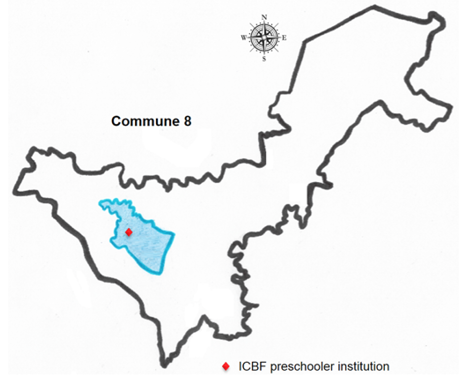
Figure 1. The Pequeñines nursery school (ICBF) in Popayán, southwest Colombia. Source: own elaboration
The present study was held in the year 2017 and two observations were practiced: at the beginning of the academic year (February, March) and at the end (November, December).
Ectoparasitological diagnosis
Scalp, hair and skin were examined. Frontotemporal, parietal, occipital, retroauricular and nape regions were inspected through naked eye observation. The examination was made by combing wet hair because it slows down the displacement of nymphs and adult lice, facilitating the visualization and collection [2]. Nits attached >1cm from the scalp are usually non-viable [16], though in some warmer climates, viable nits may be found several centimeters from the scalp [17].
The observation of nits and nymphs or adult lice was considered as a positive diagnosis. We practiced a close inspection given nits may be confused with dandruff, scabs, fibers, droplets of hair spray, plugs of desquamated cells or particles of dirt [16,17]. Insects were mechanically removed, gathered and stored in alcohol for future studies.
Statistical analysis
The information was stored in Epi InfoTM 7.2 version to determine the prevalence, risk factors and most relevant features of both positive and negative groups using the chi-square test and odds ratio (OR) with CI 95 %.
The variables took into account for this study were age, sex, health insurance, socioeconomic status, blood type, RH factor, hair washing frequency, body washing frequency, sharing personal utensils, place of residence, type of floor, type of walls, number of house residents, number of restrooms, co-sleeping, pets, infestation antecedent, lice eradication, lice inspection, caregiver’s education, fever in the last week, hair scalp itching, retroauricular itching and nuchal itching. The parents or guardians were asked about their socioeconomic information by means of a survey.
The ectoparasitological diagnosis consisted in direct visualization and included location of nits, hair length (long >5 cm and short <5 cm), hair type (smooth and wavy), hair color (black, brown and blonde), hair scalp inflammation and location of adenopathies.
Ethical issues
This project had a bioethical endorsement that was granted by the ethics committee of the research vice-rector’s office of the University of Cauca and the preschooler institution director. Parents, guardians and teachers were informed of the research objectives and filled an informed consent before the application of the study and responded to a structured survey. The authorization of the Committee of Ethics was obtained for experimentation in humans.
Sociodemographic description
As stated before, the sampling was practiced at the Pequeñines preschooler institution (Popayán, Colombia) (Figure 1). In total, 356 preschoolers were examined: 56.2 % were male, 90.4 % were between 3-5 years old (overall mean 3.83), 69.9 % had subsidized health insurance, 76.1 % belonged to low socioeconomic status and 96.3 % lived in urban areas. The prevalence and the incidence in this study were 5.1 % (18/356) and 20.2 % (90/356), respectively (table 1).
Bivariate analysis
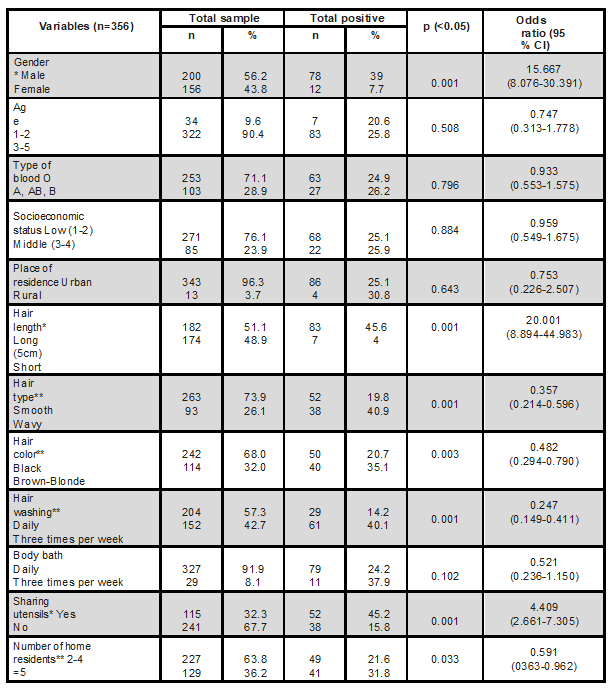
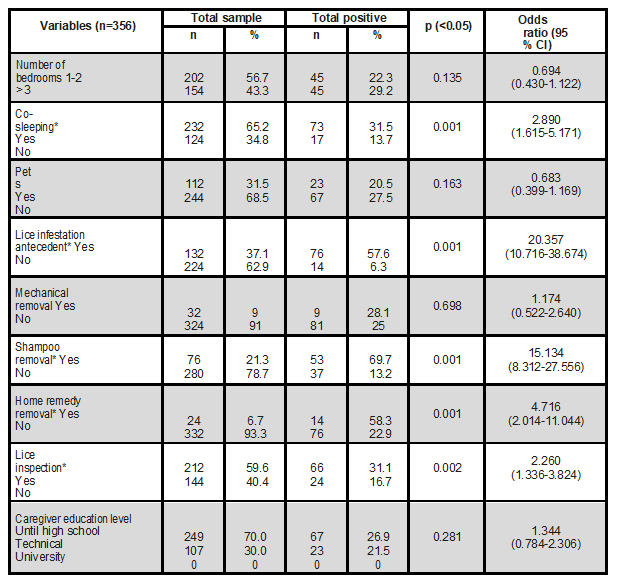
The associated epidemiological variables were lice infestation antecedent, long hair, female gender and removing with shampoo (95 % CI: 15-20). Removing with home remedy, sharing utensils, co-sleeping and lice inspection (95 % CI: 2-5) (Figure 2-3). The protective factors were daily hair washing, smooth hair, black hair and less than or equal to four home residents (95 % CI: 0.2-0.6) (Table 2).
Table 1. Sociodemographic description
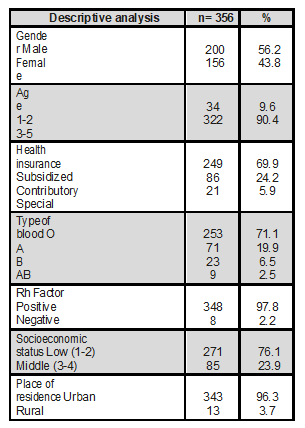
Source: own elaboration.
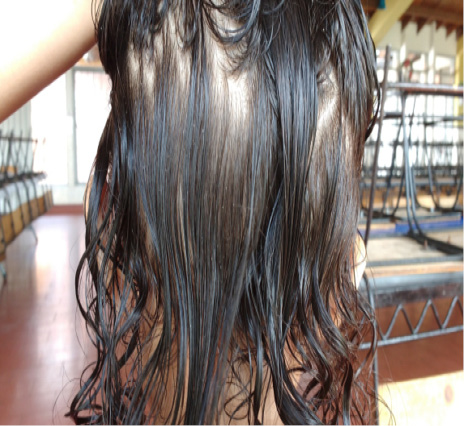
Figure 2. Multiple nits (eggs) on hair.Source: supplied by authors.
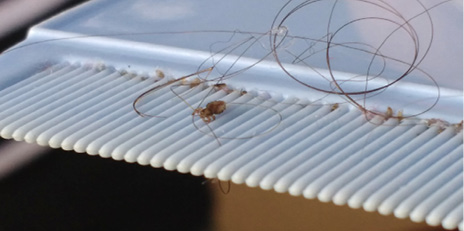
Figure 3. Louse and nits in lice comb.Source: supplied by authors.
Clinical manifestations
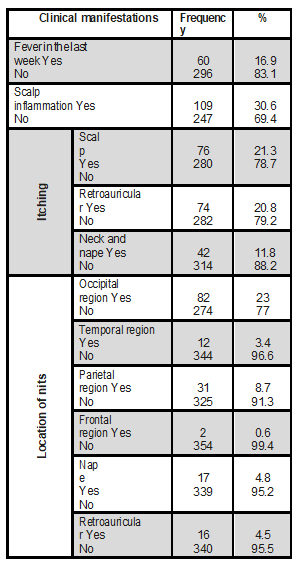
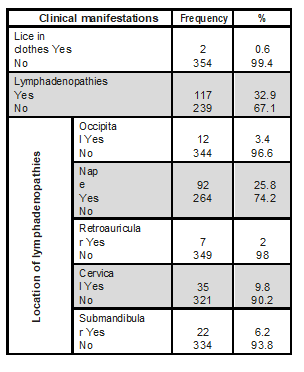
The clinical variables in order of frequency were presence of adenopathies and hair scalp inflammation (30-33 %); nits localized in occipital region, hair scalp itching, retroauricular itching and nape adenopathies (20-26 %) (Table 3).
Table 2. PC associated factors. *Risk factors. **Protective factors
|
 |
||
Source: own elaboration.
Table 3. Clinical manifestations of pediculosis capitis
Source: own elaboration.
However, PC is a global distributed infestation and is the most common ectoparasitosis that affects human beings, specially to infant population, worldwide prevalence rate of PC differs in terms of the biogeographic environment and personal habits. PC is endemic both in low- and middle-income countries but also in the developed world.
In the present study, PC was more common in girls than boys and long hair seems to be an important risk factor. Although long hair has been widely referred in the literature [18–20] even though, there are some authors who disagree [21].
Liao et al. [22] found that those students aged 10 showed significantly higher infestation than their older fellow students (>10 years old). In the present study, we found that the group of children older than 3 years (preschoolers between 3 and 5 years old) presented a higher infestation rate. It also coincides with Frankowski et al. [16], which reports that children aged 3 to 11 present the highest prevalence rate for PC in the United States of America.
In accordance to the literature, there are various studies which have reported prevalence rates of PC throughout the world and most of them had infant population involved. In the Americas, prevalence varies from 3.6 % to 61.4 % and is higher in females. In Europe, prevalence oscillates from 0.48 to 22.4 %. In Asia, prevalence ranges from 0.7 to 59 %, being higher in girls and women. In Africa, the majority of studies were applied in Egypt and prevalence varied from 0 % to 58.9 % and was higher in females as well [8]. In the present study, the PC infestation rate among preschooler children from Popayán was 5.1 % (18/356), which is less than other prevalence rates reported in our country, like a study applied by the same authors in 2015 that determined a prevalence of 11.5 % in a similar institution [23]. However, in the present study, the infestation showed a higher burden throughout the scholar year reaching until 71 cases more of 356 children (incidence 20.2 %).
In Battambang, Cambodia, Liao et al. [22] examined 323 school children from two primary schools and found that 44.3% were infested with P. capitis. They also determined that girls had significantly higher infestation rates in most age groups (total infection rate: 56.9 % vs. 29.9 %).
In Southern Jordan [24], the prevalence of lice infestation was 20.4 % in similar population (481 school students aged 6-12 years). The major risk factors were female gender (50.5 %), low socioeconomic status, inadequate hygiene practices and sharing personal articles. The prevalence rate was greater in girls with long hair (> shoulder level), belonged to rural area, more than five home residents with less than three rooms and lice infestation antecedent in the previous year. The variables statistically significant (p<0.05) were female sex, sharing personal utensils and living with families that presented a history of infestation. These variables were significant in our study as well, but low socioeconomic status was not associated with head lice.
In Kayseri, Turkey [25], a total of 8,122 schoolchildren (49.6 % boys and 50.4 % girls aged 5-16 years) were examined in 15 urban and 9 rural schools. Head lice infestation was detected in 25.2 % of individuals and also it was more frequent in rural scholar girls with low socioeconomic status who lived in houses with only one room and at least three siblings and parents had low educational level. Although the frequency of bathing was not significant in the Turkish study, it did in the present study.
Mumcuoglu et al. [26] studied the clinical manifestations of PC in a population of 2,643 children between 4-11 years. Among the infant population, they found lymphadenopathies (30.5 %), itching (18.9 %), conjunctivitis (16.1 %), excoriations (9 %) and bite reactions as skin lesions (4.5 %). The symptoms associated with the ectoparasitosis were similar in our study and lymphadenopathies was the most common clinical variable in those infested children (32.9 %). Nape lymphadenopathies was the most frequent site of nodes inflammation with 25.8 %. None other studies that measured lymphadenopathies location were found. The second location was cervical lymphadenopathies (9.8 %), which can be also affected in other processes such as immune maturation, infections of the respiratory tract, inflammatory reactivity to vaccines, dentition and further miscellaneous conditions [27]. The mentioned processes can stimulate lymphadenopathies in general.
As other international authors have referred [28], the variable “type of blood” with “presence of P. capitis” was evaluated and it resulted not to be a significant risk factor. However, it is encouraged to include this variable in further studies.
In Lima, Peru [29], PC was present in 9.1% (67/736 participants). Head lice infestation was significantly associated with female gender, < 15 years, household size > 4 persons, presence of dogs and cats and wooden houses. Even though we measured for the presence of pets, this variable did not show statistical significance which is agree with scientific literature.
Cazorla et al. [30] studied a population of 327 children of which 28.8 % were positive and 84 % of those infested were female. Head lice were found in occipital (22.3 %), parietal (11.7 %), frontal (6.4 %) and temporal (2.1 %) regions.
Lymphadenopathies and scalp itching were present in 7.3-18 % of positive children and 5.5 % - 9.5 % of negative children, respectively. Cervical area was the most frequent localization of lymphadenopathies (14.9 %). Both variables associated with PC were statistically significant. Long hair (>3cm), sharing personal hairbrush, lice infestation antecedent, living with someone infested, low socioeconomic status and sleeping in the same bed with at least a person were statistically significant as well. Color and hair type, in-house pets, hair washing, home residents and number of bedrooms were not significant in the Cazorla study.
In Colombia, there are a few studies regarding P. capitis. Escobar et al. found a 9 % prevalence among 133 children with intellectual disability [31]. In Bogotá [32] during seven months, they estimated a head lice prevalence between 2.9 % and 33.3 % (mean 8.7 %). The variables associated with PC were long hair (> 11.5cm), living with more than five home residents and having poor hygienic habits.
There are two previous studies of the infestation in Popayán. Gonzales et al. determined a prevalence of 39 % and the infestation was more common in girls that belonged to socioeconomic status 1 (low economic income) [33]. In our 2017 study the prevalence was 11.5 %. The variables associated with the PC were female sex, long hair (>3 cm) and scalp itching [23]. In the present study, the prevalence rate of infestation was 5.1 % (18/356) and the incidence rate was 20.2 % (90/356). This is the first study of PC incidence applied in Colombia. However, in England, Harris et al. showed a greater annual incidence of 37.4 % [34]. In our study the incremented head lice burden could be explained for children’s behavior like sharing personal things when playing and co-sleeping. The persistence of head lice in Popayán shows that is a public health problem particularly in children population who demands special attention.
It has been widely discussed if several hair characteristics such as length, type, color and washing frequency have an important role for getting PC. According to this, we measured those factors and found that despite a few authors have reported that length hair is not a relevant factor [35], we confirmed that long hair is a strong risk factor for PC (OR 20.001, CI 95 % 8.894-44.983), as many studies have reported [30,32,36]. In the present study, three protective factors were determined, all regarding hair characteristics (type, color and hair washing). Although it has been proposed that brown, blonde and red hair could increase the probability for getting PC, we found that black hair exhibits a protective role (OR 0.482, CI 95 % 0.294-0.790) but this could be influenced given the big number of children involved in this study (mestizo children). Nevertheless, it has not been reported that black hair plays a protective factor yet by other authors [30,37,38]. Also, smooth hair showed a protective factor (OR 0.357, CI 95 % 0.214-0.596); this fact is very interesting because lice claws are better able to grasp some hair types more than others and it has been curiously referred that smooth hair is very likely to facilitate head lice infestation. Even though, several authors have found that hair type and wavy hair are significant risk factors for head lice [39], but not for any others [30,38]. The personal habit daily hair washing showed a protective factor (OR 0.247, CI 95 % 0.149-0.411) as determined by AlBashtawy et al. as well [36].
Al Bashtawy et al. found that living in rural areas, sharing personal utensils and frequency of hair washing 1 per week are strong risk factors and they are associated with P. capitis infestation [36] the prevalence of pediculosis capitis and some risk factors for infestation were investigated among 1550 randomly selected primary-school children in Mafraq governorate, Jordan. The prevalence of pediculosis capitis was 26.6%. There were significant differences in the prevalence between girls (34.7%).
Antecedent of infestation is strongly associated with head lice [30,36,38], as it is shown for the present study as well.
A study determined the efficacy of the education based on Health Belief Model (HBM) [40]. They found a significantly raising in the mean scores of knowledge, perceived susceptibility, perceived severity, perceived benefits, self-efficiency, and behavior in the intervention group one month after the intervention (p<0.05). They concluded that HBM is a strategy to promote preventive behaviors against pediculosis. In this way, it would be necessary to implement HBM as an educative model and try to articulate it with Colombian public and private education institutions.
As shown for this study and many authors, nobody is exempted of getting infested by P. capitis. The insect can affect all people with no exception in terms of age and socioeconomic backgrounds, often with contrasting associations.
Limitations of the study
It is highly suggested to apply more studies that evaluate the dynamics of pediculosis capitis. Tutors have certain beliefs (cultural issue) which could stimulate the persistent of the phenomenon and were not measured. There is a lack of studies with older children, so the variables associated could present with some variations.
Conclusions
Head lice infestation should be taken as a severe public health concern, especially in low and middle-income countries.
It is suggested to practice campaigns among medical students, doctors, nurses, teachers and parents, in order to maintain effective epidemiological surveillance, controlling risk factors and providing effective treatment.
Acknowledgments
To the nursery school Pequeñines of the Instituto Colombiano de Bienestar Familiar (ICBF).
Declaration of interest: none.
Financial source: the present research was financed by the research office (VRI) - University of Cauca (ID 4474).